
Jacob Burck
Polish-born Jewish-American painter & sculptor
About Jacob Burck
Lived 1907 – 1982 (aged 75). Jacob Burck was an American journalist, editorial cartoonist, printmaker and sculptor.
Jacob Burck (née Yankel Boczkowsky, January 10, 1907 – May 11, 1982) was a Polish-born Jewish-American painter, sculptor, and award-winning editorial cartoonist. Active in the Communist movement from 1926 as a political cartoonist and muralist, Burck quit the Communist Party after a visit to the Soviet Union in 1936, deeply offended by political demands there to manipulate his work.
Upon his return to the United States, Burck drew political cartoons for two large mainstream dailies, the St. Louis Post Dispatch and then, for 44 years, the Chicago Daily Times (later as the Chicago Sun-Times). Burck was awarded the 1941 Pulitzer Prize for Editorial Cartooning.
Biography
Early years
Jacob Burck was born Yankel Boczkowsky on January 10, 1907, in Wysokie Mazowieckie, Poland (then Russia), the son of ethnic Jewish parents, Abraham Burke, a bricklayer, and Rebecca Lew Burke.
Burck emigrated to the United States at age six and lived in Cleveland until 1924. He attended the Cleveland School of Art on a scholarship after he was discovered on a Cleveland sidewalk sketching instead of attending elementary school.
When he was seventeen years old, Burck travelled to New York City to study at the Art Students League of New York (ASL) under Albert Sterner and Boardman Robinson.
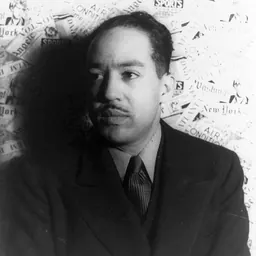
Burck joined the revolutionary movement in 1926, while still a teenager. In 1927 or 1928, Burck began to draw occasional editorial cartoons for the Communist Party's daily newspaper, The Daily Worker, as well as its monthly artistic-literary magazine, The New Masses. He went on staff at The Daily Worker full-time as cartoonist in 1929. Langston Hughes, Meyer Schapiro, and many other figures in the New York art and progressive scene. During this period, he exhibited with other prominent artists, including: George Grosz, José Clemente Orozco, Diego Rivera, Reginald Marsh, Jean Charlot, Thomas Hart Benton, Hugo Gellert, William Gropper, David Alfaro Siqueiros, Julio Castellanos, John Flannagan (sculptor), and Louis Lozowick.
In 1931, Burck was a founding Director of the "New York Suitcase Theater", along with playwright Paul Peters, poet Langston Hughes, and writer Whittaker Chambers. Burck's work was exhibited in the Whitney Museum of American Art's First Biennial Exhibition of Contemporary American Sculpture, Watercolors and Prints, which opened in December, 1933.
Evidence presented to the Dies Committee lists Burck in May 1933 as a contributing editor (with Henri Barbusse, Cyril Briggs, Whittaker Chambers, Robert W. Dunn, Maxim Gorky, Harry Gannes, Grace Hutchins, Robert Minor among others) of Labor Defender, the monthly magazine of International Labor Defense, the American Communist Party's legal defense organization. He also contributed work to the official organ of the party's social and fraternal organization, the International Workers Order.
Burck was an accomplished muralist and exhibited groups of murals along with Edward Laning in the gallery of the Art Students League. Burck was commissioned by the Soviet travel agency, Intourist, to create a five-panel mural for its New York offices, depicting the construction of large-scale industry in the Soviet Union. Plans were changed however and the panels were shipped to Moscow for display at the Museum of Modern Western Art prior to being installed in Intourist's Moscow office. This episode marked the end of Burck's connection with the Communist movement.
Chicago years Burck draws in Times Square, New York to raise money for the Loyalists in the Spanish Civil War, 1938. Behind the canvas, left to right: William Gropper, Fred Ellis, Rockwell Kent. After returning from the USSR in 1937, Burck went to work as an editorial cartoonist for the St. Louis Post Dispatch, before moving to the Chicago Daily Times in 1938. Burck's incisive and biting style led to his daily cartoons being syndicated by Field Newspaper Syndicate of Field Enterprises in more than 200 newspapers across the United States. Burck's signature style, with India ink with brush, grease pencil, or lithograph crayon, was soon adopted by Bill Mauldin and most other editorial cartoonists of the 1940s and 1950s.
Burck won the Pulitzer Prize for Editorial Cartooning while at the Chicago Daily Times in 1941 for a cartoon titled, If I Should Die Before I Wake. and was subsequently revealed to be a serial perjurer.
Burck's defense was able to demonstrate "a long record of anti-communism... [was] exemplified in his political cartoons." The deportation order was formally vacated by an act of the United States Congress in April 1957.
Burck's syndications dropped drastically because of the government case, but he continued to produce daily editorial cartoons for the Chicago Sun-Times, successor to the Chicago Daily Times, over a 44-year career.
A long-time member of the Cliff Dwellers Club in Chicago, Burck received the 1971 Merit Award "for distinguished service to the arts in Chicago."
Burck's final published editorial cartoon appeared in the Chicago Sun-Times on February 23, 1982. Over the course of his career he was responsible for drawing over 10,000 editorial cartoons. William Christoffersen and Francisco Farreras.
Works
Art Burck was a prominent painter and sculptor through the 1960s and 1970s.
Burck's original works were collected by several presidents of the United States including Harry S Truman and Richard Nixon. Burck's work is also in the permanent collections of the Museum of Modern Art, The Smithsonian Institution, The National Gallery of Art, The Art Institute of Chicago, the Whitney Museum of American Art, the Philadelphia Museum of Art, the Museum of Fine Arts, Boston, the Cleveland Museum of Art, the Baltimore Museum of Art, and the University of Michigan Museum of Art.
His evocative portrait of Hugh Hefner, the smoke from Hef's pipe forming a group of writhing bodies, hung in the Playboy mansion in Chicago.
His work is part of the "Capital and Labor" portion of the Library of Congress online exhibit Life of the People: Realist Prints and Drawings from the Ben and Beatrice Goldstein Collection, 1912–1948.
Books
According to art historian Andrew Hemingway, "Burck was singled out for special treatment in 1935 when the Daily Worker published a 250-page volume of his cartoons under the title Hunger and Revolt. The book also contained 11 essays by prominent people including John Strachey and Henri Barbusse. 1929 Red Cartoons reprinted from The Daily Worker (1929) Graft and Gangsters (1931) Hunger and Revolt: Cartoons (1935)
Futuro: Cartones de Jacob Burck (1935) Our 34th President: Ike's Campaign, Election and Inauguration in Historic Cartoons] (1953)
Awards 1941: Pulitzer Prize for Editorial Cartooning for "If I Should Die Before I Wake" 1942: Sigma Delta Chi Award, inaugural prize for editorial cartooning from the Society of Professional Journalists
Don’t just read it —
keep it.
Full-length biographies made to live with: read them, listen on the way to work, watch them tonight.
- E-book
- Audio
- Video
Instant download · yours to keep · every purchase keeps this site free
Important facts
People in Jacob Burck's life
Named in this biography and alive at the same time




Related people
Same field, nearest in time



Contemporaries
People whose lives overlapped Jacob Burck's


Frequently asked questions
Who was Jacob Burck?
Polish-born Jewish-American painter & sculptor (1907–1982)
When was Jacob Burck born?
Jacob Burck was born on 10 January 1907 in Białystok.
When did Jacob Burck die?
Jacob Burck died on 11 May 1982 in Chicago.
What was Jacob Burck's occupation?
Jacob Burck was a journalist, editorial cartoonist, printmaker and sculptor.
What nationality was Jacob Burck?
Jacob Burck was American.
Sources & further reading
Cite this page
APA: Biography.guide. (2026). Jacob Burck. https://biography.guide/jacob-burck/
MLA: "Jacob Burck." Biography.guide, https://biography.guide/jacob-burck/.
Chicago: "Jacob Burck." Biography.guide. https://biography.guide/jacob-burck/.
Data last updated: 2026-09-20 · Spot an error? Report a correction.
Page generated 2026-09-27 05:24 UTC