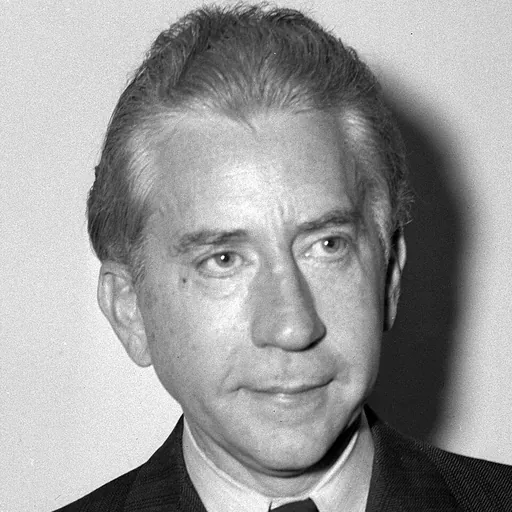
J. Paul Getty
American industrialist and art collector
About J. Paul Getty
Lived 1892 – 1976 (aged 83–84). J. Paul Getty was an American art collector, autobiographer, entrepreneur, industrialist and patron of the arts.
Jean Paul Getty Sr. (; December 15, 1892 – June 6, 1976) was an American petroleum industrialist who founded the Getty Oil Company in 1942 and was the longtime patriarch of the Getty family. A native of Minneapolis, Minnesota, he was the son of pioneer oilman George Getty. In 1957, Fortune magazine named J. Paul Getty the wealthiest living American, while the 1966 Guinness Book of Records declared him to be the world's wealthiest private citizen, worth an estimated $1.2 billion (approximately $ billion in ). At the time of his death, he was worth more than $6 billion (approximately $ billion in ). A book published in 1996 ranked him as the 67th wealthiest American who ever lived (based on his wealth as a percentage of the concurrent gross national product).
Getty was known for his frugality, going so far as to haggle with the kidnappers when his grandson was held to ransom in 1973. He had five children and divorced five times. Getty was an avid collector of art and antiquities. His collection formed the basis of the J. Paul Getty Museum in Los Angeles; more than $661 million of his estate was left to the museum after his death.
Background Getty was born in Minneapolis to Sarah Catherine McPherson (Risher) and George Franklin Getty, who was an attorney in the insurance industry. He grew up as a Methodist; his father was a devout Christian Scientist and both his father and mother were strict teetotalers. Jean was of part Scottish descent. In 1903, when Jean was 10 years old, his father traveled to Bartlesville, Oklahoma, and bought the mineral rights for of land. The Getty family then moved to Bartlesville, where J. Paul Getty attended the Garfield School. Within a few years Getty had established wells on the land which produced of crude oil a month.
As newly minted millionaires, the family moved to Los Angeles, but J. Paul Getty later returned to Oklahoma. At age 14, he attended the Harvard Military School for a year, followed by Polytechnic High School in Sun Valley, Los Angeles, studying reading. Enamored by Europe after traveling abroad with his parents in 1910, he enrolled at the University of Oxford in Oxford, England, on November 28, 1912. In 1948–49, Getty paid Ibn Saud $9.5 million in cash, guaranteed $1 million a year, and a royalty of 55 cents a barrel for the Saudi Arabian Neutral Zone concession, which was 2.5 times more than what other major oil companies were paying in the Middle East at the time. Oil was finally discovered in March 1953. Since 1953, Getty's gamble produced a year, which contributed greatly to the fortune responsible for making him one of the richest people in the world.
Getty's wealth and ability to speak Arabic enabled his unparalleled expansion into the Middle East. He owned the controlling interest in about 200 businesses, including Getty Oil. Getty owned Getty Oil, Getty Inc., George F. Getty Inc., Pacific Western Oil Corporation, Mission Corporation, Mission Development Company, Tidewater Oil, Skelly Oil, Mexican Seaboard Oil, Petroleum Corporation of America, Spartan Aircraft Company, Spartan Cafeteria Company, Minnehoma Insurance Company, Minnehoma Financial Company, Pierre Hotel, Pierre Marques Hotel, a 15th-century palace and nearby castle at Ladispoli on the coast northwest of Rome, a Malibu ranch home, and Sutton Place, a 72-room mansion near Guildford, Surrey.
Art collection Getty's first forays into collecting began in the late 1930s, when he was inspired by the collection of 18th-century French paintings and furniture of the landlord of his New York City penthouse, Amy Guest, a relation of Sir Winston Churchill. During the 1950s, Getty's interests shifted to Greco-Roman sculpture, which led to the building of the Getty Villa in the 1970s to house the collection. Lord Beaverbrook called him "priapic" and "ever-ready" in his sexual habits.
Getty was married and divorced five times. He had five sons with four of his wives: Jeanette Demont (married 1923 – divorced 1926); one son, George F. Getty II. Allene Ashby (1926–1928); no children. Getty met 17-year-old Ashby, the daughter of a Texas rancher, in Mexico City while he was studying Spanish and overseeing his family's business interests. They eloped to Cuernavaca, Mexico, but the marriage was bigamous as he was not yet divorced from Jeanette. The two quickly decided to dissolve the union while still in Mexico. Gaston divorced Getty that year. She died in 2017 at the age of 103.
Getty was quoted as saying "A lasting relationship with a woman is only possible if you are a business failure"
Kidnapping of grandson John Paul Getty III
In Rome on July 10, 1973, 'Ndrangheta kidnappers abducted Getty's 16-year-old grandson, John Paul Getty III, and demanded $17 million (equivalent to $ in ) for his safe return. The family suspected a ploy by the rebellious teenager to extract money from his miserly grandfather. John Paul Getty Jr. asked his father for the money, but was refused. In November 1973, an envelope containing a lock of hair and a human ear arrived at a daily newspaper. The second demand had been delayed three weeks by an Italian postal strike. After his release, the younger Getty called his grandfather to thank him for paying the ransom but Getty refused to come to the phone.
Getty defended his initial refusal to pay the ransom on two grounds. He argued that his 13 other grandchildren could also become kidnapping targets if he paid Nine of the kidnappers were apprehended, including Marco Alphonso Grillo, John Vincent Latorre, Salvatore Pignataro, Girolamo Piromalli and Saverio Mammoliti, high-ranking members of the 'Ndrangheta, a Mafia organization in Calabria. Two of the kidnappers were convicted and sent to prison; the others were acquitted for lack of evidence, including the 'Ndrangheta bosses. Most of the ransom money was never recovered.
Getty III was permanently affected by the trauma and became a drug addict. After a stroke brought on by a cocktail of drugs and alcohol in 1981, he was rendered speechless, nearly blind, and partially paralyzed for the rest of his life. He died on February 5, 2011, at age 54. The two best known examples are his reluctance to pay his grandson's kidnapping ransom and a pay phone he had installed at Sutton Place. A darker incident was his fifth wife's claim that Getty scolded her for spending too much on their terminally ill son's medical treatment, though he was worth tens of millions of dollars at the time. Reusing stationery was another obsession of Getty's. He had a habit of writing responses to letters on the margins or back sides and mailing them back, rather than using a new sheet of paper. He also carefully saved and reused manila envelopes, rubber bands, and other office supplies. He placed dial locks on all the regular telephones, limiting their use to authorized staff, and the coin-box telephone was installed for others. In his autobiography, he described his reasons:
In a 1963 televised interview with Alan Whicker, Getty said that he thought guests would want to use a pay phone. After 18 months, he said, "the in-and-out traffic flow at Sutton subsided. Management and operation of the house settled into a reasonable routine. With that, the pay telephone [was] removed, and the dial locks were taken off the telephones in the house."
Later years and death On June 30, 1960, Getty threw a 21st birthday party for a relative of his friend, the 16th Duke of Norfolk, which served as a housewarming party for the newly purchased Sutton Place. The event's failure made Getty the object of ridicule and he never threw another large party. He remained an inveterate hard worker, boasting at age 74 that he often worked 16 to 18 hours per day overseeing his operations across the world. The New York Times wrote of Getty's domestic arrangement saying that he "ended his life with a collection of desperately hopeful women, all living together in his Tudor mansion in England, none of them aware that his favorite pastime was rewriting his will, changing his insultingly small bequests: $209 a month to one, $1,167 to another." Only Kitson received a significant bequest upon Getty's death: 5,000 shares of Getty Oil, which doubled in value during the 1980s, and a $1,167 monthly income.
In 1972, Getty himself appeared in a 30-second television commercial for the E.F. Hutton brokerage firm. Filmed at Sutton Place, the commercial ran on U.S. television for five years.
Quotations J. Paul Getty has one entry in the eighth edition of The Oxford Dictionary of Quotations: "If you can actually count your money, then you are not really a rich man."
Published works Getty, J. Paul. The history of the bigger oil business of George F.S. F. and J. Paul Getty from 1903 to 1939. Los Angeles?, 1941, Getty, J. Paul. Europe in the Eighteenth Century. [Santa Monica, Calif.]: privately printed, 1949, Le Vane, Ethel, and J. Paul Getty. Collector's Choice: The Chronicle of an Artistic Odyssey through Europe. London: W.H. Allen, 1955, Getty, J. Paul. My Life and Fortunes. New York: Duell, Sloan & Pearce, 1963, Getty, J. Paul. The Joys of Collecting. New York: Hawthorn Books, 1965, Getty, J. Paul. How to be Rich. Chicago: Playboy Press, 1965, Getty, J. Paul. The Golden Age. New York: Trident Press, 1968, Getty, J. Paul. How to be a Successful Executive. Chicago: Playboy Press, 1971, Getty, J. Paul. As I See It: The Autobiography of J. Paul Getty. Englewood Cliffs, N.J. : Prentice-Hall, 1976. ,
Don’t just read it —
keep it.
Full-length biographies made to live with: read them, listen on the way to work, watch them tonight.
- E-book
- Audio
- Video
Instant download · yours to keep · every purchase keeps this site free
Important facts
People in J. Paul Getty's life
Named in this biography and alive at the same time





Related people
Same field, nearest in time
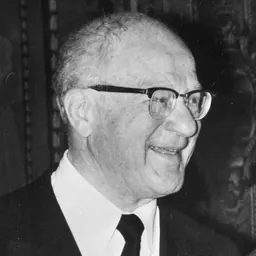
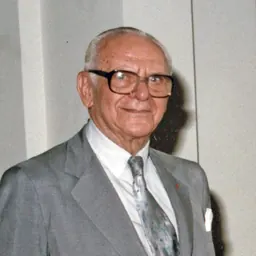
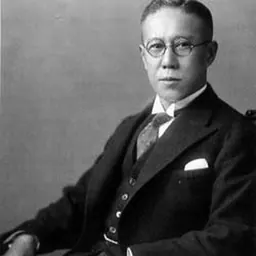
Contemporaries
People whose lives overlapped J. Paul Getty's
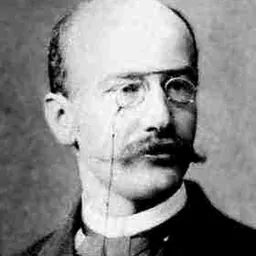

Frequently asked questions
Who was J. Paul Getty?
American industrialist and art collector (1892–1976)
When was J. Paul Getty born?
J. Paul Getty was born on 15 December 1892 in Minneapolis.
When did J. Paul Getty die?
J. Paul Getty died in 1976 in Guildford.
What was J. Paul Getty's occupation?
J. Paul Getty was an art collector, autobiographer, entrepreneur, industrialist and patron of the arts.
What nationality was J. Paul Getty?
J. Paul Getty was American.
Sources & further reading
Cite this page
APA: Biography.guide. (2026). J. Paul Getty. https://biography.guide/j-paul-getty/
MLA: "J. Paul Getty." Biography.guide, https://biography.guide/j-paul-getty/.
Chicago: "J. Paul Getty." Biography.guide. https://biography.guide/j-paul-getty/.
Data last updated: 2026-09-23 · Spot an error? Report a correction.
Portrait: Wikimedia Commons · author & licence
Page generated 2026-09-27 05:05 UTC