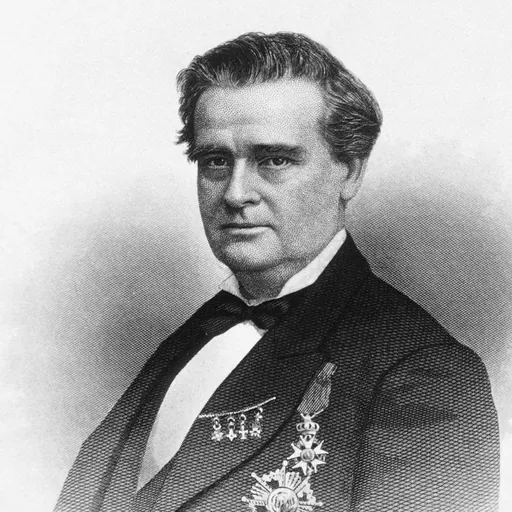
About J. Marion Sims
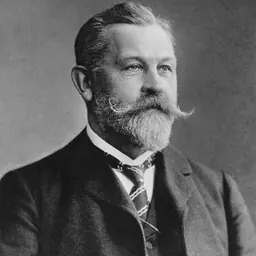
Lived 1813 – 1883 (aged 70). J. Marion Sims was an American surgeon, gynecologist and physician.
James Marion Sims (January 25, 1813 – November 13, 1883) was an American physician in the field of surgery. His most famous work was the development of a surgical technique for the repair of vesicovaginal fistula, a severe complication of obstructed childbirth. He developed this technique via non-consensual and unanesthetized surgeries on enslaved black women Anarcha Westcott, Lucy and Betsey and impoverished Irish women. He is also remembered for inventing the Sims speculum, the Sims sigmoid catheter, and Sims' position. Against significant opposition, he established, in New York, the first hospital in the United States specifically for women. He was forced out of the hospital he founded because he insisted on treating cancer patients; he played a small role in the creation of the nation's first cancer hospital, which opened after his death.
Sims was one of the most famous and admired American physicians of his era. He was elected President of the American Medical Association in 1876, and he was one of the first American physicians to become famous in Europe. He openly boasted that he was the second-wealthiest doctor in the country. However, as medical ethicist Barron H. Lerner states, "one would be hard pressed to find a more controversial figure in the history of medicine." It stood for 124 years before being removed in 2018.
Today, many medical ethicists criticize how Sims developed his surgical techniques. He operated on some enslaved black women and girls who, like prisoners, could not meaningfully consent because they could not refuse. Some medical historians have defended Sims' practices as consistent with the accepted standards of his time. According to Sims, the enslaved black women upon whom he experimented were "willing" patients who had no better options for treatment. the son of John and Mahala (Mackey) Sims. His father, Colonel John Sims participated in the War of 1812, being stationed at Charleston. His paternal grandfather was one of Marion's men; his great-grandfather was with Washington at Braddock's defeat. His maternal grandfather, Charles Mackey, was taken prisoner by Banastre Tarleton, and would have been hanged, but for the intervention of his wife.
For the first twelve years of his life, Sims and his family lived in Lancaster Village, north of Hanging Rock Creek, where his father owned a store. Sims later wrote of his early school days there.
After his father was elected sheriff of Lancaster County, he sent Sims in 1825 to the newly established Franklin Academy, in Lancaster. In 1832, after two years of study at the predecessor of the University of South Carolina, South Carolina College, where he was a member of the Euphradian Society, Sims worked with Dr. Churchill Jones in Lancaster, South Carolina. He took a three-month course at the Medical College of Charleston (predecessor of the Medical University of South Carolina), but found it too rigorous.
He moved to Philadelphia, Pennsylvania, in 1834 and enrolled at the Jefferson Medical College, from which he graduated in 1835 as "a lackluster student who showed little ambition after receiving his medical degree". He was in Mount Meigs from 1835 to 1837.
In 1837 Sims and his wife moved to Cubahatchee, Alabama, where they remained until 1840.
Practice in Montgomery In 1840 the couple moved to Montgomery, Alabama, Within a few years he "had the largest surgical practice in the State", and the largest practice of any doctor in Montgomery up to that time. "He was immensely popular, and greatly beloved."
In Montgomery, Sims continued essentially his practice as a plantation physician: treating the enslaved, who then made up two thirds of the city's population. It was also the first hospital specifically for Black people in the United States.
In 1840, the field of gynecology did not exist; there was no training on the subject, for Sims or anyone else. "The practice of examining the female organs was considered repugnant by doctors." Sims shared this view, remarking in his autobiography that "if there was anything I hated, it was investigating the organs of the female pelvis". and a common, socially destructive, and a terrible complication of childbirth that affected many women. Vesicovaginal fistulas occur when the woman's bladder, cervix, and vagina become trapped between the fetal skull and the woman's pelvis, cutting off blood flow and leading to tissue death. The necrotic tissue later sloughs off, leaving a hole. Following this injury, as urine forms, it leaks from the vagina, leading to a form of incontinence. Because a continuous stream of urine leaks from the vagina, it is difficult to keep the area clean. Such personal hygiene issues often lead to marginalization from society as well as vaginal irritation, scarring, and loss of vaginal function. Sims also worked to repair rectovaginal fistulas, a similar condition in which flatulence and feces escape from the rectum through a tear in the tissue separating it from the vagina, thus leading to fecal incontinence.
Sims' vaginal speculum. Sims, however, was not the first to successfully treat a vesicovaginal fistula, not even in the United States; Dr. John Peter Mettauer had successfully surgically repaired one in Virginia in 1838; and Dr. George Hayward in Boston the following year. Moreover, Henry van Roonhuyse's clinical treatise entitled Medico-Chirurgical Observations (1676) had outlined essential repair steps for such conditions that are recognizable even today.
Between 1845 and 1849, Sims performed experimental surgery on enslaved black women and girls to treat vaginal problems. He added a second story to his four-bed hospital, doubling its capacity. Sims' vaginal speculum, described above, aided in vaginal examination and surgery. The rectal examination position, in which the patient is on the left side with the right knee flexed against the abdomen and the left knee slightly flexed, is also named for him.
Experimental subjects Occasionally, Sims conducted experimental surgery on white women, but his main subjects were twelve enslaved black women and girls with fistulas, whom he treated at his own expense in his backyard hospital. They were brought to him by their owners. Sims searched for patients with this fistula, and succeeded in finding six or seven women and girls. A prospectus from the 1830s of the South Carolina Medical College, then the South's leading medical school, pointed out to prospective students that it had an advantage of a peculiar character:
The college announced, in advertisements in the Charleston papers, that it had set up a surgery (operating room) for negroes, and offered to treat without charge, while it was in session, any "interesting cases" sent by their owners, "for the benefit and instruction of their pupils". They extended the offer to free "persons of color". Sims conducted experimental surgery on each of them several times, including operating on Anarcha thirty times before the repair of her fistulas was declared a success. Anarcha, Lucy, and Betsy are memorialized in the statue Mothers of Gynecology, unveiled in Montgomery, Alabama, on September 24, 2021.
Sims' former collaborator, Nathan Bozeman, later supplied the names of at least four other African-American women treated by Sims during this period: Ann McRee, 16, treated by Sims for fistula in 1849. Delia, 23, "Dr. Sims' own servant [slave]", who between 1850 and 1853 underwent ten or more operations for fistula repair.
In addition, a common racist belief from the time, that often persists to this day, is that black people do not feel as much pain as white people. Given this, Sims did not anesthetize the women he operated on while developing his fistula repair technique. Anesthesia was itself still experimental; early anesthetic agents were much more dangerous than the replacements developed in the twentieth century. Dosing was also imprecise: underdosing did not kill the pain; overdosing could and sometimes did kill the patient. Chloroform could be obtained from a druggist, but nitrous oxide and the highly flammable ether had to be manufactured by the surgeon on the spot. In Sims' day, surgeons were trained to operate quickly on unanesthetized patients. Anesthesia was first used in dentistry, and was just being announced as an exciting novelty in privately published pamphlets, some claiming credit for the anesthetic's first use, at the same time as Sims' fistula repair surgeries.
Sims published a paper In 1868 on his work on using nitrous oxide as an anesthetic, and in 1874 on using chloroform. In 1874 Sims addressed the New York State Medical Society on "The Discovery of Anaesthesia," in which he claimed that Americans had discovered the practice before the British, and in 1880 he delivered a paper (published soon afterwards) at the New York Academy of Medicine about a death from anesthesia.
Sims also committed other errors due to the incomplete knowledge about sanitation and infection in surgical theaters at the time. One patient, named Lucy, nearly died from sepsis after Sims operated on her in the presence of twelve doctors, experimentally using a sponge during the procedure to wipe urine from her bladder.
Sims eventually perfected his technique. One of his key developments was the introduction in 1849 of silver wire as a suture, thus avoiding the infections associated with silk sutures, or the potential poisoning from using lead sutures (as Mettauer had done in 1838). He proceeded to repair fistulas in several other enslaved black women.
According to Durrenda Ojanuga, after Sims' successful treatment of Anarcha, he was asked by many white women to repair vesicovaginal fistulas, but most of them were apparently unable to endure the pain of the operation. The Journal of Medical Ethics reports a case study of one white woman whose fistula was repaired by Sims without the use of anesthesia during a series of three operations in 1849.
Trismus nascentium is a form of generalised tetanus. Infants who have not acquired passive immunity from the mother having been immunised are at risk for this disease. It usually occurs through infection of the unhealed umbilical stump, particularly when the stump is cut with a non-sterile instrument. In the twenty-first century, neonatal tetanus mostly occurs in developing countries, particularly those with the least-developed healthcare infrastructure. It is rare in developed countries.
Trismus nascentium is now recognized to be the result of unsanitary practices and nutritional deficiencies, but in the nineteenth century its cause was unknown, and many enslaved African children contracted this disease. Medical historians believe that the conditions of the quarters of enslaved people were the cause. Sims alluded to the idea that sanitation and living conditions played a role in its contraction, writing that
henever there are poverty, and filth, and laziness, or where the intellectual capacity is cramped, the moral and social feelings blunted, there it will be oftener found. Wealth, a cultivated intellect, a refined mind, an affectionate heart, are comparatively exempt from the ravages of this unmercifully fatal malady. But expose this class to the same physical causes, and they become equal sufferers with the first.
New York: the Woman's Hospital
Sims reluctantly moved to New York City in 1853 because of his health. He decided to focus on diseases of women. He had an office at 267 Madison Avenue. In 1860 a Charleston, South Carolina, newspaper described his success as "splendid," and called him "the happiest man in New York."
In 1855 he founded the Woman's Hospital, which, not counting his own backyard infirmary, was the first hospital for women in the United States. At its inception, Woman's Hospital's primary purpose was to repair vesico-vaginal fistulas using Sims' technique,
His project met with "universal opposition" from the New York medical community;
In the Woman's Hospital, Sims usually performed his operations on indigent women in an operating theatre so that medical students and other doctors could view it, as was considered fundamental to medical education at the time. Some patients remained in the hospital indefinitely and underwent repeated procedures.
When Sims addressed the American Medical Association in 1858 on the topic "Treatment of the results of obstructed labor", the "charts" which illustrated it "caused the lady auditors to vacate the gallery."
Sims and the Confederacy Sims' Southern sympathies were no secret—he was no abolitionist—and even in New York, many of his patients were Southern ladies. As the American Civil War drew near, this practice fell away, and he did not feel comfortable remaining in New York.
In 1861 Sims, who considered himself "a loyal Southerner," moved to Europe. There, he toured hospitals at first primarily for the purpose of researching hospital architecture for the new premises of his Woman's Hospital in New York, then still in the planning stages, but his renown soon permitted him to demonstrate his vesicovaginal repair surgery multiple times. First, he arrived in Dublin and performed one in front of Dr. Fleetwood Churchill and other colleagues. He then proceeded to Edinburgh to see Sir James Young Simpson operate on dysmenorrhea, but evidently "did not think it well done." From there, he went to London, and performed a second fistula repair with several colleagues on hand to observe, including Dr. Thomas Spencer Wells (soon to be appointed Queen Victoria's household surgeon). The patient, however, died within six days because, as the autopsy showed, Sims had inadvertently closed the patient's ureter. Undaunted, he went to Paris in September 1861, where he performed fistula repairs at the Beaujon, the Hôpital St. Louis, the Hôtel Dieu, and La Charité. Afterwards, Sims was called to Brussels to operate there, before returning to Paris. These surgeries greatly enhanced Sims's reputation, and he planned on traveling to Vienna to demonstrate the procedure there, when another case from a colleague arrived in the French capital and eventually caused him to cancel his trip to Austria. According to the U.S. Minister in Brussels Henry Shelton Sanford, Sims was a "violent secessionist," and his "movements in Europe had 'given color to (the) opinion' that he was a spy." He became known for the Battey surgery, which contributed to his "honorable reputation". This involved the removal of both ovaries. It became a popular treatment to relieve insanity, epilepsy, hysteria (diseased uterus), and other "disorders of the nerves" (as mental illness was called at the time). At the time, these were believed to be caused by disorders of the female reproductive system.
The controversial nature of Sims' speech resulted in the acceptance of his resignation by the Woman's Hospital's Board of Governors a month later. He was accused of being "reckless" and "lethal" by a member of the Board of Governors, who argued Sims should be fired for his insubordination. It predictably also brought him into conflict with some other doctors at the Woman's Hospital, with whom Sims carried on a dialogue by means of published pamphlets.
After quarreling with the board of the Woman's Hospital over the admission of cancer patients, Sims became instrumental in establishing America's first cancer institute, New York Cancer Hospital.
In reply to the treatment he received from the Woman's Hospital, Sims was unanimously elected president of the American Medical Association, an office he held from 1876 to 1877.
According to Wylie, Sims consulted with doctors for his unknown cardiac condition both in the United States and in Europe. He was "positive that he had a serious disease of the heart and it caused deep mental depression". She further notes that "the slave masters who sent the women to Sims for treatment were less concerned about their suffering than their ability to produce more slaves", a fact that may have further impacted the ability of these women to consent.
In regards to Sims' discoveries, Durrenda Ojenunga wrote in 1993:
His fame and fortune were a result of unethical experimentation with powerless black women. Dr. Sims, "the father of gynecology", was the first doctor to perfect a successful technique for the cure of vesicovaginal fistula, yet despite his accolades, in his quest for fame and recognition, he manipulated the social institution of slavery to perform human experimentation, which by any standard is unacceptable.
Drawing on Sims' published autobiography, case-histories, and correspondence, historian Stephen C. Kenny highlights how Sims' surgical treatment of enslaved infants suffering from neonatal tetanus was a typical, but tragically distinctive, feature in the career of an ambitious medical professional in the slaveowning South. Individual doctors like Sims and the profession were incentivized in multiple ways through the system of chattel slavery. Many physicians not only employed enslaved people in their practice, but also traded in enslaved people, while at the same time their medical research was advanced directly and significantly through the exploitation of the enslaved population. In a related article exploring the types, frequency and functions of slave hospitals in the American South, Kenny identifies Sims' private 'negro infirmary' located behind his office on South Perry Street in Montgomery as an example of a "hospital-for-experimentation," where Sims also undertook a series of gruelling and dangerous invasive surgeries on enslaved men. Sims used the surgical opportunities presented by long neglected chronic–and often incurable–cases of illness and injuries among the enslaved to sharpen his skills and stake a claim for professional celebrity—all in the context of the profits to be made from human trafficking one of the South's busiest slave markets.
Others, such as Harriet A. Washington and Rebekah Barber, have emphasized how "ach naked, unanesthetized slave woman had to be forcibly restrained by other physicians through her shrieks of agony as Sims determinedly sliced, then sutured her genitalia" and argued that slaves were forced to hold each other down during these surgeries. He suggests that surviving documentation indicates that the women were trained to assist in their own surgical procedures and that (despite some being as young as 13) She suggests that these opposing views are overly reductionist and that Sims' history is more nuanced. Indeed, Sims lived in a slave-holding society and expressed the racism and sexism that were considered normal during his time.
According to the Australian gynecologist and author Caroline M. de Costa,
According to L. Lewis Wall, "Sims's modern critics have discounted the enormous suffering experienced by fistula victims, have ignored the controversies that surrounded the introduction of anaesthesia into surgical practice in the middle of the 19th century, and have consistently misrepresented the historical record in their attacks on Sims." Wall, who has himself performed fistula surgery, portrays Sims as an ethical, caring, and successful clinician.
Legacy and honors J. Marion Sims statue, South Carolina Capitol grounds, Columbia, South Carolina. On the title page of the reprint of an article, "History of the Discovery of Anesthesia", first published in the May 1877 number of the Virginia Medical Monthly, Sims listed his honors as: Author of "Silver Sutures in Surgery," "The Sims Operation for Vesico-Vaginal Fistula," "Uterine Diseases," "History of the Discovery of Anaesthesia", Etc.; Member of the Historical Society of New York; Surgeon to the Empress Eugenie; Delegate to Annual Conference of the Association for the Reform and Codification of the Law of Nations, 1879; Founder of the Woman's Hospital of the State of New York, and formerly Surgeon to the Same; Centennial President of the American Medical Association, Philadelphia, 1876; President of the International Medical Congress at Berne, 1877; Fellow of the American Medical Association; Permanent Member of the New York State Medical Society; Fellow of the Academy of Sciences, of the Academy of Medicine, of the Pathological Society, of the Neurological Society, of the County Medical Society, and of the Obstetrical Society of New York; Fellow of the American Gynaecological Association; Honorary Fellow of the State Medical Societies of Connecticut, Virginia, South Carolina, Alabama and Texas; Honorary Fellow of the Royal Academy of Medicine of Brussels; Honorary Fellow of the Obstetrical Societies of London, Dublin and Berlin, and of the Medical Society of Christiana [Oslo]; Knight of the Legion of Honor (France); Commander of Orders of Belgium, Germany, Austria, Russia, Spain, Portugal and Italy, Etc. was erected in Bryant Park, in midtown Manhattan, New York, in 1894, then taken down in the 1920s amid subway construction, and in 1934 was moved to the northeastern corner of Central Park, at 103rd Street, opposite the New York Academy of Medicine. The address delivered at its rededication was published in the Bulletin of the New York Academy of Medicine. This was the first statue erected in the United States in honor of any physician. The statue became the center of protests in 2017 due to Sims' operations on enslaved black women. It was defaced with the word "RACIST" and had the eyes painted red. In April 2018, the New York City Public Design Commission voted unanimously to have the statue removed from Central Park and installed in Green-Wood Cemetery in Brooklyn, near where Sims is buried. In November 2017, author J.C. Hallman's article about Sims' Central Park statue, "Monumental Error" appeared on the cover of Harper's Magazine. The article played a role in the broader discussion about Confederate monuments, and in a later op-ed for the Montgomery Advertiser, Hallman revealed Sims' career as a spy during the Civil War and the fraudulent history of another Sims monument in Montgomery, Alabama. Another memorial was installed on the grounds of his alma mater, Jefferson Medical College (now Thomas Jefferson University) in Philadelphia. There is a statue on the grounds of the Alabama State Capitol in Montgomery. "An alternative statue of Sims's 'first cure', the young woman known as Anarcha, was erected in protest only to be stolen in the night." Another statue of Sims, installed in 1929, is at the South Carolina State House in Columbia; in 2017, the mayor of Columbia, Stephen K. Benjamin, called for its removal, as have other protestors. A painting by Marshall Bouldin III, entitled Medical Giants of Alabama, that depicted Sims and other white men standing over a partially clothed black patient, was commissioned for $20,000 in 1982 (paid for by donors). It was on display at the University of Alabama at Birmingham's Center for Advanced Medical Studies, but was removed in late 2005 or early 2006 because of complaints from people offended by it as well as the ethical questions associated with Sims. The Medical University of South Carolina, whose predecessor Sims attended, set up around 1980 an endowed chair in his honor. In February, 2018, the chair was renamed. However, a "J. Marion Sims Chair" in obstetrics and gynecology still appears in a March 2018 program. A J. Marion Sims Society, a student organization, existed there from 1923 to 1945. A Sims Memorial Address on Gynecology, delivered before the South Carolina Medical Society at Charleston, is documented from 1927. In 1950, a historical marker was erected near the site of his parents' farmhouse in Lancaster County, South Carolina, where he was born. Present at the dedication ceremony were Congressman James P. Richards and representatives of the American Medical Association, the Medical College of South Carolina, the University of South Carolina, the chairman of Lancaster's Marion Sims Memorial Hospital board, the state archivist of South Carolina, and four of Sims' children. Dr. Roderick McDonald, president of the South Carolina Medical Association, introduced the speaker, Dr. Seale Harris, past president of the Southern Medical Association and former editor of the Southern Medical Journal, whose biography of Sims, Woman's Surgeon: the Life Story of J. Marion Sims, had just been published. A cartoon of Sims appeared on the cover of the November 2017 issue of The Nation. A J. Marion Sims Foundation was founded in 1995 in his home town of Lancaster, South Carolina. It has dispensed almost $50,000,000 in grants. The Marion Sims Memorial Hospital is located in Lancaster. In Montgomery, Alabama, a historical marker at 37 South Perry St. marks the location of Sims' house and backyard hospital or infirmary. The building on the site is from the early twentieth century. In 1953, Sims was elected to the Alabama Hall of Fame.
Contributions Vaginal surgery: fistula repair. Invented silver wire as a suture. Instrumentation: Sims' vaginal speculum; Sims' sigmoid catheter. There is a petition campaign to have Sims' name removed from the devices he invented: "Sims uterine curette, uterine sound, vaginal retractor, uterine scissors, and rectal speculum." New names would be chosen by "a committee of POC (People of Color)." Exam and surgical positioning: Sims' position. Fertility treatment: Insemination and postcoital test. Cancer care: Sims argued for the admission of cancer patients to the Woman's Hospital, despite contemporary beliefs that the disease was contagious. Abdominal surgery: Sims advocated a laparotomy to stop bleeding from bullet wounds to this area, repair the damage and drain the wound. His opinion was sought when President James Garfield was shot in an assassination attempt; Sims responded from Paris by telegram. Sims' recommendations later gained acceptance.
Don’t just read it —
keep it.
Full-length biographies made to live with: read them, listen on the way to work, watch them tonight.
- E-book
- Audio
- Video
Instant download · yours to keep · every purchase keeps this site free
Important facts
People in J. Marion Sims's life
Named in this biography and alive at the same time







Related people
Same field, nearest in time


Contemporaries
People whose lives overlapped J. Marion Sims's





Frequently asked questions
Who was J. Marion Sims?
American physician and gynecologist (1813-1883)
When was J. Marion Sims born?
J. Marion Sims was born on 25 January 1813 in Lancaster County.
When did J. Marion Sims die?
J. Marion Sims died on 13 November 1883 in Manhattan.
What was J. Marion Sims's occupation?
J. Marion Sims was a surgeon, gynecologist and physician.
What nationality was J. Marion Sims?
J. Marion Sims was American.
Sources & further reading
Cite this page
APA: Biography.guide. (2026). J. Marion Sims. https://biography.guide/j-marion-sims/
MLA: "J. Marion Sims." Biography.guide, https://biography.guide/j-marion-sims/.
Chicago: "J. Marion Sims." Biography.guide. https://biography.guide/j-marion-sims/.
Data last updated: 2026-09-24 · Spot an error? Report a correction.
Portrait: Wikimedia Commons · author & licence
Page generated 2026-09-27 05:08 UTC