
About Seale Harris
Lived 1870 – 1957 (aged 87). Seale Harris was an American military physician, known for Hyperinsulinism.
Life Harris studied at the University of Georgia for three years, joining the Sigma Alpha Epsilon fraternity there in September 1891.
After the completion of postgraduate studies at Johns Hopkins University, Dr. Harris accepted the position of Professor of Clinical Medicine at the Medical College of Alabama in Mobile in December 1907.
Returning to private practice in Birmingham, Dr. Harris was instrumental in building the 50-bed Gorgas Hospital Hotel which later became Montclair Baptist Medical Center. A prolific author and contributor to medical literature, he advocated a national Department of Health, improved nutrition, and attention to diabetes mellitus. He was instrumental in establishing a camp near Mobile for children with diabetes. In tribute to his life and work, it was later designated Camp Seale Harris.
He opened the Seale Harris Clinic in Birmingham in 1922. The clinic and name are perpetuated by his successors. Shortly after the discovery of insulin in 1922, Harris visited Canada to study diabetes cases with the scientists who discovered the hormone. These studies led to research on the effects in nondiabetic patients of an excessive secretion of insulin and his recognition that hyperinsulinism could cause hypoglycemia, a deficiency of sugar in the blood. His research on hyperinsulinism and its control brought international recognition to Harris, including the Distinguished Service Medal, the highest scientific award of the American Medical Association.
The reception of Harris's findings were recounted by William Dufty: After the discovery of insulin in 1924, "doctors and patients experimenting with insulin in its early years took too little or too much. An overdose produced symtopms of what has come to be called insulin shock. Dr Seale Harris of the University of Alabama began to notice symptoms of insulin shock in many people who were neither diabetic nor taking any insulin. These people were diagnosed as having low levels of glucose in their blood; diabetics have high levels of glucose." The remedy was self-government of the body. The patient with low blood glucose must be prepared to give up refined sugar, candy, coffee and soft drinks – these items had caused the troubles...Hyperinsulinism or low blood glucose therapy was a do-it-yourself proposition.
Seale Harris was awarded the 1949 Distinguished Service Medal of the American Medical Association. Harris was posthumously elected in 1965 to the Alabama Hall of Fame.
Dr. Stephen Gyland of Tampa, Florida, suffered from hyperinsulinism and happened on Harris's article in The Journal of the American Medical Association. He wrote a letter to the Journal praising Harris and describing his long search for a diagnosis and treatment before finding Harris's study.
Military career With the advent of World War I, and with a commission of major in the Medical Corps of the U.S. Army, Dr. Harris was assigned to the staff of general William Crawford Gorgas. While serving overseas he was decorated for meritorious service by general John J. Pershing.
Personal Harris was the son of physician Charles Hooks Harris and his wife Margaret Ann (Monk) Harris.
On April 28, 1897, Harris married Stella Rainer in Union Springs. Their daughter Josephine Ann was born in 1899 and their son Seale was born in 1900.
Selected bibliography 1908: Jaundice and its Significance, Southern Medical Journal, via Internet Archive 1920: The Nation's Greatest Need: A National Department of Health, American Journal of Public Health 10(8):633–6. 1922: "Nutrition, The Most Important Public Health Problem of Today", Southern Medical Journal 15(12). 1923: Insulin and Diet In The Treatment of Diabetes, J. B. Lippincott & Co. 1924: "Hyperinsulinism and Dysinsulinism", Journal of the American Medical Association 83(10): 729–33. 1928: The Sugar Fed Child. UAB Press. 1934: Nomenclature of Disorders of Insulin Secretion, Annals of Internal Medicine 7(9): 1084–1100. 1936: The Diagnosis and Treatment of Hyperinsulism, Annals of Internal Medicine 10(4): 514–33. 1939: A Simplified High Carbohydrate Diet in Diabetes Mellitus, Southern Medical Association, snippet from Google Books. 1946: Banting's Miracle: the Story of the Discoverer of Insulin, J. B. Lippincott & Co, snippet from Google Books 1950: Woman's Surgeon: the Life Story of J. Marion Sims MacMillan.
Don’t just read it —
keep it.
Full-length biographies made to live with: read them, listen on the way to work, watch them tonight.
- E-book
- Audio
- Video
Instant download · yours to keep · every purchase keeps this site free
Important facts
People in Seale Harris's life
Named in this biography and alive at the same time

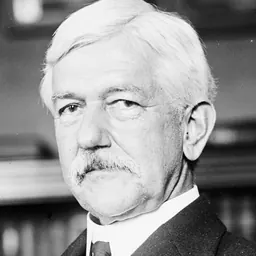



Related people
Same field, nearest in time


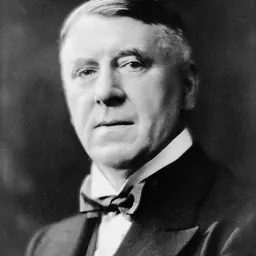

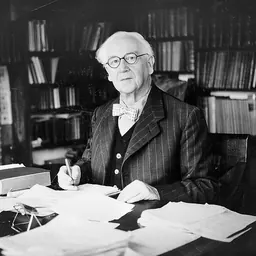
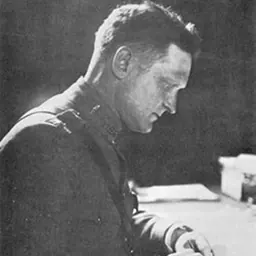
Contemporaries
People whose lives overlapped Seale Harris's



Frequently asked questions
Who was Seale Harris?
American physician
When was Seale Harris born?
Seale Harris was born on 13 March 1870 in Cedartown.
When did Seale Harris die?
Seale Harris died on 17 March 1957 in Birmingham.
What was Seale Harris's occupation?
Seale Harris was a military physician.
What was Seale Harris known for?
Seale Harris was known for Hyperinsulinism.
What nationality was Seale Harris?
Seale Harris was American.
Sources & further reading
Cite this page
APA: Biography.guide. (2026). Seale Harris. https://biography.guide/seale-harris/
MLA: "Seale Harris." Biography.guide, https://biography.guide/seale-harris/.
Chicago: "Seale Harris." Biography.guide. https://biography.guide/seale-harris/.
Data last updated: 2026-09-20 · Spot an error? Report a correction.
Page generated 2026-09-27 05:24 UTC