
About J. I. Wedgwood
Lived 1883 – 1951 (aged 67). J. I. Wedgwood was a British theologian and writer.
Biography
Early life and adulthood Wedgwood was born in London in 1883, the son of Alfred Allen Wedgwood, son of Hensleigh Wedgwood and Rosina Margaret Ingall. He was a descendant of Josiah Wedgwood, Master-Potter of Etruria. In 1894 he was sent to Windlesham House School, leaving for Brighton College in 1897.
He studied organ construction and became an organist at 14; before 18 was already an authority, writing many standard texts. He then studied at University College, Nottingham, with the intention of making a living as a chemist, but found himself attracted to High Anglican worship, becoming an altar server and later being sent to York Minster, where as choirmaster he trained boys in plainchant. As an Anglo-Catholic he became a member of the Confraternity of the Blessed Sacrament.
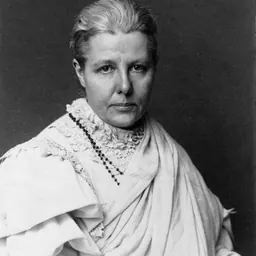
Theosophy and co-masonry In 1904 Wedgwood attended a lecture on Theosophy given by Annie Besant in York. Having heard her once previously in Nottingham, he determined to end his interest in Theosophy by attending a second lecture and ridding himself of "that woman". Three days later he joined the Theosophical Society and was forbidden to return to the church. Citing the local canon, he wrote: "The Vicar could not have such a heretic as a church official!".
Liberal Catholic Church
On his return to England, Wedgwood learned that one of the bishops of the church, Frederick Samuel Willoughby, had become enmeshed in a sexual misconduct scandal and as a result had been suspended by Archbishop Arnold Harris Mathew. Mathew wanted all the clergy of the church to renounce Theosophy as he had heard from a non-Theosophical priest that the beliefs of the society were incompatible.
Bishop Willoughby offered to consecrate Wedgwood to the episcopate in order to guard the apostolic succession as he had received it. Wedgwood, however, approached a number of other bishops seeking consecration. He wrote to the Old Catholic Archbishop of Utrecht, by whom Mathew had originally been consecrated, but received no reply. He then approached Bishop Frederick James, a fellow Theosophist and a number of other wandering bishops, but none would oblige. With no other options open, Wedgwood received from Willoughby, King and Gauntlett the apostolic succession on 13 February 1916. This took place only after Archbishop Mathew had dissolved the Old Roman Catholic Church and published a letter in The Times announcing his intention to join the Roman Catholic Church. thumb After his episcopal consecration, Wedgwood traveled to Australia and consecrated Charles Webster Leadbeater as a bishop. He also initiated Leadbeater into Freemasonry and Martinism. By 1917, seeds for the Liberal Catholic Church were established in the United States, and in 1919 there were four Liberal Catholic houses of worship. Leadbeater was appointed as his successor.
By 1924, with money running short, Wedgwood approached his old friend Annie Besant and through her influence again became involved with the church in Huizen, Netherlands, where he was offered a house and estate for his use. A small chapel was built and dedicated to Saint Michael and All Angels, where Wedgwood began to celebrate regular services. He also resumed his activities with the Theosophical Society, with increasingly frequent claimed visions and meetings with masters, angels, archangels and denizens of the higher realms.
Death and tributes Wedgwood died on 13 March 1951 in Farnham, Surrey, from a fall which broke several ribs and ruptured a lung. In the years before his death he continued to wander in and out of the dementia of tertiary syphilis, in the lucid periods devoting himself to the work of the centre at Huizen and to the establishment of a lesser centre at Tekels Park near Camberley, Surrey, in England, where he lived almost entirely from 1937 onwards. According to Tilet's account of Wedgwood, periods became less and less over the years and during his last months he had to be kept from any involvement in public activities, even from eating in the communal dining room, because of his unpredictable behaviour.
His death brought eulogies from his most devoted followers. Bishop Vreede wrote: His crucifixion is at an end ... In utter defencelessness and harmlessness and in utter humility he took upon himself the vicarious atonement for the bearers of the apostolic succession he brought over to the Liberal Catholic Church and by that sacrifice occultly founded the church and opened a possibility for the redemption of the Lord's Church at large.
Others remembered him differently. This is what Oscar Köllerström wrote in his tribute to Bishop Wedgwood (The Liberal Catholic, July 1951):
Don’t just read it —
keep it.
Full-length biographies made to live with: read them, listen on the way to work, watch them tonight.
- E-book
- Audio
- Video
Instant download · yours to keep · every purchase keeps this site free
Important facts
People in J. I. Wedgwood's life
Named in this biography and alive at the same time


Related people
Same field, nearest in time
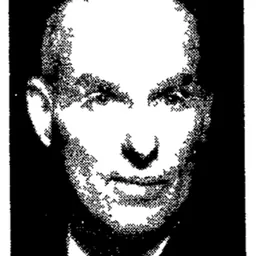
Contemporaries
People whose lives overlapped J. I. Wedgwood's


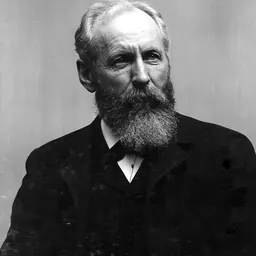

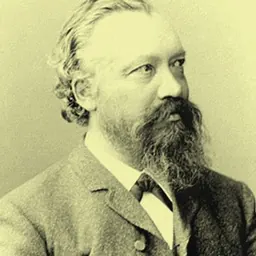
Frequently asked questions
Who was J. I. Wedgwood?
American bishop (1883-1851)
When was J. I. Wedgwood born?
J. I. Wedgwood was born on 24 March 1883 in London.
When did J. I. Wedgwood die?
J. I. Wedgwood died on 13 March 1951 in Farnham.
What was J. I. Wedgwood's occupation?
J. I. Wedgwood was a theologian and writer.
What nationality was J. I. Wedgwood?
J. I. Wedgwood was British.
Sources & further reading
Cite this page
APA: Biography.guide. (2026). J. I. Wedgwood. https://biography.guide/j-i-wedgwood/
MLA: "J. I. Wedgwood." Biography.guide, https://biography.guide/j-i-wedgwood/.
Chicago: "J. I. Wedgwood." Biography.guide. https://biography.guide/j-i-wedgwood/.
Data last updated: 2026-09-20 · Spot an error? Report a correction.
Page generated 2026-09-27 05:34 UTC