
Ivo Rojnica
Croatian fascist official
About Ivo Rojnica
Lived 1915 – 2007 (aged 92). Ivo Rojnica was an ustaše.
Ivo Rojnica (20 August 1915 – 1 December 2007) was a Croatian Ustaše official and intelligence agent who was active in the World War II Axis puppet state known as the Independent State of Croatia (NDH) from 1941 to 1945. After the war, he escaped to Argentina, where he reinvented himself as a businessman and diplomat.
Having joined the fascist, Croatian nationalist Ustaše movement in 1939, Rojnica was appointed as the commissioner of Dubrovnik shortly after the establishment of the NDH in April 1941. In this capacity, he oversaw the implementation of the Ustaše movement's repressive anti-Serb and anti-Semitic measures there. In June 1941, he issued a decree limiting the freedom of movement of Dubrovnik's Jewish and Serb inhabitants. At least 58 individuals were executed on Rojnica's orders between May and December 1941. Upon completing his tenure, he engaged in intelligence work for the rest of the war, and received a decoration from Ustaše leader Ante Pavelić. In May 1945, Rojnica fled to Italy, and was arrested by the British Army the following year. Fearing extradition to Yugoslavia, he feigned a mental breakdown and was transferred to a poorly guarded psychiatric hospital from which he escaped.
Rojnica emigrated to Argentina under a pseudonym in 1947 and was granted Argentine citizenship in 1951. Three years later, he petitioned to be recognized under a Hispanicized variant of his real name. Opening a textile factory, he distinguished himself as a successful businessman and an active member of the country's Croatian émigré community, co-founding several cultural societies and publications. In recognition of his charitable activities, he was awarded the Order of St. Gregory the Great by the Holy See. However, he was also suspected of financing several Croatian nationalist aircraft hijackings in the early to mid-1970s. A close associate and supporter of the President of Argentina, Carlos Menem, Rojnica was appointed as the Authorized Representative of the President of Croatia to Argentina and Latin America in 1991. During the Yugoslav Wars, he financed the smuggling of Argentine weaponry to Croatia in violation of a United Nations arms embargo. In February 1993, the Government of Croatia announced its intention to appoint him as the country's ambassador to Argentina. The move caused a public outcry and the Croatian government ultimately reversed its decision. Rojnica died in Buenos Aires in 2007, at the age of 92, having never been indicted or stood trial.
Early life Ivo Rojnica was born on 20 August 1915 in the village of Cista, near Imotski, in what was then Austria-Hungary and is now Croatia. He was the fourth of eleven children born to Stipan and Anđa Rojnica . In his youth, he relocated to the coastal town of Dubrovnik, where he completed his secondary education and subsequently opened a textile business. In 1939, he joined Ante Pavelić's fascist, Croatian nationalist Ustaše movement.
World War II Decree issued by Rojnica in June 1941 forbidding Dubrovnik's Jewish and Serb inhabitants from walking the streets and operating their businesses from 7:00 p.m. to 7:00 a.m. In the years leading up to the Axis invasion of Yugoslavia, Rojnica served as an agent of the Abwehr, Germany's military intelligence service, where he received the code name "Ante". Following the invasion and occupation of Yugoslavia, the Axis created a puppet state known as the Independent State of Croatia (NDH), which was placed under Ustaše rule, and which consisted of most of modern-day Croatia, all of modern-day Bosnia and Herzegovina, and parts of modern-day Serbia. On 18 May 1941, Italy and the NDH signed the Treaty of Rome, whereby the latter was given control of Dubrovnik in exchange for the cession of the rest of Dalmatia, which was integrated into the Italian state as the Governorate of Dalmatia. On 23 May 1941, Rojnica was appointed as the commissioner of Dubrovnik. The same day, local Ustaše launched a campaign of arrests, killings and expulsions targeting the movement's ideological opponents, such as members of the Communist Party of Yugoslavia. Serbs and Jews were also singled out for persecution, with the latter being forced to wear a yellow star around their arm, and to mark their properties with the Star of David.
Between 4 and 5 June 1941, the Dubrovnik Ustaše arrested the bank clerk Nikola Mašanović, the municipal treasurer Branko Hope, the merchant Branko Radonić and the journalist Jaša Miloslavić. The four men were then killed and their bodies were thrown into a river. The historian Nikola Anić argues that Rojnica was among those most responsible for these murders, given that he was Dubrovnik's most senior Ustaše official. Afterwards, Rojnica received the expropriated property of Blagoje Čorolija, the owner of a Dubrovnik delicatessen. On 25 June, Rojnica issued a decree ordering the confiscation of all radios in Dubrovnik and restricting the movement of the city's Jews and Serbs. It read as follows:
Over the course of several months, many of the Serbs and Jews who were not able to escape Dubrovnik were killed or deported to concentration camps such as Jasenovac. He was succeeded by Vlado Herceg, who had previously served as a warrant officer in the Poglavnik'''s Bodyguard Brigade , which was tasked with guarding Pavelić. For the rest of the war, Rojnica took part in intelligence gathering activities. In 1943, he was promoted to the rank of lieutenant in the Ustaše Militia. In the war's final months, Rojnica extorted refugees passing through Dubrovnik, forcing them to pay him exorbitant sums in return for safe passage.
Exile In May 1945, with the Yugoslav Partisans approaching Zagreb, Rojnica retreated to Austria with elements of the Croatian Armed Forces. His escape had been facilitated by the Ustaše functionary and Roman Catholic priest Krunoslav Draganović, one of the main organizers of the network of ratlines smuggling fascist war crimes suspects out of Europe. In August, his family was reunited with him, also disembarking from the Maria C. The family settled in Vicente López, a suburb of Buenos Aires, where Rojnica opened a textile factory called Pulloverfin. On 31 August 1951, he was granted Argentine citizenship under the false name he had used to enter the country, and on 20 December 1954, he successfully petitioned the government to legally change his name to Juan Rojnica. In 1969, he published the first volume of his three-volume memoir Meetings and Experiences . In his memoirs, he attempted to minimize the actions of the NDH by asserting that the Ustaše had no intention of exterminating the puppet state's Serb population, that no more than 250,000 Serbs had been expelled and that no more than 450 Serbs had been forcibly converted to Roman Catholicism. Most historians agree that around 300,000 Serbs were killed by the Ustaše between 1941 and 1945, or about 17 percent of the NDH's Serb population. According to the scholar Sabrina P. Ramet, by 1943, 120,000 Serbs were deported to German-occupied Serbia and a further 300,000 were forced to flee the NDH. Additionally, from 1941 to 1942, between 97,000 and 300,000 Serbs were subjected to forced conversion. Referring to anti-Semitic atrocities, Rojnica stated that "Croats are not guilty for the fate of the Jews," and maintained that the Germans were solely responsible for The Holocaust in Croatia.
Rojnica was suspected of financing several Croatian nationalist aircraft hijackings that took place in the United States and Europe in the early to mid-1970s. News of Rojnica's appointment and the allegations against him were soon widely reported in the Argentine press, prompting numerous complaints and protests. Rojnica himself was unapologetic, telling the Feral Tribune, "everything I did in 1941 I would do again." In 1996, he was granted an audience with the mayor of Dubrovnik, Ivo Obuljen.
Later years and death In March 1997, Menem acceded to a request from the Simon Wiesenthal Center to hand over the bank records of 334 Nazi officials and their wives and mistresses who had fled to Argentina after the war; Rojnica's name was absent from the files. In 1998, the Simon Wiesenthal Center requested that he be indicted, extradited and tried, but received no response from the Argentine authorities. The Argentine press attributed Rojnica's apparent immunity to the sizeable financial contributions former Ustaše members had made to Menem's electoral campaigns.
In 2001, the director of the Simon Wiesenthal Center's Jerusalem office, Efraim Zuroff, listed Rojnica among eight "major Nazi war criminals" still at large. The following year, Rojnica published a book titled Witness to Truth and Justice'' . The following year, he criticized the Serbian authorities for failing to issue arrest warrants for Rojnica and two other Axis war crimes suspects—the Croatian Milivoj Ašner and the Hungarian Sándor Képíró. Rojnica died in Buenos Aires on 1 December 2007, at the age of 92. The following day, he was buried at a local cemetery, El Jardin de la Paz. In response to the news, Alen Budaj, a representative of a Croatian Jewish organization, expressed indignation that Rojnica had never been indicted or stood trial.
Rojnica's grandson, Ivo Esteban Rojnica, was one of Argentina's most successful black market currency traders until his arrest by the Argentine authorities in October 2023 on suspicion of laundering drug money for the Sinaloa Cartel.
Footnotes
Don’t just read it —
keep it.
Full-length biographies made to live with: read them, listen on the way to work, watch them tonight.
- E-book
- Audio
- Video
Instant download · yours to keep · every purchase keeps this site free
Important facts
People in Ivo Rojnica's life
Named in this biography and alive at the same time

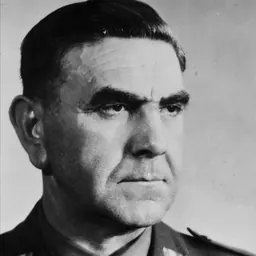
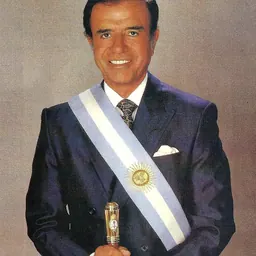


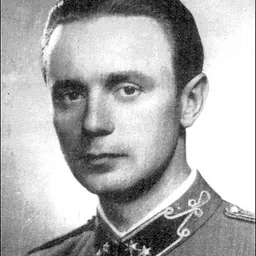

Contemporaries
People whose lives overlapped Ivo Rojnica's






Frequently asked questions
Who was Ivo Rojnica?
Croatian fascist official
When was Ivo Rojnica born?
Ivo Rojnica was born on 20 August 1915.
When did Ivo Rojnica die?
Ivo Rojnica died on 1 December 2007.
What was Ivo Rojnica's occupation?
Ivo Rojnica was an ustaše.
Sources & further reading
Cite this page
APA: Biography.guide. (2026). Ivo Rojnica. https://biography.guide/ivo-rojnica/
MLA: "Ivo Rojnica." Biography.guide, https://biography.guide/ivo-rojnica/.
Chicago: "Ivo Rojnica." Biography.guide. https://biography.guide/ivo-rojnica/.
Data last updated: 2026-09-20 · Spot an error? Report a correction.
Page generated 2026-09-27 05:17 UTC