
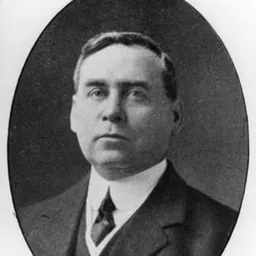
Krunoslav Draganović
Croatian Roman Catholic priest
About Krunoslav Draganović
Lived 1903 – 1982 (aged 78). Krunoslav Draganović was a Croatian philosopher, catholic priest, catholic theologian, church historian and pontifical Croatian College of St. Jerome.
Krunoslav Stjepan Draganović (30 October 1903 – 5 July 1983) was a Bosnian Croat Catholic priest associated with the ratlines which aided the escape of Ustaše war criminals from Europe after World War II while he was living and working at the College of St. Jerome in Rome. He was an Ustaša and a functionary in the fascist puppet state called the Independent State of Croatia.
Early life Draganović was born in the village of Matići near Orašje, in Bosnia and Herzegovina under Austro-Hungarian rule. He attended secondary school in Travnik and studied theology and philosophy in Sarajevo. Draganović was ordained a priest on 1 July 1928.
From 1932 to 1935, he studied at the Pontifical Oriental Institute and Gregorian University in Rome. In 1937, his German language doctoral dissertation, titled Massenübertritte von Katholiken zur Orthodoxie im kroatischen Sprachgebiet zur Zeit der Türkenherrschaft (Mass conversions of Catholics to Orthodoxy in the Croatian-speaking area during the Turkish rule) was published.
In 1935, he returned to Bosnia, initially as secretary to Archbishop Ivan Šarić.
World War II and Ratlines Draganović was an Ustaše lieutenant-colonel and the vice chief of the Bureau of Colonization. He oversaw confiscation of Serb property in Bosnia and Herzegovina.
Ante Pavelić hid for two years, from 1945 to 1948, in Italy under the protection of Draganović and the Vatican, before surfacing in Buenos Aires in Argentina.
Through his ratline, with assistance from the U.S. Counterintelligence Corps (CIC), Draganović played a major role in helping notorious Nazi war criminals like Klaus Barbie flee from Europe. The two maintained a friendly relationship. Austrian sociologist Klaus Taschwer has emphasized the collaboration of Draganović and Austrian Bishop Alois Hudal as instrumental in aiding the escape of Nazis to Juan Peron's Argentina.
Draganović was accused of laundering the Ustaše's treasure of jewellery and other items stolen from war victims in Croatia. In 2002, declassified CIA documents revealed that Draganović worked as a spy for the CIA from 1959 to 1962 for the purpose of gathering intelligence on the Communist but non-aligned regime of Yugoslavia, at the time headed by Tito. His employment with the CIA was eventually terminated as he was considered to be unreliable. According to the CIA, Draganović was "not amenable to control, too knowledgeable of unit personnel and activity, demanded outrageous monetary tribute and U.S. support of Croat organizations as partial payment for cooperation."
In 1945, Draganović printed his Mali hrvatski kalendar za godinu 1945 (Small Croatian Calendar for the year 1945) in Rome for Croatian emigrants.
He maintained regular contacts with the former NDH leader Ante Pavelić, who was in hiding.
Return to Yugoslavia Some mystery surrounds Draganović's later defection to Yugoslavia. After World War II, he lived in Italy and Austria gathering evidence of communist crimes committed in Yugoslavia. He was wanted by Yugoslavia's Department of State Security (UDBA).
On 10 November 1967, the Yugoslavian state attorney declared that Draganović was in Sarajevo—as a free man, as Yugoslav authorities reportedly sought information from Draganović in exchange for granting him freedom. He was supposed to "tell-all", name his colleagues and like-minded people, hand his archive over to Tito's agents, make some positive remarks about Communist Yugoslavia and in return, Belgrade would waive judicial condemnation and imprisonment. Draganović died in Sarajevo on 5 July 1983.
Works Izvješće fra Tome Ivkovića, biskupa skradinskog, iz godine 1630. (1933) Izvješće apostolskog vizitatora Petra Masarechija o prilikama katoličkog naroda u Bugarskoj, Srbiji, Srijemu, Slavoniji i Bosni g. 1623. i 1624. (1937) Opći šematizam Katoličke crkve u Jugoslaviji, en: General schematism of the Catholic Church in Yugoslavia (1939) Hrvati i Herceg-Bosna (1940) Hrvatske biskupije. Sadašnjost kroz prizmu prošlosti (1943) Katalog katoličkih župa u BH u XVII. vijeku (1944) Povijest Crkve u Hrvatskoj (1944) Opći šematizam Katoličke crkve u Jugoslaviji, Cerkev v Jugoslaviji 1974, en: General schematism of the Catholic Church in Yugoslavia, The Church in Yugoslavia 1974 (1975) Katarina Kosača – Bosanska kraljica (1978) Komušina i Kondžilo (1981) Masovni prijelazi katolika na pravoslavlje hrvatskog govornog područja u vrijeme vladavine Turaka (1991)
Don’t just read it —
keep it.
Full-length biographies made to live with: read them, listen on the way to work, watch them tonight.
- E-book
- Audio
- Video
Instant download · yours to keep · every purchase keeps this site free
Important facts
People in Krunoslav Draganović's life
Named in this biography and alive at the same time
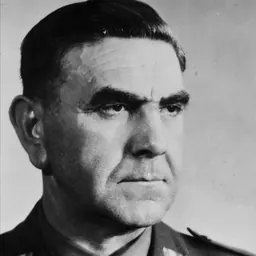




Related people
Same field, nearest in time

Contemporaries
People whose lives overlapped Krunoslav Draganović's
Frequently asked questions
Who was Krunoslav Draganović?
Croatian Roman Catholic priest (1903–1982)
When was Krunoslav Draganović born?
Krunoslav Draganović was born on 30 October 1903 in Brčko.
When did Krunoslav Draganović die?
Krunoslav Draganović died on 14 June 1982 in Sarajevo.
What was Krunoslav Draganović's occupation?
Krunoslav Draganović was a philosopher, catholic priest, catholic theologian, church historian and pontifical Croatian College of St. Jerome.
What nationality was Krunoslav Draganović?
Krunoslav Draganović was Croatian.
Sources & further reading
· Wikipedia: Krunoslav Draganović
· DBpedia: Krunoslav Draganović
Cite this page
APA: Biography.guide. (2026). Krunoslav Draganović. https://biography.guide/krunoslav-draganovic/
MLA: "Krunoslav Draganović." Biography.guide, https://biography.guide/krunoslav-draganovic/.
Chicago: "Krunoslav Draganović." Biography.guide. https://biography.guide/krunoslav-draganovic/.
Data last updated: 2026-09-22 · Spot an error? Report a correction.
Page generated 2026-09-27 05:30 UTC