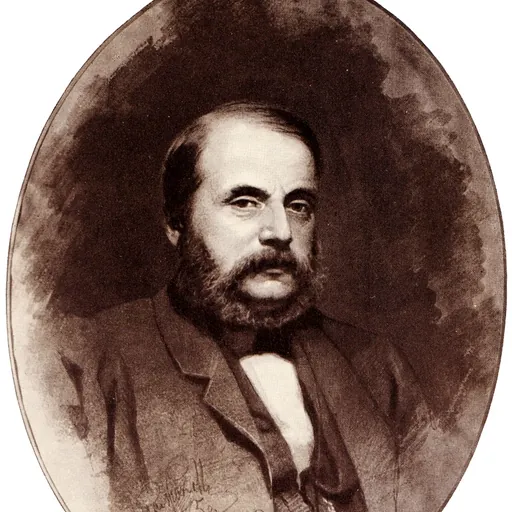
About Ivan Goncharov
Lived 1812 – 1891 (aged 79). Ivan Goncharov was a Russian linguist, writer, novelist, translator, essayist and literary critic.
Ivan Aleksandrovich Goncharov ( , ; , ; – ) was a Russian novelist best known for his novels The Same Old Story (1847, also translated as A Common Story), Oblomov, and The Precipice (1869, also translated as Malinovka Heights). He also served in many official capacities, including the position of censor.
Goncharov was born in Simbirsk into the family of a wealthy merchant; as a reward for his grandfather's military service, they were elevated to Russian nobility status. He was educated at a boarding school, then the Moscow College of Commerce, and finally at Moscow State University. After graduating, he served for a short time in the office of the Governor of Simbirsk, before moving to Saint Petersburg where he worked as government translator and private tutor, while publishing poetry and fiction in private almanacs. Goncharov's first novel, The Same Old Story, was published in Sovremennik in 1847.
Goncharov's second and best-known novel, Oblomov, was published in 1859 in Otechestvennye zapiski. His third and final novel, The Precipice, was published in Vestnik Evropy in 1869. He also worked as a literary and theatre critic. Towards the end of his life Goncharov wrote a memoir called An Uncommon Story, in which he accused his literary rivals, first and foremost Ivan Turgenev, of having plagiarized his works and prevented him from achieving European fame. The memoir was published in 1924. Fyodor Dostoevsky, among others, considered Goncharov an author of high stature. Anton Chekhov is quoted as stating that Goncharov was "...ten heads above me in talent."
Biography Early life Goncharov was born on 6 June 1812 (O.S.) in Simbirsk (now Ulyanovsk). His father, Aleksander Ivanovich Goncharov, was a wealthy grain merchant and a state official who served several terms as mayor of Simbirsk. The family's big stone manor in the town center occupied a large area and had all the characteristics of a rural manor, with huge barns (packed with wheat and flour) and numerous stables. Alexander Ivanovich died when Ivan was seven years old. He was educated first by his mother, Avdotya Matveevna, and then his godfather Nikolay Nikolayevich Tregubov, a nobleman and a former Russian Navy officer. With Tregubov around, Goncharov's mother could focus on domestic affairs. "His servants, cabmen, the whole household merged with ours; it was a single family. All the practical issues were now mother's, and she proved to be an excellent housewife; all the official duties were his," Ivan Goncharov remembered. Unlike Alexander Herzen, Vissarion Belinsky or Nikolay Ogaryov, his fellow Moscow University students, Goncharov remained indifferent to the ideas of political and social change that were gaining popularity at the time. Reading and translating were his main occupations. In 1832, the Telescope magazine published two chapters of Eugène Sue's novel Atar-Gull (1831), translated by Goncharov. This was his debut publication. The novel itself, though, appeared only ten years later, preceded by some extraordinary events in Goncharov's life. Turgenev, who fell out with Goncharov after the latter accused him of plagiarism (specifically of having used some of the characters and situations from The Precipice, whose plan Goncharov had disclosed to him in 1855, in Home of the Gentry and On the Eve), nevertheless declared: "As long as there is even one Russian alive, Oblomov will be remembered!"
The Precipice
A moderate conservative at heart, Goncharov greeted the emancipation reform of 1861, embraced the well-publicized notion of the government's readiness to "be at the helm of [social] progress", and found himself in opposition to the revolutionary democrats. In the summer of 1862 he became an editor of Severnaya Potchta (The Northern Post), an official newspaper of the Interior Ministry, and a year later returned to the censorship committee. The controversial character Mark Volokhov, as leftist critics saw it, had been concocted to condemn 'nihilism' again, thus making the whole novel 'tendentious'. Yet, as Vladimir Korolenko later wrote, "Volokhov and all things related to him will be forgotten, as Gogol's Correspondence has been forgotten, while Goncharov's huge characters will remain in history, towering over all of those spiteful disputes of old." while others praised it as an eye-opening, if controversial piece of writing. It was not published until 1924.
Goncharov, who never married, spent his last days absorbed in lonely and bitter recriminations because of the negative criticism some of his work had received. He died in Saint Petersburg on 27 September 1891, of pneumonia. He was buried at the Novoye Nikolskoe Cemetery of the Alexander Nevsky Lavra. In 1956 his ashes were moved to the Volkovo Cemetery in Leningrad.
Selected bibliography Nimfodora Ivanovna (1836) – unpublished novella "The Galloping Disease/A Cruel Illness" (1838) – short story "A Happy Error" (1839) – short story Ivan Savich Podzhabrin (1848) The Same Old Story (Обыкновенная история, 1847) Letters from a Friend in the Capital to a Bridegroom in the Provinces (1848) Frigate "Pallada" (Фрегат "Паллада", 1858) "Oblomov's Dream. An Episode from an Unfinished Novel", short story, later Chapter 9 in the 1859 novel as "Oblomov's Dream" ("Сон Обломова", 1849) Oblomov (1859) The Precipice (Обрыв, 1869)
Don’t just read it —
keep it.
Full-length biographies made to live with: read them, listen on the way to work, watch them tonight.
- E-book
- Audio
- Video
Instant download · yours to keep · every purchase keeps this site free
Important facts
People in Ivan Goncharov's life
Named in this biography and alive at the same time
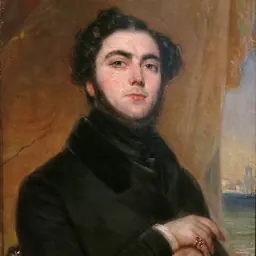

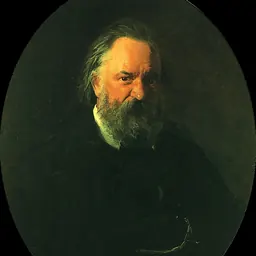
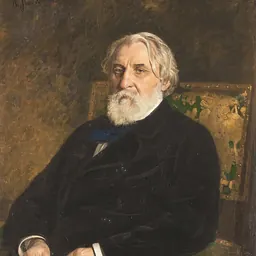
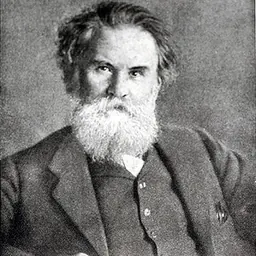

Related people
Same field, nearest in time
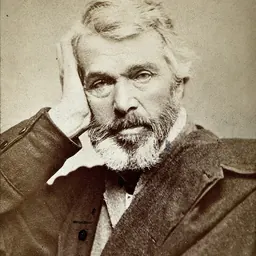

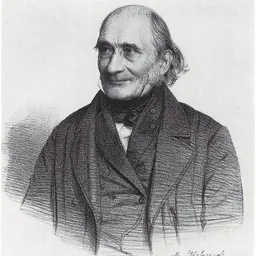
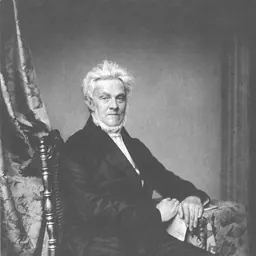
Contemporaries
People whose lives overlapped Ivan Goncharov's




Frequently asked questions
Who was Ivan Goncharov?
Russian novelist and official (1812–1891)
When was Ivan Goncharov born?
Ivan Goncharov was born on 6 June 1812 in Ulyanovsk.
When did Ivan Goncharov die?
Ivan Goncharov died on 15 September 1891 in Saint Petersburg.
What was Ivan Goncharov's occupation?
Ivan Goncharov was a linguist, writer, novelist, translator, essayist and literary critic.
What nationality was Ivan Goncharov?
Ivan Goncharov was Russian.
Sources & further reading
Cite this page
APA: Biography.guide. (2026). Ivan Goncharov. https://biography.guide/ivan-goncharov/
MLA: "Ivan Goncharov." Biography.guide, https://biography.guide/ivan-goncharov/.
Chicago: "Ivan Goncharov." Biography.guide. https://biography.guide/ivan-goncharov/.
Data last updated: 2026-09-22 · Spot an error? Report a correction.
Portrait: Wikimedia Commons · author & licence
Page generated 2026-09-27 05:03 UTC