
About Ivan Fichev
Lived 1860 – 1931 (aged 71). Ivan Fichev was a Bulgarian diplomat, military personnel, journalist, military officer and historian.
Ivan Ivanov Fichev (, born 15 April 1860 – 18 November 1931) was a Bulgarian general, Minister of Defense, military historian and academician.
Biography
Ivan Fichev was born in 1860 in Tırnova in the Ottoman Empire (now Veliko Tarnovo, Bulgaria). He was a grandson of the famous architect from the National Revival, Kolyu Ficheto. Fichev studied in Veliko Tarnovo, Gabrovo and in Robert College in Istanbul.
During the Russo-Turkish War (1877–1878) he participated in the Bulgarian volunteer corps and later served as translator for the temporary Russian governors in Gabrovo and Tarnovo. In 1880 he was accepted in the Military School in Sofia and graduated in 1882 with the rank of lieutenant and was assigned to serve in the 20th Varna infantry battalion. In August 1885 he was promoted to First Lieutenant.
Serbo-Bulgarian War During the Serbo-Bulgarian War in 1885 he was a commander of 2nd Company in the 5th Danube Regiment and participated in the defense of Vidin between 12 and 16 November.
1886–1911 In January 1887 he was promoted to the rank of Captain and in 1898 graduated the Military Academy in Turin, Italy. On 1 January 1892 he was promoted a Major and on 1 January 1903 a Colonel. From the beginning of 1907 he was appointed a commander of the Second Thracian Infantry Division based in Plovdiv and on 1 January 1908 Ivan Fichev was promoted a Major General.
In May 1910, Ivan Fichev was appointed Chief of the General Staff of the Bulgarian Army. Over the next two years, he focused on improving the army’s organization, training and overall readiness for a possible future conflict with the Ottoman Empire. He placed particular emphasis on the preparation of senior officers, and under his direction large-scale maneuvers involving the 3rd Balkan and 8th Tundzha Infantry Divisions were held in 1910. These were followed by fortress exercises near Shumen in 1911. Fichev also supported the development of higher military education and proposed the creation of a military academy and a center for advanced military studies. The General Staff also worked to address shortages in weapons and equipment, particularly in heavy artillery, while improving mobilization procedures, wartime headquarters and the military use of the railway network. More systematic information was also gathered on Bulgaria’s population and economic resources that could be used in wartime.
A major part of Fichev’s work involved revising Bulgaria’s existing plans for a war with the Ottoman Empire. Earlier operational plans had been drawn up in 1903, 1904 and 1908, and Fichev himself had taken part in preparing the 1903 plan while serving in the General Staff’s operations department. After becoming Chief of the General Staff, he ordered these plans to be reviewed. Together with other officers, he inspected the southern frontier, studied the terrain and considered the likely deployment of Ottoman forces. The resulting ideas were then tested through staff exercises and field maneuvers. The new operational concept was developed in two variants, known as Plan A and Plan A bis. It was based on offensive action, rapid concentration of forces and surprise. Fichev believed that a long war would favor the Ottoman Empire because of its greater manpower and resources, and therefore argued that Bulgaria should attempt to gain the initiative before Ottoman mobilization was complete. The main Bulgarian effort was to be concentrated in Eastern Thrace, while the concealed deployment of the Third Army was intended to help achieve surprise against the Ottoman forces.
The creation of the Balkan League in 1912 forced the Bulgarian General Staff to modify its plans. Even so, Thrace remained the main theater of operations for the Bulgarian Army, while a smaller force was assigned to Macedonia. The allies did not establish a unified supreme command, and Bulgaria, Serbia, Greece and Montenegro largely conducted their campaigns independently.
Balkan Wars Following Bulgaria’s general mobilization on 30 September 1912, Fichev became Chief of Staff of the Active Army. Tsar Ferdinand I served as commander-in-chief, while General Mihail Savov was appointed assistant commander-in-chief. This command structure soon created tensions, as both Ferdinand and Savov became closely involved in operational decisions that Fichev regarded as the responsibility of the General Staff.
The first phase of the war brought major Bulgarian victories at Kirk Kilisse and Lule Burgas–Bunarhisar, forcing the Ottoman army to retreat toward the fortified Çatalca line outside Constantinople. When the Ottoman government requested an armistice, Fichev favored ending the campaign while Bulgaria was still in a strong military position. Savov initially supported the same approach, but Ferdinand preferred to continue the advance toward Constantinople. Fichev opposed an immediate attack on Çatalca. On 14 November 1912, he warned Ferdinand that the Bulgarian forces were exhausted, had not yet been fully concentrated and were suffering from a serious cholera epidemic. He did not rule out an attack altogether, but argued that the army needed more time to prepare. A commission headed by Savov was later sent to the front to assess the situation. Despite these concerns, Savov decided to order the Bulgarian attack began on 17 November 1912. The army failed to break through the Ottoman defenses and suffered heavy losses. The defeat deepened the disagreements within the high command and weakened Fichev’s influence, although he remained Chief of Staff of the Army.
During the armistice concluded on 3 December 1912, Fichev increasingly supported bringing the war to an end through negotiation. When peace talks failed, hostilities resumed in January 1913, and Bulgarian forces later captured Adrianople. By that stage, however, tensions with Serbia and Greece over Macedonia were becoming increasingly serious.
Fichev opposed the prospect of another war, this time against Bulgaria’s former allies. In May 1913, he tried to persuade Ferdinand and leading political figures to seek a diplomatic settlement. He proposed that Bulgaria avoid military action against its allies, stop further troop movements toward Macedonia, keep its forces there on the defensive and submit the dispute to arbitration by the Russian emperor. As relations with Serbia and Greece deteriorated, Fichev’s disagreements with Savov and Ferdinand became more pronounced. On 12 June 1913, he submitted his resignation as Chief of Staff of the Army. The resignation was not formally accepted, and he was instead granted sick leave. Reports by the Austro-Hungarian military attaché in Sofia also recorded Fichev’s opposition to a new Balkan war and his belief that Bulgaria would have to reconsider its foreign policy if the conflict could not be avoided.
Latter life After the Balkan Wars he continued to serve as Chief of the General Staff of the Army. On 1 January 1914 he was promoted a Lieutenant General and two weeks later was appointed commander of the 3rd Military District. On 14 September that year he was appointed a Minister of War and served as such until August 1915 when he went into the reserve. After the First World War he was a Minister Plenipotentiary in the Romanian capital Bucharest.
On 14 February 1915, his daughter was a victim of a bombing attack in Sofia.
Ivan Fichev died on 13 November 1931 in Sofia.
Awards Order of Bravery, II grade; Order of St Alexander, II grade without swords, III grade and V grade Order of Military Merit, I grade and III grade Order of Stara Planina, 1st grade with swords - awarded posthumously on 20 December 2012 French Légion d'honneur, IV grade Italian Order of the Crown of Italy, II grade Romanian Order of the Star of Romania, III grade Persian Order of the Lion and the Sun, II grade
Don’t just read it —
keep it.
Full-length biographies made to live with: read them, listen on the way to work, watch them tonight.
- E-book
- Audio
- Video
Instant download · yours to keep · every purchase keeps this site free
Important facts
People in Ivan Fichev's life
Named in this biography and alive at the same time

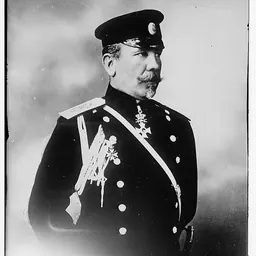

Related people
Same field, nearest in time
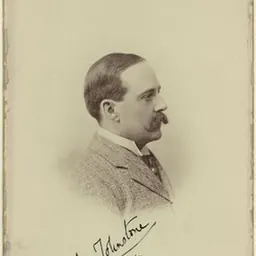

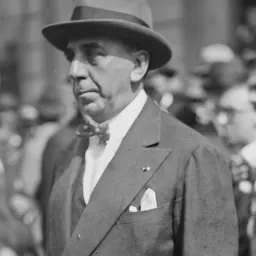
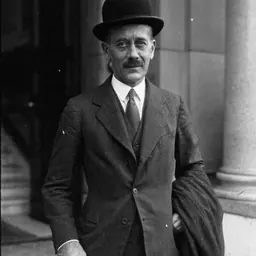
Contemporaries
People whose lives overlapped Ivan Fichev's



Frequently asked questions
Who was Ivan Fichev?
Bulgarian politician and general (1860–1931)
When was Ivan Fichev born?
Ivan Fichev was born on 15 April 1860 in Veliko Tarnovo.
When did Ivan Fichev die?
Ivan Fichev died on 18 November 1931 in Sofia.
What was Ivan Fichev's occupation?
Ivan Fichev was a diplomat, military personnel, journalist, military officer and historian.
What nationality was Ivan Fichev?
Ivan Fichev was Bulgarian.
Sources & further reading
Cite this page
APA: Biography.guide. (2026). Ivan Fichev. https://biography.guide/ivan-fichev/
MLA: "Ivan Fichev." Biography.guide, https://biography.guide/ivan-fichev/.
Chicago: "Ivan Fichev." Biography.guide. https://biography.guide/ivan-fichev/.
Data last updated: 2026-09-25 · Spot an error? Report a correction.
Page generated 2026-09-27 05:12 UTC