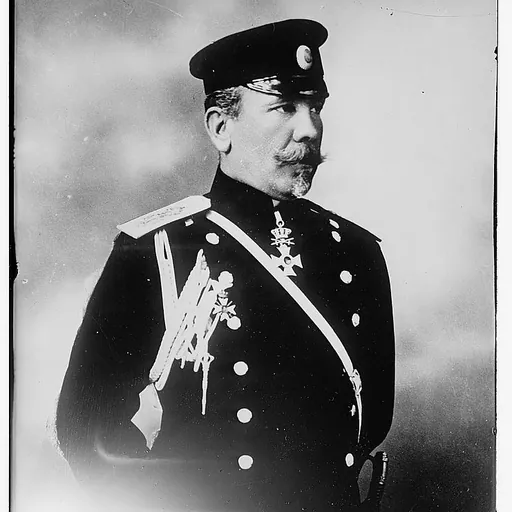
About Mihail Savov
Lived 1857 – 1928 (aged 70). Mihail Savov was a Bulgarian military personnel, diplomat and military officer.
Mihail Georgiev Savov (14 November 1857 in Stara Zagora - 21 July 1928 in Saint-Vallier-de-Thiey, France) was a Bulgarian general, twice Minister of Defence (1891–1894 and 1903–1907), second in command of the Bulgarian army during the Balkan Wars.
He was twice dismissed from the army and twice reassigned with the help of Tsar Ferdinand. Mihail Savov and Ferdinand are considered the main characters responsible for the Second Balkan War.
Early life and career Mihail Savov was born on 14 November (26 November NS) 1859 in Eski Zagra (Stara Zagora), at that time under Ottoman rule. He studied in Hasköy (Haskovo), Filibe (Plovdiv), in the Aprilov National High School in Gabrovo and then in the Imperial lyceum Galatasaray in Istanbul (1876).
He graduated the Military School in Sofia in 1879 as lieutenant. On 9 July 1881 he was promoted to first lieutenant and then continued his education in the Nicolas General Staff Academy in Saint Petersburg (1881–1885).
After his return to Bulgaria, he was appointed in the Eastern Rumelia militia. On 9 September 1885 he was promoted to captain and with Order №4 of Knyaz Alexander Batenberg in the same day he was appointed for adjutant in the army.
Serbo-Bulgarian War During the Serbo-Bulgarian War in 1885 he was appointed as head of one of the departments of the Ministry of Defence and commanded the left flank during the battle of Slivnitsa. He had contributions for the defeat of the Serbian Morava Division and the successful battle of Pirot. He was awarded with Order of Bravery III grade.
Career until the Balkan Wars In 1886, he participated in the commission for the settlement of the Bulgarian-Ottoman border in the Rhodope Mountains and served in the headquarters of the Minister of Defence.
During the mobilization of the Bulgarian Army in September 1912, Ferdinand I considered placing Savov in command of the forces in the field. Generals Nikiforov and Fichev opposed the idea and preferred that Ferdinand himself formally take the position of commander-in-chief, assisted by a council of senior generals. Savov was also cautious about accepting the post. He warned Ferdinand that dividing authority between several senior commanders could create confusion and interfere with military operations. He therefore insisted that, if he was to take part in the supreme command, his powers and responsibilities should first be clearly defined.
Although Fichev had reservations about Savov's character and his tendency to act independently, he still regarded him as a capable and experienced officer. Savov had considerable prestige within the army, and his confidence and energetic manner stood in contrast to Fichev's more cautious approach. Fichev, however, feared that having two strong personalities at the top of the command structure could lead to disagreements. According to the account, one possible arrangement was to have Savov as commander-in-chief with General Radko Dimitriev serving as his chief of staff.
On 22 September 1912 Ferdinand issued a decree creating the Main Headquarters of the Active Army and formally assumed the position of commander-in-chief. Savov was appointed his assistant, while Fichev became chief of staff. Savov's return to a leading military position was welcomed in parts of the army, where he was seen as a confident and energetic commander. Ferdinand himself appears to have been impressed by Savov's belief that Bulgaria was capable of successfully fighting the coming war under the existing political and military conditions. Savov's exact position within the high command, however, was not clearly defined. As assistant to the commander-in-chief, he was directly subordinate to Ferdinand, while the relationship between the monarch, the government and the Main Headquarters remained constitutionally unclear.
First Balkan War Battle of Lozengrad During the opening operations in Eastern Thrace, Savov's outlook increasingly differed from the much more cautious position taken by Chief of Staff Ivan Fichev. Fichev was concerned about the possibility of an Ottoman counter-offensive and considered defensive alternatives in case the Bulgarian advance failed. He also believed that diplomatic intervention by the Great Powers might eventually be necessary to bring the war to an end. Savov, on the other hand, remained confident in the Bulgarian army's ability to continue the offensive. The disagreement became particularly visible during the operations around Lozengrad. On 9 October 1912 Stoyan Danev approached Ferdinand after being told that Fichev feared the fighting around Lozengrad could develop into another prolonged siege similar to Pleven and that outside diplomatic intervention might be necessary. Ferdinand reacted angrily to the suggestion. Savov intervened in the discussion and attempted to reassure Danev, telling him not to be influenced by overly theoretical assessments and confidently predicting that Lozengrad would fall the following day. The subsequent Bulgarian success confirmed Savov's prediction. The incident also contributed to the growing tension between Ferdinand and Fichev. Ferdinand discussed his dissatisfaction with the chief of staff directly with Savov and blamed Fichev's pessimistic assessments for spreading uncertainty among the political and military leadership.
Advance towards Constantinople After the Bulgarian victory at Lule Burgas, Savov initially supported the possibility of bringing the war to an end through diplomatic mediation. At a meeting of the Council of Ministers on 22 October 1912, the government discussed the military situation and the Ottoman request for intervention by the Great Powers. Savov was also inclined towards mediation and helped persuade Ferdinand to consider such a course.
His position soon changed as the Bulgarian armies continued their advance toward Chatalja. On 25 October Ferdinand, increasingly focused on the possibility of reaching Constantinople, ordered Savov by telephone to continue the advance without interruption towards the Chatalja defensive line. Savov himself had by then become skeptical of proposals for an armistice. He suspected that Prime Minister Ivan Geshov's efforts in favor of peace were influenced by Russia and argued that an armistice at that stage would be harmful to Bulgarian interests. Savov also sought information directly from the field armies about their ability to continue the offensive. When he asked Radko Dimitriev, the commander of the Third Army, about the morale of his troops, the reply was that it could hardly be better. On 28 October Savov sent an Inquiry to the armies concerning their strength, morale, ammunition and food supplies. The responses indicated that they were considered capable of continuing the advance, reinforcing the decision to press toward Chatalja.
Together with Ferdinand, Savov continued to favor a rapid pursuit of the retreating Ottoman forces, as they were eager to maintain the momentum of the victories in Eastern Thrace, despite the fact that the Bulgarian armies faced increasingly serious logistical difficulties, including long supply lines, poor roads and shortages of food and transport.
As the Bulgarian armies approached Chatalja, Savov took a more cautious position than Ferdinand on the question of diplomacy. On 28 October Ferdinand, frustrated by the lack of information reaching him in his headquarters at Yambol, telegraphed Savov and asked for an assessment of the situation at the front. Savov reported that the armies were expected to reach a point about 15 kilometers from the Chatalja position the following day. At the same time, he argued that an attack on the fortified line should be undertaken only if the Ottoman government had not acknowledged defeat and sought an armistice on terms acceptable to Bulgaria. He and Fichev favored allowing diplomatic contacts to proceed without stopping the movement of the armies, after which the military leadership could decide how to continue the operations.
Preparations for a possible attack nevertheless continued. On 30 October the armies were ordered to strengthen the positions they had occupied and use them as a base for an eventual assault on Chatalja. Savov informed Ferdinand that the troops were consolidating their positions in preparation for an attack, although at this stage it had not yet been finally decided whether one would take place. As negotiations over a possible armistice developed, Savov wanted to know the Ottoman terms before committing himself fully to further fighting. He reasoned that these terms would make it possible to judge whether a victory at Chatalja could bring Bulgaria greater advantages. On 1 November he argued that the Great Powers should not simply be rejected and that the Ottoman conditions should first be obtained. In his view, the conclusion of an armistice was primarily a military question, while the terms of a peace settlement belonged to the government.
Savov and Fichev initially agreed that the attack should not be rushed. On the morning of 1 November, after considering the arguments for and against an immediate assault, they concluded that the armies first needed to be properly coordinated and prepared. The rapidly spreading cholera epidemic, however, made a prolonged delay increasingly dangerous. Savov accepted that an attack might become necessary, but did not want military preparations to prevent the government from continuing diplomatic negotiations. He was sent to the front to examine the condition of the troops, consult the commanders of the armies and report their views before a final decision was made. Savov interpreted the authority given to him more broadly, as allowing him to order the attack if he considered the circumstances favorable. On 2 November Savov obtained Ferdinand's personal authorization to order the attack after consulting the senior commanders, provided that he found the operation practicable. Accompanied by Colonels Stefan Nerezov and Naydenov, he left for the headquarters of the United Armies near Cherkezovo. There he discussed the readiness of the troops with Generals Radko Dimitriev and Vasil Kutinchev, as well as questions concerning the supply of the Third Army.
The following day Savov held a council at the headquarters of the Third Army at Ermenikoy. Radko Dimitriev argued that the condition of the troops made a slow, methodical attack increasingly impractical. Cholera had spread widely through the army, supplies were becoming more difficult to maintain, and Ottoman reinforcements continued to arrive from Asia. He therefore presented two alternatives: either suspend operations and make use of the Ottoman willingness to negotiate, or attack immediately while the Bulgarian armies still retained the initiative. Savov favored the second course. He believed that the Ottoman request for an armistice was intended mainly to gain time and doubted that the Ottoman government would voluntarily surrender Thrace, Macedonia, Adrianople or Salonica. In his view, if negotiations continued for another week or two and then failed, Bulgaria would have to resume the war under considerably less favorable conditions.
Savov argued that the assault should be made while the Bulgarian armies still had a reasonable prospect of success. He urged the senior officers to consider the responsibility they bore for the decision and stated that he was prepared to accept personal responsibility for ordering the attack. He maintained that an armistice should be considered only if the assault failed.
Following the council, Savov instructed colonel Nerezov to prepare Directive No. 18, which ordered the United First and Third Armies to begin their offensive against the Chatalja position on the morning of 4 November. He then reported to Ferdinand that, despite the cholera epidemic and supply shortages, the morale of the troops remained high and that the commanders at the front supported continuing the operation. Dimitriev asked Savov to assume direct command of the United Armies for the battle, but Savov declined, explaining that he did not know the terrain sufficiently well and was expected to return to Lozengrad. Savov later defended the decision to attack as the natural consequence of the military situation. He argued that as long as the government had not ordered a halt to hostilities and the Ottoman army had not capitulated, the advance should continue. He regarded the political proposals of Grand Vizier Kâmil Pasha as a matter for the government rather than the military. The order for the attack was not communicated to the Council of Ministers beforehand, officially on the grounds that the operation needed to remain secret. From a strictly military standpoint, Savov remained convinced that the fortified Chatalja position had to be attacked unless the government formally ordered the army to cease operations. Second Balkan War
He also issued the demonstrative attack against the Serb and Greek armies which flamed the Second Balkan War in 1913.
On 29 June 1913 he was put in command of the united 4th and 5th Armies and on 14 July 2nd Army was also joined. He was the chief architect of the Bulgarian strategy at the Battle of Kalimanci and the Battle of Kresna Gorge, where the Bulgarians successfully held back the advancing Greek and Serbian armies.
In the next years Mihail Savov lived in France. After the First World War he became Minister Phenipotentiary in France (1920–1923) and Belgium (1922–1923).
Footnotes
Don’t just read it —
keep it.
Full-length biographies made to live with: read them, listen on the way to work, watch them tonight.
- E-book
- Audio
- Video
Instant download · yours to keep · every purchase keeps this site free
Important facts
People in Mihail Savov's life
Named in this biography and alive at the same time
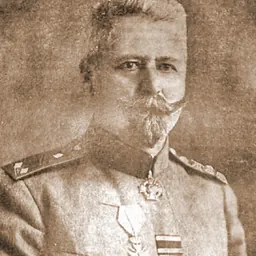

Related people
Same field, nearest in time


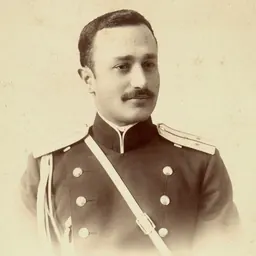
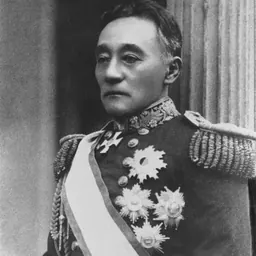
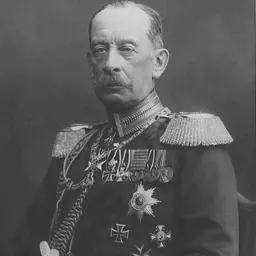

Contemporaries
People whose lives overlapped Mihail Savov's





Frequently asked questions
Who was Mihail Savov?
Bulgarian general (1857–1928)
When was Mihail Savov born?
Mihail Savov was born on 26 November 1857 in Stara Zagora.
When did Mihail Savov die?
Mihail Savov died on 21 July 1928 in Saint-Vallier-de-Thiey.
What was Mihail Savov's occupation?
Mihail Savov was a military personnel, diplomat and military officer.
What nationality was Mihail Savov?
Mihail Savov was Bulgarian.
Sources & further reading
Cite this page
APA: Biography.guide. (2026). Mihail Savov. https://biography.guide/mihail-savov/
MLA: "Mihail Savov." Biography.guide, https://biography.guide/mihail-savov/.
Chicago: "Mihail Savov." Biography.guide. https://biography.guide/mihail-savov/.
Data last updated: 2026-09-20 · Spot an error? Report a correction.
Portrait: Wikimedia Commons · author & licence
Page generated 2026-09-27 04:58 UTC