
About Ivan Bahrianyi
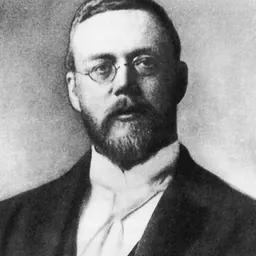
Lived 1906 – 1963 (aged 56). Ivan Bahrianyi was a Russian and German politician, poet, writer and opinion journalist.
Ivan Pavlovych Bahrianyi (né Lozoviaha, Lozoviahin; 2 October 1906 – 25 August 1963) was a Ukrainian writer, essayist, novelist, and politician. In 1992, he was posthumously awarded the Shevchenko National Prize in literature.
Biography
Early years Ivan Bahrianyi was born in the village of Kuzemyn, Kharkov Governorate, Russian Empire, to the family of a bricklayer. He could not receive education consistently due to difficult living conditions during World War I, the Russian Revolution, and the post-war chaos. At the age of six, he started in parochial school. Later, Bahrianyi finished higher elementary school in Okhtyrka. Having completed his secondary education in 1920, he entered a locksmith school before being admitted to an artistic school. That same year, he witnessed the murders of his grandfather and uncle.
"I was just a 10-year-old boy when the Bolsheviks invaded my mind as a bloody nightmare, appearing as the executioners of my people. This was in 1920. At the time, I lived with my grandfather in a village on a beekeeping farm. My grandfather was 92 years old and had lost an arm. Then, one evening, some armed men speaking a foreign language came. Right in front of my eyes and those of my cousins, they tortured him to death while we screamed in terror. They also killed one of his sons — my uncle.They killed my grandfather because he was a wealthy Ukrainian farmer (he owned 40 hectares of land) and opposed 'the commune.' They killed my uncle because, during the national liberation struggle of 1917–18, he was a soldier in the Ukrainian National Republic Army. He fought for the freedom and independence of his people." He tried to escape but was unsuccessful, and his sentence was extended by 3 years.
Bahrianyi was then transferred to another camp, Bamlag. The exact date of his release is unknown. On 16 June 1938, he was re-arrested and placed in Kharkiv NKVD jail for “nationalist counter-revolutionary organization." Bahrianyi was charged with participating in and even leading the nationalist counter-revolutionary organization. On 1 April 1940 the prosecution failed to convict Bahrianyi after he refused to sign a confession. It was ruled that Bahrianyi was already prosecuted for his activity and the case was dismissed. Bahrianyi returned to Okhtyrka. Later, he used his autobiographical details in his 1946 novel Tiger Trappers (Tyhrolovy) and 1950 novel Garden of Gethsemane (Sad Hetsymans'kyi).
World War II years
Before World War II Bahriany was working in the Okhtyrka theater "Narodnyi Dim." After Okhtyrka was overrun by the German Army at the onset of World War II, Bahrianyi was arrested for his anti-fascist messages in the theater's curtain design. He escaped from prison after two months, joining a Ukrainian nationalist underground organization, and later relocated to Galicia.
Bahrianyi worked in the OUN propaganda sector, writing patriotic songs and articles, as well as drawing cartoons and propaganda posters. He also helped to establish the Ukrainian Supreme Liberation Council (USLC) and contributed to drafting its founding documents. Simultaneously, he resumed his literary activities. Bahrianyi published his novel Tyhrolovy (translated as Tiger Trappers or The Hunters and the Hunted in English) and the poem Huliaipole in 1944. Before Nazi Germany's defeat in 1945, Bahrianyi moved to West Germany with the help of OUN.
Emigration Bahrianyi became a major organizing force in thge Ukrainian émigré writers' community. He founded a group known as the Ukrainian Art Movement (MUR). . This movement would be responsible for publishing thousands of articles. The MUR held three congresses in 1945, 1947 and 1948. Literary and artistic themes focused on modernization and the diaspora of Ukrainian culture.
After the end of World War II, under a 1939 agreement, all former citizens were to return to Soviet Ukraine. Bahrianyi, who had settled in displaced persons camp in Neu-Ulm, Germany wrote a pamphlet that had a massive impact on ex-Ostarbeiter and prisoners of war, Why I Am Not Going Back to the Soviet Union. The pamphlet presented the Soviet Union as an "evil stepmother" that staged a genocide of its own people. The pamphlet was included in reports to the United Nations General Assembly by Eleanor Roosevelt and it led to the adoption of the Universal Declaration of Human Rights. This guaranteed freedom of movement and the right to asylum under Article 13.
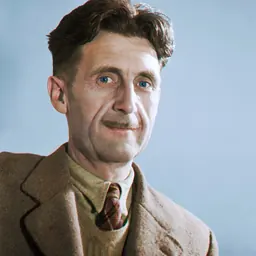
In 1947 Bahrianyi organized the first foreign translation of George Orwell's Animal Farm.
In 1948, he founded the Ukrainian Revolutionary Democratic Party (URDP). From 1948 until his death in 1963, he edited the newspaper Ukrains'ki visti (Ukrainian News). He headed the Ukrainian National Council's executive committee and also performed the duties of the Deputy President of the Ukrainian People's Republic in exile.
The novel "A Man Runs Over the Abyss” was written in 1948-1949 and published. The novel was a harsh critique of Bolshevism and sought to expose lies of the Soviet Union.
In 1963, the Democratic Union of Ukrainian Youth based in Chicago started action to support awarding Bahrianyi with the Nobel Prize. Still, his sudden death prevented him from being formally nominated for the award, which is not awarded posthumously. Bahrianyi died on 25 August 1963. He was buried in Neu-Ulm, Bavaria, West Germany.
Works Stories Etude (, 1921)
Novellas and tales Defeat (1948), a novella The Fiery Circle (Neu Ulm, 1953)
Novels Skelka (, Kharkiv, 1929), a novella in verse Zvirolovy (Trappers, Lviv-Kraków, 1944) and Tyhrolovy (Tiger Trappers, published in English as The Hunters and the Hunted, Neu Ulm, 1946) Sad Hetsymanskyi (, Garden of Gethsemane, Neu Ulm, 1950) Marusia Bohuslavka, the first book of the novel Wild Wind (Munich, 1957) A Man Runs Over an Abyss (published posthumously, Neu Ulm-New York, 1965)
Poems Mongolia (1927) Ave Maria (Kharkiv, 1928) Huliaipole The Phone (1956), a poem for children In the Sweat of the Forehead (, 1929), a collection of poems that was prohibited for publication by censorship The Golden Boomerang (, 1946, a collection of poems
Plays Lilac The General (, 1947) Morituri (, 1947)
Articles Why I Am Not Going Back to the Soviet Union (1946), a pamphlet
Unknown Mother Tongue Shots in the Taiga
Family
Bahrianyi was married twice; his first wife was Antonina Zosimova, and they had two children: a son, Boris, and a daughter, Natasha. In exile, he married again to Halyna Tryhub (born in Ternopil). They also had two children: son Nestor and daughter Roksolana.
Awards and honours In 1992, Bahrianyi posthumously received the Shevchenko Prize for his novels Tyhrolovy and Sad Hetsymanskyi. On 13 July 2023, Pushkin Park in Kyiv was renamed Ivan Bahrianyi Park.
Don’t just read it —
keep it.
Full-length biographies made to live with: read them, listen on the way to work, watch them tonight.
- E-book
- Audio
- Video
Instant download · yours to keep · every purchase keeps this site free
Important facts
People in Ivan Bahrianyi's life
Named in this biography and alive at the same time

Related people
Same field, nearest in time






Contemporaries
People whose lives overlapped Ivan Bahrianyi's


Frequently asked questions
Who was Ivan Bahrianyi?
Ukrainian writer and politician (1906–1963)
When was Ivan Bahrianyi born?
Ivan Bahrianyi was born on 19 September 1906 in Okhtyrka.
When did Ivan Bahrianyi die?
Ivan Bahrianyi died on 25 August 1963 in Neu-Ulm.
What was Ivan Bahrianyi's occupation?
Ivan Bahrianyi was a politician, poet, writer and opinion journalist.
What nationality was Ivan Bahrianyi?
Ivan Bahrianyi was Russian and German.
Sources & further reading
Cite this page
APA: Biography.guide. (2026). Ivan Bahrianyi. https://biography.guide/ivan-bahrianyi/
MLA: "Ivan Bahrianyi." Biography.guide, https://biography.guide/ivan-bahrianyi/.
Chicago: "Ivan Bahrianyi." Biography.guide. https://biography.guide/ivan-bahrianyi/.
Data last updated: 2026-09-20 · Spot an error? Report a correction.
Page generated 2026-09-27 05:29 UTC