
About Ito Sukeyuki
Lived 1843 – 1914 (aged 70). Ito Sukeyuki was a Japanese military personnel.
Marshal-Admiral Count (9 June 1843 – 16 January 1914) was a Japanese career officer and admiral in the Imperial Japanese Navy in Meiji-period Japan.
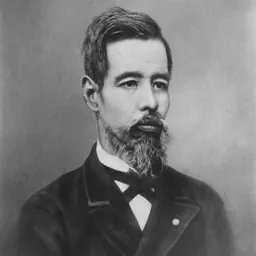
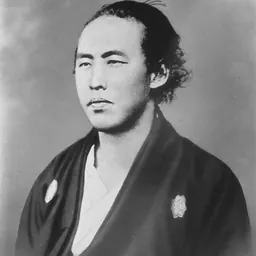
Biography Born in what is now part of Kagoshima City, the fourth son of a samurai of the Satsuma Domain, Itō studied English and Western learning at the domain's Kaiseijo school, gunnery under Egawa Hidetatsu, and navigation at Katsu Kaishū's Kobe Naval Training Center alongside Sakamoto Ryōma and Mutsu Munemitsu. He participated in the Anglo-Satsuma War as a member of the Satsuma domain's navy. Popular accounts describe him as part of a small unit that attempted to board a British warship disguised as watermelon sellers; the attempt was discovered and failed. Before the Boshin War, Itō had already relocated to Edo and had placed his naval skills at the service of the forces striving to overthrow the Tokugawa Shogunate. He escaped from the burning of the Satsuma Domain residence in Edo and fought in several of the war's naval engagements, including off Awa and in Miyako Bay.
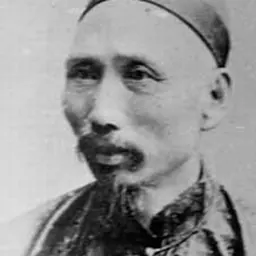
Following the fall of Lüshun, the remaining Beiyang Fleet withdrew to Weihai, where it made its last stand. Admiral Ding Ruchang chose suicide over surrender ahead of the fleet's capitulation in February 1895. Itō had Ding's body returned with dignity, setting aside the captured merchant ship Kangji from among the fleet's seized ships for that purpose rather than have the body transported home on an ordinary vessel. Popular accounts add that he justified the decision to reluctant subordinates by asking whether they would want his own body carried home in a rowboat were their positions reversed, though the exact wording of that exchange is not independently verified. The release of the Kangji itself was reported at the time by The Times and was noted internationally as an act of chivalry toward a defeated enemy. After the war ended in 1905, he was made marshal admiral in 1906, and his title of nobility was raised to that of hakushaku (count) in 1907. At the same time, he was awarded the Order of the Golden Kite (1st class) and the Grand Cordon of the Supreme Order of the Chrysanthemum.
Itō took no part in politics and was not among the formally recognized genrō, though contemporaries sometimes grouped him with them informally. Subordinates called him "Thunder God Commander" for his strict discipline, and separately recalled him as generous off duty and fond of rice wine, which he called "rice soup."
Itō died in 1914. His grave is at the temple of Kaian-ji in Shinagawa, Tokyo.
Don’t just read it —
keep it.
Full-length biographies made to live with: read them, listen on the way to work, watch them tonight.
- E-book
- Audio
- Video
Instant download · yours to keep · every purchase keeps this site free
Important facts
People in Ito Sukeyuki's life
Named in this biography and alive at the same time


Related people
Same field, nearest in time


Contemporaries
People whose lives overlapped Ito Sukeyuki's

Frequently asked questions
Who was Ito Sukeyuki?
Japanese admiral (1843-1914)
When was Ito Sukeyuki born?
Ito Sukeyuki was born on 20 May 1843 in Kagoshima.
When did Ito Sukeyuki die?
Ito Sukeyuki died on 16 January 1914 in Tokyo.
What was Ito Sukeyuki's occupation?
Ito Sukeyuki was a military personnel.
What nationality was Ito Sukeyuki?
Ito Sukeyuki was Japanese.
Sources & further reading
Cite this page
APA: Biography.guide. (2026). Ito Sukeyuki. https://biography.guide/ito-sukeyuki/
MLA: "Ito Sukeyuki." Biography.guide, https://biography.guide/ito-sukeyuki/.
Chicago: "Ito Sukeyuki." Biography.guide. https://biography.guide/ito-sukeyuki/.
Data last updated: 2026-09-20 · Spot an error? Report a correction.
Page generated 2026-09-27 05:31 UTC