
About Isamu Akasaki
Lived 1929 – 2021 (aged 92). Isamu Akasaki was a Japanese physicist, professor, engineer, electrotechnician, university teacher and scientist.
was a Japanese materials scientist specializing in the field of semiconductor technology. He is best known for co-inventing the bright gallium nitride (GaN) p–n junction blue LED in 1989 and subsequently the high-brightness GaN blue LED as well.
Akasaki was awarded the 2014 Nobel Prize in Physics, along with Hiroshi Amano and Shuji Nakamura, "for the invention of efficient blue light-emitting diodes which has enabled bright and energy-saving white light sources."
Early life and education
Isamu Akasaki was born on January 30, 1929, in Chiran, Japan, and was raised in Kagoshima. His elder brother is , who was an electronic engineering researcher and a Professor Emeritus at Kyushu University. (Their surname "" is also pronounced Akazaki. )
Akasaki graduated from Kagoshima Prefectural Daini-Kagoshima Middle School (now Kagoshima Prefectural Konan High School) in 1946, from Seventh Higher School Zoshikan (now Kagoshima University) in 1949, and from the Faculty of Science at Kyoto University in 1952. During his university years, he visited shrines and temples that local residents rarely visit, walked around the mountains of Shinshu during the summer vacation, enjoyed classes and enjoyed a fulfilling student era.
Career
In 1952, Akasaki joined the research staff of the Kobe Kogyo Corporation (now Fujitsu Ltd.). From 1959 to 1964, he worked at Nagoya University, where he was Research Associate, Assistant Professor, and Associate Professor in the Department of Electronics. In 1964, he obtained a D.Eng. from Nagoya for a thesis on the vapor-phase epitaxial growth of Ge. After receiving his doctorate, he joined Matsushita Research Institute Tokyo, Inc., where he became head of the Basic Research Laboratory IV and then general manager of the Semiconductor Department. In 1981, Akasaki returned to Nagoya University as a professor.
In 1992, Akasaki became a professor in the Graduate School of Science and Technology at Meijo University. He was appointed director of the Research Center for Nitride Semiconductor Core Technologies in 2011. at Matsushita Research Institute Tokyo, Inc. (MRIT), where he decided to adopt metalorganic vapor phase epitaxy (MOVPE) as the preferred growth method for GaN.
In 1981, Akasaki started afresh the growth of GaN by MOVPE at Nagoya University, and in 1985 he and his group succeeded in growing high-quality GaN on sapphire substrate by pioneering the low-temperature (LT) buffer layer technology.
This high-quality GaN enabled them to discover p-type GaN by doping with magnesium (Mg) and subsequent activation by electron irradiation (1989), to produce the first GaN p-n junction blue/UV LED (1989), and to achieve conductivity control of n-type GaN (1990) and related alloys (1991) by doping with silicon (Si), enabling the use of hetero structures and multiple quantum wells in the design and structure of more efficient p-n junction light emitting structures.
They achieved stimulated emission from the GaN firstly at room temperature in 1990, and developed in 1995 the stimulated emission at 388 nm with pulsed current injection from high-quality AlGaN/GaN/GaInN quantum well device. They verified quantum size effect (1991) and quantum confined Stark effect (1997) in nitride system, and in 2000 showed theoretically the orientation dependence of piezoelectric field and the existence of non-/semi-polar GaN crystals, which have triggered today's worldwide efforts to grow those crystals for application to more efficient light emitters.
Nagoya University Akasaki Institute
Akasaki's patents were produced from these inventions, and the patents have been rewarded as royalties. Nagoya University Akasaki Institute opened on October 20, 2006. The cost of construction of the institute was covered with the patent royalty income to the university, which was also used for a wide range of activities in Nagoya University. The institute consists of an LED gallery to display the history of blue LED research/developments and applications, an office for research collaboration, laboratories for innovative research, and Akasaki's office on the top sixth floor. The institute is situated in the center of the collaboration research zone in Nagoya University Higashiyama campus.
Personal life He and his wife Ryoko lived in Nagoya, and the couple had no children.
Death Akasaki died from pneumonia at a hospital in Nagoya on April 1, 2021, at the age of 92.
Recognition Awards Year Organization Award Citation 1998 IEEE IEEE Jack A. Morton Award "For contributions in the field of group-III nitride materials and devices." 1998 Rank Foundation Rank Prize for Optoelectronics "For contributions to the invention of nitride based blue and green semiconductor diode lasers." 1998 NEC C&C Foundation C&C Prize "For basic and pioneering contributions to the development of high brightness and long lifetime blue light-emitting devices using nitride-based compound semiconductors." 1999 Electrochemical Society Gordon E. Moore Medal for Outstanding Achievement in Solid State Science and Technology — 2000 The Asahi Shimbun Asahi Prize "For their research and development of a blue light emitting device." 2006 The Minerals, Metals & Materials Society John Bardeen Award "For his pioneering work and key discoveries in the field of GaN and related materials which has enabled their widespread development and use." 2009 Inamori Foundation Kyoto Prize in Advanced Technology "Pioneering Work on Gallium Nitride p-n Junctions and Related Contributions to the Development of Blue Light Emitting Devices." 2011 IEEE IEEE Edison Medal "For seminal and pioneering contributions to the development of nitride-based semiconductor materials and optoelectronic devices, including visible wave length LEDs and lasers." 2013 Society for Information Display Karl Ferdinand Braun Prize — 2014 Royal Swedish Academy of Sciences Nobel Prize in Physics "For the invention of efficient blue light-emitting diodes which has enabled bright and energy-saving white light sources." 2015 Asia Society Asia Game Changer Award "For lighting our world in a groundbreaking and sustainable way." 2016 Asian Scientist Asian Scientist 100 — 2021 Queen Elizabeth Prize for Engineering Foundation Queen Elizabeth Prize for Engineering "For the creation and development of LED lighting, which forms the basis of all solid state lighting technology."
Memberships Year Organization Type 1999 IEEE Fellow 2008 National Academy of Engineering International Member
Honors Year Head of state Honor 2011 Akihito Order of Culture
Don’t just read it —
keep it.
Full-length biographies made to live with: read them, listen on the way to work, watch them tonight.
- E-book
- Audio
- Video
Instant download · yours to keep · every purchase keeps this site free
Important facts
People in Isamu Akasaki's life
Named in this biography and alive at the same time
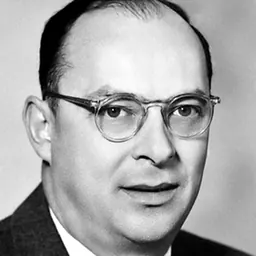


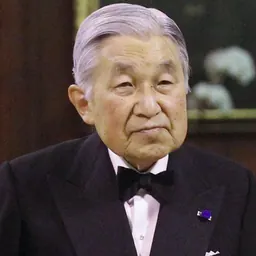


Related people
Same field, nearest in time
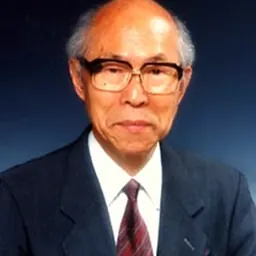



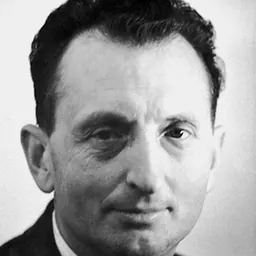
Contemporaries
People whose lives overlapped Isamu Akasaki's




Frequently asked questions
Who was Isamu Akasaki?
Japanese engineer (1929-2021)
When was Isamu Akasaki born?
Isamu Akasaki was born on 30 January 1929 in Chiran.
When did Isamu Akasaki die?
Isamu Akasaki died on 1 April 2021 in Nagoya.
What was Isamu Akasaki's occupation?
Isamu Akasaki was a physicist, professor, engineer, electrotechnician, university teacher and scientist.
What nationality was Isamu Akasaki?
Isamu Akasaki was Japanese.
Sources & further reading
Cite this page
APA: Biography.guide. (2026). Isamu Akasaki. https://biography.guide/isamu-akasaki/
MLA: "Isamu Akasaki." Biography.guide, https://biography.guide/isamu-akasaki/.
Chicago: "Isamu Akasaki." Biography.guide. https://biography.guide/isamu-akasaki/.
Data last updated: 2026-09-20 · Spot an error? Report a correction.
Page generated 2026-09-27 05:24 UTC