
About Isabella Lickbarrow
Lived 1784 – 1847 (aged 62). Isabella Lickbarrow was a British poet and writer.
Isabella Lickbarrow (5 November 178410 February 1847) was an English poet from Kendal who is sometimes associated with the Lake Poets. She published two collections: Poetical Effusions and A Lament upon the Death of Her Royal Highness the Princess Charlotte and Alfred, a Vision (1818). Her work covers various subjects, but scholars have noted her topographical and political poetry about the Napoleonic Wars.
Life Map of Kendal, 1814. Lickbarrow was a native of the town and published her first book there. Lickbarrow lived in Kendal for most, if not all, of her life. Her mother died when she was five years old, and her father died when she was 20, after which she turned to publishing poetry as a way to earn a living for herself and her two sisters. This is apparent from the preface to Poetical Effusions (1814), which describes the work as a way to "assist the humble labours of herself and her orphan sisters."
Lickbarrow came from a Nonconformist family. Her father, originally a Quaker, became a Unitarian. but present-day scholars have not verified this claim.
Poetry Lickbarrow began publishing in the Westmorland Advertiser, a local newspaper, in November 1811 and quickly gained a following, which led to the release of Poetical Effusions by the newspaper's publisher in 1814. Wordsworth himself, Thomas De Quincey, and Robert Southey. William Axon, writing in Notes and Queries in 1908, recalled Effusions in elegiac tones: "et us hope that the result of the publication was to make life easier for Isabella Lickbarrow, although it has not secured her the immortality of Sappho."
Lickbarrow's poetry was versatile and evinced an interest in matters at home and abroad. Jonathan Wordsworth, describing Lickbarrow as a "poet of genuine individuality," notes that her poems show a preoccupation with the Napoleonic Wars, among other subjects. Behrendt observes that her poems on war attend to the troubles that soldiers, often poor and ill-served by the government, faced when returning home from the campaign.
Lickbarrow "bid the nation rejoice" upon Napoleon's abdication.
Scout Scar or Underbarrow Scar, near Kendal. Lickbarrow's 'On Underbarrow Scar' (composed about 1814) calls it a "lofty barrier of the waste". Knowles argues that "Lickbarrow's pre-Waterloo poetry voices a strong objection to Britain's role in the war in Europe," observing that this could be expected given her Quaker background. Knowles also suggests that Lickbarrow's Lament upon the Death of Her Royal Highness the Princess Charlotte and Alfred, a Vision (1818), about the death of Princess Charlotte of Wales in 1817, reflects unease about Britain's future — given that George IV, subject to widespread popular disdain, was about to succeed his father — and views Britain's ancient history, exemplified in the person of Alfred the Great, as a potential source of wisdom for the country in the early 19th century. Knowles observes that Lickbarrow was "one of the only female poets to continue to write overtly political poetry in the post-Waterloo period."
Although her subjects included politics and foreign affairs, Lickbarrow also wrote frequent topographical poetry about locations in the Lake District and elsewhere, including Underbarrow Scar, Esthwaite Water, and South Stack Lighthouse (in Wales).
Poetical Effusions went out of print after its first publication until 2004, when it was released in an edited collection by the Wordsworth Trust. Feldman observes that the work "contains unusual variety for a first book," noting that it features poems on several different subjects and in various styles.
Works Lickbarrow published two collections and numerous poems in local newspapers. Printed twice in 1814, once locally in Kendal and once in London.
A much-noted composition on the publication of poems in newspapers that concerns neither war nor topography.
Don’t just read it —
keep it.
Full-length biographies made to live with: read them, listen on the way to work, watch them tonight.
- E-book
- Audio
- Video
Instant download · yours to keep · every purchase keeps this site free
Important facts
People in Isabella Lickbarrow's life
Named in this biography and alive at the same time

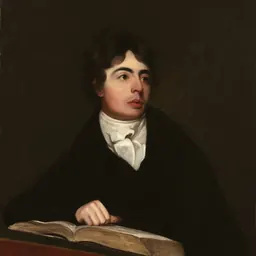
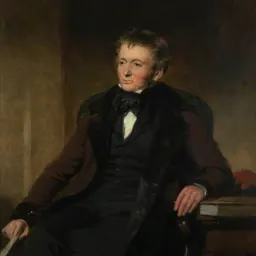
Related people
Same field, nearest in time

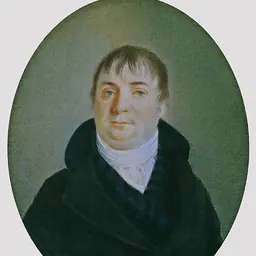
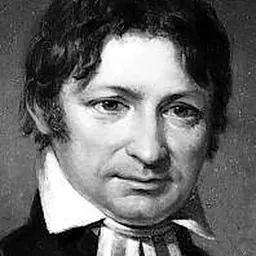
Contemporaries
People whose lives overlapped Isabella Lickbarrow's



Frequently asked questions
Who was Isabella Lickbarrow?
English poet (1784–1847)
When was Isabella Lickbarrow born?
Isabella Lickbarrow was born on 5 November 1784 in Kendal.
When did Isabella Lickbarrow die?
Isabella Lickbarrow died on 10 February 1847.
What was Isabella Lickbarrow's occupation?
Isabella Lickbarrow was a poet and writer.
What nationality was Isabella Lickbarrow?
Isabella Lickbarrow was British.
Sources & further reading
· Wikipedia: Isabella Lickbarrow
· DBpedia: Isabella Lickbarrow
Cite this page
APA: Biography.guide. (2026). Isabella Lickbarrow. https://biography.guide/isabella-lickbarrow/
MLA: "Isabella Lickbarrow." Biography.guide, https://biography.guide/isabella-lickbarrow/.
Chicago: "Isabella Lickbarrow." Biography.guide. https://biography.guide/isabella-lickbarrow/.
Data last updated: 2026-09-20 · Spot an error? Report a correction.
Page generated 2026-09-27 05:23 UTC