
Isaac Swayze
Canadian politician
About Isaac Swayze
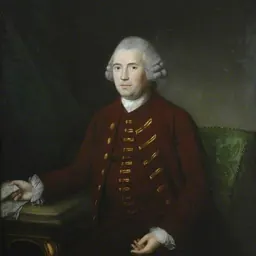
Lived 1751 – 1828 (aged 76–77). Isaac Swayze was a Canadian.
Isaac Swayze (1751 – February 11, 1828) was a Loyalist and British partisan during the American Revolution, and afterwards a politician and militia officer in Upper Canada. Swayze, the son of Caleb Swayze, was born in Roxbury, Morris County, New Jersey in 1751. The identity of his mother is uncertain. When Isaac's father died in 1794, he left a widow named Elizabeth, however, she may have been Isaac's stepmother.
Revolutionary War
During the American Revolutionary War, Swayze served as a partisan for the British. He guided British forces in New York and New Jersey, provided intelligence to British authorities, escorted Loyalist refugees, passed counterfeit money, and rustled horses for the British army. He is believed to have been an associate of noted partisan James Moody. Swayze may have been the "trusted Loyalist" Moody sent to Fort Niagara in 1778 to obtain "precise intelligence" from Major John Butler of Butler's Rangers. It is possible that he was with Butler at the Battle of Wyoming in July 1778 and spent the following winter at Fort Niagara. Another story tells how Swayze had been captured and sentenced to death, but had escaped by exchanging clothes with his wife during a prison visit. He apparently never saw her again. Following a high-profile robbery in 1782, Isaac's brother Caleb was killed when his hiding place in Morris County's Great Swamp was discovered.
In April 1783, Isaac was arrested by the British authorities at New York on suspicion of having committed a robbery on Long Island. In two letters to Lieutenant General Guy Carleton, he protested that he had been "unjustly accused of robbery" and "deprived of justice" since he had been held without trial for eight weeks and as a result was unable to collect debts owing him from those evacuating from New York. A court martial acquitted Swayze in July 1783 but ordered him to leave New York.
The First Legislature of Upper Canada by Frederick Sproston Challener In 1792, Swayze was elected to the 1st Parliament of Upper Canada representing the 3rd Riding of Lincoln. In 1795, he led a protest against the wording used on deeds that some people believed would prevent the sale of their own land. He was charged with sedition and fined. Despite this he was appointed a justice of the peace in 1796. He did not run for office in 1796 but was elected again for 3rd Lincoln in 1800 following a campaign in which he was accused of being a horse thief. Swayze was elected again in 1804 but declined to run in 1808. During this time, Swayze generally supported policies that favoured farmers and small merchants rather than the rich elite. Swayze's unit, which was responsible for moving field guns and ammunition during military engagements, was present at the Battle of Queenston Heights in October 1812. Swayze received favourable mention in a letter Major General Roger Hale Sheaffe wrote to Lieutenant General George Provost after the battle, Swayze lost his house and barn in December 1813 when the Americans burned Niagara. After the war Swayze claimed several hundred pounds in damages. He was a vocal opponent of the reformer Robert Gourlay. In 1818 he brought charges of seditious libel against the editor of the Niagara Spectator for publishing an address authored by Gourlay. Swayze was instrumental in Gourlay's arrest for sedition that same year. Gourlay was imprisoned for eight months and later banished. Gourlay once asked, "How could such a man as Isaac Swayze be elected, and repeatedly elected?"
Swayze was active in bringing members of his family to Upper Canada from New Jersey after the Revolutionary War. His son Benjamin joined him, as did the children of his brother Caleb. A cousin, Israel Swayze, also brought his family to the Niagara region and settled in Thorold Township. Israel Swayze is believed to have been the progenitor of the apple known as the Swayze Pomme Gris.
Isaac Swayze retired from public life following his defeat in the 1820 election. He died in Queenston on 24 Mar 1828.
Don’t just read it —
keep it.
Full-length biographies made to live with: read them, listen on the way to work, watch them tonight.
- E-book
- Audio
- Video
Instant download · yours to keep · every purchase keeps this site free
Important facts
People in Isaac Swayze's life
Named in this biography and alive at the same time



Contemporaries
People whose lives overlapped Isaac Swayze's





Frequently asked questions
Who was Isaac Swayze?
Canadian politician
When was Isaac Swayze born?
Isaac Swayze was born in 1751.
When did Isaac Swayze die?
Isaac Swayze died on 11 February 1828.
What nationality was Isaac Swayze?
Isaac Swayze was Canadian.
Sources & further reading
Cite this page
APA: Biography.guide. (2026). Isaac Swayze. https://biography.guide/isaac-swayze/
MLA: "Isaac Swayze." Biography.guide, https://biography.guide/isaac-swayze/.
Chicago: "Isaac Swayze." Biography.guide. https://biography.guide/isaac-swayze/.
Data last updated: 2026-09-20 · Spot an error? Report a correction.
Page generated 2026-09-27 05:13 UTC