
About James Moody
Lived 1744 – 1809 (aged 64–65). James Moody was an English politician.
James Moody (January 1, 1744 – April 6, 1809) was an American-born military officer, landowner and politician who served in the New Jersey Volunteers during the American Revolutionary War. Following the war he emigrated to Nova Scotia and represented Annapolis County in the Nova Scotia House of Assembly from 1793 to 1806. Moody wrote one of the most well-known Loyalist memoires of the war.
Career
He was born in Little Egg Harbor, New Jersey, on January 1, 1744, the son of John Moody. His first wife was Elizabeth Brittain (1748–1782). James and Elizabeth had three children including a son John born March 6, 1768, and a daughter Maria born on February 28, 1775. Records for the other child have been lost. His father-in-law William Brittain (1725–1804) was an outspoken Loyalist, though only the three youngest of his six sons were also Loyalists.
By 1777, James and his family were living on a 500-acre farm owned in his father's name, but for James' use. On Sunday, March 28, 1777, a Patriot militia came to his house to arrest him because he refused to give up his allegiance to Britain and swear loyalty to the United States. Shots were fired, but he managed to escape. In April 1777, he joined the New Jersey Volunteers under the command of General Cortlandt Skinner. In 1780, Moody led several men to free eight Loyalist prisoners held in the Sussex County Courthouse in Newton, Sussex County, New Jersey. Moody freed the men and fled with them. Despite a pursuit lasting several days, Revolutionary forces failed to capture them.
He was captured in 1780 but managed to escape to New York City. After that, for a time, he was put into service intercepting rebel correspondence. A measure of his success was that George Washington, whose dispatches he successfully intercepted, referred to him as "that villain Moody". Following a betrayed attempt to steal the papers of Congress, Moody escaped, but his younger brother John was captured on November 8, 1781 (along with Laurence Marr) and hanged for espionage on November 13. He was only 23. In late February 1782, Moody's wife Elizabeth was thrown by a horse and killed. He married his second wife, Jane Lynson, on March 21, 1782. He went to England that same year.
Also that year, he published an account of his experiences during the American Revolution.
He went to Nova Scotia in 1782 and settled at Sissaboo (later Weymouth). Moody built ships there and also constructed mills. He served as a captain in the Royal Nova Scotia Regiment, a colonel in the local militia and road commissioner. He died in Sissaboo.
Publication Lieut. James Moody's narrative of his exertions and sufferings in the cause of government, since the year 1776: authenticated by proper certificates.
Don’t just read it —
keep it.
Full-length biographies made to live with: read them, listen on the way to work, watch them tonight.
- E-book
- Audio
- Video
Instant download · yours to keep · every purchase keeps this site free
Important facts
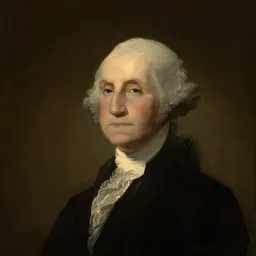
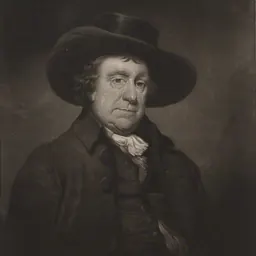
People in James Moody's life
Named in this biography and alive at the same time
Related people
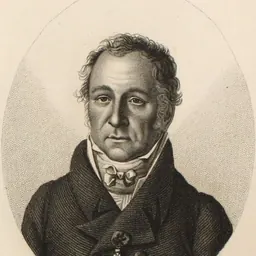
Same field, nearest in time



Contemporaries
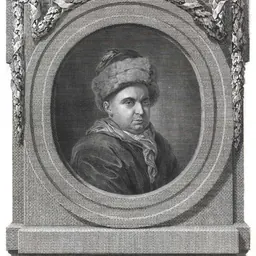
People whose lives overlapped James Moody's





Frequently asked questions
Who was James Moody?
Canadian politician
When was James Moody born?
James Moody was born in 1744 in Little Egg Harbor Township.
When did James Moody die?
James Moody died in 1809 in Weymouth.
What was James Moody's occupation?
James Moody was a politician.
What nationality was James Moody?
James Moody was English.
Sources & further reading
· DBpedia: James Moody (loyalist)
Cite this page
APA: Biography.guide. (2026). James Moody. https://biography.guide/james-moody/
MLA: "James Moody." Biography.guide, https://biography.guide/james-moody/.
Chicago: "James Moody." Biography.guide. https://biography.guide/james-moody/.
Data last updated: 2026-09-20 · Spot an error? Report a correction.
Page generated 2026-09-27 05:21 UTC