
About Isaac Navon
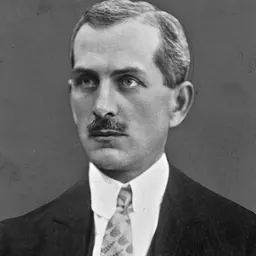
Lived 1921 – 2015 (aged 94). Isaac Navon was an Israeli politician, writer, playwright, educator and diplomat.
Yitzhak Rachamim Navon (; 9 April 1921 – 6 November 2015
He attended the Doresh Tziyon and Takhemoni elementary schools and the Hebrew University high school.
Navon studied Arabic and Islamic studies at the Hebrew University of Jerusalem. He taught Hebrew literature for several years. He was fluent in Arabic, Hebrew, Ladino, French and English.
Navon was a member of the Haganah's Arab Intelligence Unit and worked undercover in Jerusalem. During the war, he listened to wiretapped conversations of the British Army. Later he was sent by the Israeli foreign service to Uruguay and Argentina to track down Nazis.
Navon was married to Ofira Navon née Resnikov, who died of cancer in 1993. Navon died in Jerusalem at the age of 94 on 6 November 2015. But the labour elite of which Navon was one, would in the future dictate the Left's agenda. Navon served as deputy speaker of the Knesset and chairman of the Knesset Committee on Foreign and Defense Affairs.
President of Israel (1978–83) President Navon meeting with Christian leaders before Christmas and the christian New Year. In the background is an Israeli relief made of basalt ash. On 19 April 1978, Navon was elected by the Knesset to serve as the fifth President of Israel. The race was uncontested and Navon received 86 votes in the 120-member Knesset with 23 members casting blank votes. He assumed office on 29 May 1978 and was the first president with small children to move into Beit HaNassi, the presidential residence in Jerusalem. His wife, Ofira, was active in promoting the welfare of Israeli children.
As a president, Navon met with Egyptian president Anwar Sadat and was influential in the peace talks. According to Haaretz newspaper, he achieved more in one visit than five by Israel's Prime Minister.
Although the Israeli presidency is a ceremonial office, Navon was an outspoken advocate of a judicial commission of inquiry to probe Israel's role in the Sabra and Shatila massacre perpetrated by Lebanese Falangists in 1982.
Minister of education
In 1983, Navon turned down the opportunity to run for a second term of office. Instead he returned to politics, the only Israeli ex-president to do so. When the polls showed that Navon was more popular than Labor chairman Shimon Peres, Peres was pressured to step aside and allow Navon to take over the party leadership. Navon's fluency in the Arabic language made him especially popular among Arab and Mizrahi voters. But Navon did not accept the chairmanship. In 1984, he was elected to the Knesset and served as minister of education and culture from 1984 to 1990. Navon was Minister of Education during the first Intifada. During the summer of 1989 there were riots and protests. Jerusalem parents appealed to Navon by petition, to reopen their schools. Navon a socialistic Jew was impressed by the legal implications: "This action is immoral and ineffective and will cause irreversible damage in the long and short run to Palestinian children and to our own." As the violence escalated moderates suffered at the hands of extremists.
Remaining in the Knesset until 1992, he briefly left politics. Navon emerged from retirement to chair a Commission of Inquiry on Israeli medical authorities' controversial practice of discarding blood donated by Israelis of Ethiopian origin due to concerns about AIDS transmission.
Literary career
Navon wrote two musicals based on Sephardic folklore: Romancero Sefardi (1968) and Bustan Sefardi ("Sephardic Garden" 1970), which were successfully performed at Habimah, Israel's national theater in Tel Aviv. He is also the author of The Six Days and the Seven Gates (1979), a modern legend of the reunification of Jerusalem, first published in Hebrew by Shikmona Publishing Company and later translated into English.
Awards and recognition In 2003, the Spanish government granted Navon an award at Herzliya.
The Jerusalem - Yitzchak Navon Station in central Jerusalem, Israel, is named after Navon and honors his history in the country. Shortly before his death, he was placed honorary last 120th spot on the Zionist Union list on 2015 Israeli legislative election.
Don’t just read it —
keep it.
Full-length biographies made to live with: read them, listen on the way to work, watch them tonight.
- E-book
- Audio
- Video
Instant download · yours to keep · every purchase keeps this site free
Important facts
Family & relationships
People in Isaac Navon's life
Named in this biography and alive at the same time


Related people
Same field, nearest in time




Contemporaries
People whose lives overlapped Isaac Navon's

Frequently asked questions
Who was Isaac Navon?
Israeli politician, 5th President of Israel (1921–2015)
When was Isaac Navon born?
Isaac Navon was born on 9 April 1921 in Jerusalem.
When did Isaac Navon die?
Isaac Navon died on 7 November 2015 in Jerusalem.
What was Isaac Navon's occupation?
Isaac Navon was a politician, writer, playwright, educator and diplomat.
What nationality was Isaac Navon?
Isaac Navon was Israeli.
Sources & further reading
Cite this page
APA: Biography.guide. (2026). Isaac Navon. https://biography.guide/isaac-navon/
MLA: "Isaac Navon." Biography.guide, https://biography.guide/isaac-navon/.
Chicago: "Isaac Navon." Biography.guide. https://biography.guide/isaac-navon/.
Data last updated: 2026-09-25 · Spot an error? Report a correction.
Page generated 2026-09-27 05:12 UTC