
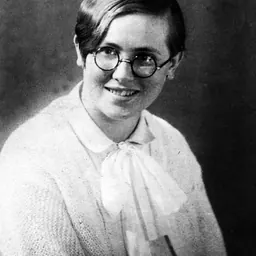
Irene Wosikowski
German resistance fighter
About Irene Wosikowski
Lived 1910 – 1944 (aged 34). Irene Wosikowski was a politician, resistance fighter, commercial clerk and secretary.
Judith Auer Irene Wosikowski (9 February 1910 – 27 October 1944) was a German political activist (KPD). After 1933 she continued with her (now illegal) political activity in Germany till 1935. The next two years were spent in Moscow after which, as instructed by the party, she moved to Paris, which had become one of two de facto capitals for the exiled German Communist Party. She worked on political education and publishing till 1940 when she was placed in the Gurs internment camp. After her escape she joined the Résistance. Living "underground" (unregistered) she remained at liberty till July 1943, despite the intensely dangerous nature of much of her resistance work, which included approaching German soldiers and engaging in "political" discussions to try to persuade them to face up to the accelerating savagery of the Shoah. Following her arrest Wosikowski was subjected to a sustained programme of torture and taken back to Germany, where she was executed at Plötzensee on the edge of Berlin.
Life Provenance and early years Judith Auer Irene Wosikowski was born in Danzig (as Gdańsk was known at that time) and grew up in a politicised social-democratic household. In 1911 Wilhelm Wosikowski had received an employment ban ("Berufsverbot") in Danzig on account of his trades union involvement and the family relocated to Kiel. In 1921 Alice Wosikowski married her dead husband's brother and the family moved again, this time to Hamburg.
Politics Irene attended a "Handelsschule" (commercially oriented school) and on completion of the middle school stage took a job as a typist. After two years she moved on to work in an export agency. Her next job was with the Hamburg branch of the Soviet trade mission. She was sent in 1930 to work at the (implausibly large) Soviet trade mission in Berlin. She had been only 14 in 1924 when she joined the Young Communists: between 1926 and 1930 she was the "political leader" ("politische Leiterin") with the Young Communists' Hamburg group. Irene Wosikowski became a member of the party's Berlin region leadership team ("Landesleitung"). For a time she also worked as a close assistant to Franz Dahlem (who after 1945 would enjoy a long – though not uninterrupted – career as a senior national politician in the Soviet occupation zone (of Germany) and the German Democratic Republic.
Internment The Gurs internment camp had been set up at the end of the Spanish Civil War as a resettlement camp for escaping fighters from Spain. It had not been constructed as a "concentration camp". A committed sportswoman, Wosikowski organised other internees to become more physically active (whether they liked it or not ). Two of her fellow internees, Luise Kraushaar and Thea Saefkow had, like her, been working for the party in Paris and in the camp the three of them teamed up. By the end of June 1940 Irene Wosikowski had escaped with her two comrades. Wosikowski now took the train for Marseille, intending to join up with the Résistance. Following her release she was required to report regularly to the "Vichy" police. She shared an apartment with another German emigre called Thérèse Schmidt, and earned a small amount of money through dress-making.
On 13 January 1948 Alice Wosikowski lodged a charge against the sailor at the district court in Stade Hermann Frischalowski, in which she accused him of a "crime against humanity and denunciation for political reasons, causing death". A tribunal rejected the case against the former sailor because of his motive which amounted to "doing his duty against forces seeking to demoralise the army". Irene Wosikowski appealed the decision, but again the appeal was rejected because the sailor's actions were consistent with the law as it existed at the time. Alice Wosikowski died in 1949. The judgment was rescinded not until 1998, when by Sections 1 and 2 of the German law repealing wrongful National Socialist judgments in the administration of criminal justice of August 25, 1998, these verdicts of the People's Court were vacated.
Don’t just read it —
keep it.
Full-length biographies made to live with: read them, listen on the way to work, watch them tonight.
- E-book
- Audio
- Video
Instant download · yours to keep · every purchase keeps this site free
Important facts
People in Irene Wosikowski's life
Named in this biography and alive at the same time



Related people
Same field, nearest in time





Contemporaries
People whose lives overlapped Irene Wosikowski's




Frequently asked questions
Who was Irene Wosikowski?
German resistance fighter (1910-1944)
When was Irene Wosikowski born?
Irene Wosikowski was born on 9 February 1910 in Gdańsk.
When did Irene Wosikowski die?
Irene Wosikowski died on 27 October 1944 in Berlin-Plötzensee.
What was Irene Wosikowski's occupation?
Irene Wosikowski was a politician, resistance fighter, commercial clerk and secretary.
What nationality was Irene Wosikowski?
Irene Wosikowski's recorded nationality: German Reich.
Sources & further reading
Cite this page
APA: Biography.guide. (2026). Irene Wosikowski. https://biography.guide/irene-wosikowski/
MLA: "Irene Wosikowski." Biography.guide, https://biography.guide/irene-wosikowski/.
Chicago: "Irene Wosikowski." Biography.guide. https://biography.guide/irene-wosikowski/.
Data last updated: 2026-09-20 · Spot an error? Report a correction.
Page generated 2026-09-27 05:23 UTC