
About Iosipos Moisiodax
Lived 1725 – 1800. Iosipos Moisiodax was a Turkish eastern Orthodox priest, philosopher, writer, translator and pedagogue.
Iosipos Moisiodax or Moesiodax (; ; 1725–1800) was a Greek and later Wallachian philosopher, an Eastern Orthodox deacon, and one of the greatest exponents of the modern Greek Enlightenment. He was also director of the Princely Academy of Iași and professor at the Princely Academy of Bucharest.
Biography Ioannis Moisiodax was born in the town of Cernavodă in Western Dobruja, at the time part of the Ottoman Empire. He later took the monastic name Iosipos. Some authors consider that his surname, Moisodax/Moesiodax ("Dacian from Moesia"), indicate Romanian or Aromanian origins. However, there is no doubt that Moisiodax saw himself as Greek and he presented himself as such. He may have been of Karamanli origin. Little is known about his youth, but it is assumed he received elementary education and learned Greek from a clergyman in Wallachia or Thrace.
In 1753–54, Moisiodax went to the Greek schools in Salonica and Smyrna, where he was influenced by Neo-Aristotelianism. In 1754–1755 he went for several years to the Athonite Academy, which was back then under the direction of Eugenios Voulgaris, another prominent exponent of the Neohellenic Enlightenment. Between 1759 and 1762 Moisiodax studied at the University of Padua, under Giovanni Poleni. During this period he was ordained an Eastern Orthodox deacon. He went first to Braşov (1777), and after that to Wien, where he published his most important work, The Apology. In 1797 he was briefly a professor at the Princely Academy of Bucharest. He died in Bucharest, in 1800.
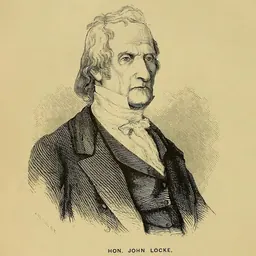
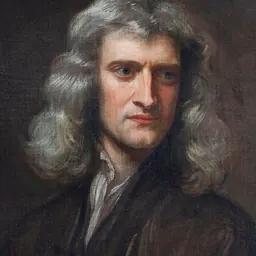
The Apology (1780) is remarkable in many respects. Among other things, it is the first essay of Neohellenic literature. But its greatest importance resides in the concept of "sound philosophy" proposed there. This philosophy is the Occidental natural philosophy, as opposed to the Corydalean Neo-Aristotelianism that was taught everywhere in the Greek-speaking world. Moisiodax admired Descartes, Galilei, Christian Wolff, John Locke, but most of all he admired Isaac Newton. He thought that philosophical instruction must begin with the study of mathematics (Angelo Nicolaides), and that good philosophy is mathematical philosophy. Also, Moisiodax banned the Aristotelian logic from the academic curricula, replacing it with the theory of knowledge, and proposed that the Ancient Greek be replaced in classrooms by Modern Greek, in order to increase the clarity of the lessons taught.
Philosophical work Conflict between the Ancients and the Moderns Iosipos Moisiodax was a critic of Greek society and culture during the Modern Greek Enlightenment. His philosophies on Greek society and culture focused on education reform as framed by his engagement in the conflict between the Ancients and the Moderns. Moisiodax argued for the Moderns in this debate. He believed that Greek society, in relation to Europe, overemphasized the importance of maintaining ancient philosophical theories over the incorporation of modern philosophical theories created during the Enlightenment. According to Moisiodax, this precluded Greek society from advancing socially or culturally, thus putting Greece at a disadvantage to many parts of Europe. In this way, "sounds philosophy" was part of Moisiodax's larger critique of Aristotle's theories on prime matter, Moisiodax's "sound philosophy" appears in his other works as well. In his work entitled, Theory of Geography, Moisiodax used his "sound philosophy" to challenge the Ancients' theories of the basic functions of the Earth.
Moisiodax, as a deacon in the Greek Orthodox Church, was not opposed to teaching religion in schools, but argued for the integration of his "sound philosophy" into their curriculum to secularize education. Moisiodax also argued against the teaching of religious superstition in schools, mirroring John Locke's argument against the teaching of religious superstitions in medieval European education systems. Moisiodax argued that religious superstitions impeded on a student's ability to act as an enlightened member of society. Several of these merchants provided Moisiodax with financial support which he used to publish his works that advocated for the teaching of Modern Greek.
Controversies Moisiodax faced criticism and threats of violence for propagating his ideas. For example, many people who were loyal to the traditional system of education disavowed Moisiodax's teachings. Additionally, Moisiodax believed that he was criticized by some philosophers who supported the Ancients in the debate between the Ancients and the Moderns. He believed that these philosophers feared that their theories would become irrelevant if Greek society adopted modern philosophical theories. Nevertheless, Moisiodax felt it was his duty to spread the ideas of the Enlightenment. Moisiodax desired to spread his theories in the hopes of enlightening all Greeks. Περί Παίδων Αγωγής ή Παιδαγωγία Treatise on the Education of the Youth, adaptation after John Locke and Fénelon with several original chapters, Venice, 1779 Aπολογία Apology, Wien, 1780 Θεωρία της Γεωγραφίας, The Theory of Geography, Wien, 1781 (written in 1767) Σημειώσεις Φυσιολογικαί, Philological notes, Bucharest, 1784
Translations to Greek Οδός Μαθηματική, by Alain Caillé Στοιχεία Μαθηματικών, by André Tacquet
Unpublished works Οδοί Φυσικής Επιτομή Αστρονομίας κατά τους Νεωτέρους
Don’t just read it —
keep it.
Full-length biographies made to live with: read them, listen on the way to work, watch them tonight.
- E-book
- Audio
- Video
Instant download · yours to keep · every purchase keeps this site free
Important facts
People in Iosipos Moisiodax's life
Named in this biography and alive at the same time
Related people
Same field, nearest in time



Contemporaries
People whose lives overlapped Iosipos Moisiodax's





Frequently asked questions
Who was Iosipos Moisiodax?
Greek writer
When was Iosipos Moisiodax born?
Iosipos Moisiodax was born in 1725 in Cernavodă.
When did Iosipos Moisiodax die?
Iosipos Moisiodax died in 1800 in Bucharest.
What was Iosipos Moisiodax's occupation?
Iosipos Moisiodax was an eastern Orthodox priest, philosopher, writer, translator and pedagogue.
What nationality was Iosipos Moisiodax?
Iosipos Moisiodax was Turkish.
Sources & further reading
· Wikipedia: Iosipos Moisiodax
Cite this page
APA: Biography.guide. (2026). Iosipos Moisiodax. https://biography.guide/iosipos-moisiodax/
MLA: "Iosipos Moisiodax." Biography.guide, https://biography.guide/iosipos-moisiodax/.
Chicago: "Iosipos Moisiodax." Biography.guide. https://biography.guide/iosipos-moisiodax/.
Data last updated: 2026-09-20 · Spot an error? Report a correction.
Page generated 2026-09-27 05:06 UTC