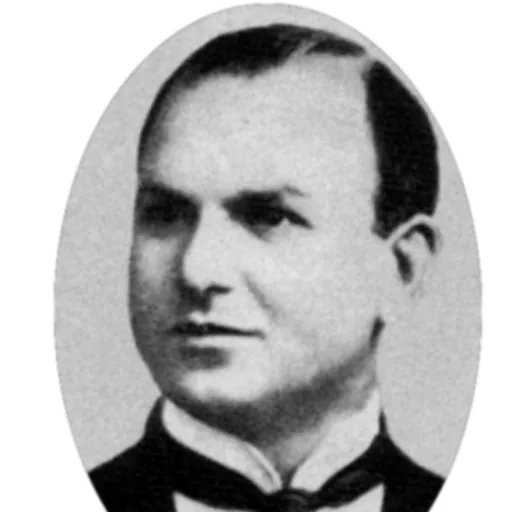
Ion Inculeț
President of the Moldavian Democratic Republic
About Ion Inculeț
Lived 1884 – 1940 (aged 56). Ion Inculeț was a Russian politician, mathematician and physicist.
Ion Inculeț (; – 18 November 1940) was a Bessarabian and Romanian politician. He served as President of the Country Council of the Moldavian Democratic Republic, Minister of the Interior of Romania, and, from 1918, a full member of the Romanian Academy.
Biography Ion Inculeț was born on 5 April 1884 in Răzeni village, which was part of the inter-war (between World War I and World War II) Lăpușna County, in the family of Constantin and Maria Inculeț (née Ionaș), who were peasants. The surname, Inculeț, indicates that Ion might have descended from the Ukrainians and Russians who had settled in Bessarabia. After graduating from his primary school, in 1894, he was admitted to the Theological School in Chișinău. In the newspaper, he published articles on civil rights, personal inviolability, local administration, land reform, and relations between nobility and peasants. In the end, he graduated from the university in 1911 with a first-class diploma and a recommendation for a teaching position. At the same time, he was a Privatdozent (as a private lecturer) in mathematics and astronomy.
Returning to his previous position, he also started practicing journalism during the years 1913–1914, mostly through collaboration with science popularization magazines like Vestnik Znania. This came as a shock, as Ion Pelivan had been the more senior Moldovan national activist, and Pelivan had initially received a majority of the votes, but late during the night it was announced that there was a revision of the presidential proposal. As Gherman Pântea, the former minister in the Government of the Democratic Republic, and future mayor of Odessa, would later proclaim he stated Inculeț's activity was as follows: Immediately afterwards Inculeț was announced as the country's president, leading to the Governor of Bessarabia, Constantin Mimi, resigning from his post and retiring to his estate. In late December, amid the risk of destabilization due to six Bolshevik committees operating alongside the Board of Directors, a secret meeting was held by the Țării on 14 December authorizing external intervention in order to restore order. Inculeț and Pantelimon Erhan, his prime minister, negotiated with the Odessa Military District due to control over military commands being fragmented as some officers were loyal to the Provisional Government, requesting two Cossack divisions. At the same time, Ion Pelivan sought military aid from a leader of the White Movement (which was the anti-Bolshevik side during the Russian Civil War), Dmitry Shcherbachev, in Iași. This was the moment that the Romanian government got approval from the Allies of World War I to send organized troops to support the recognized authorities. Meanwhile, he and Erhan publicly pretended to opposite the intervention of the Romanians after they were summoned by an ad hoc tribunal.
In January 1918, a dual authority emerged in the Republic, despite him being president. One fraction was loyal to the pro-Romanian side, the Țării, and one fraction was loyal to the Bolsheviks, called the Frontotdel. The Frontotdel began disrupting supply lines to Romania and looting warehouses, and attempted to expel the Țării and arrest them. Under pressure from the Frontotdel, on 6 January 1918, he was forced, alongside Erhan, to send a telegram to Iasi requesting that the Romanian Army be withdrawn from Bessarabia. It was, however, ignored by the Romanian government. On 10 January, Romanian forces crossed the Prut, and on the following day the Frontotdel retreated, ending their brief control of Chișinău. The tribunal investigators who had summoned the ad hoc tribunal fled. The session was to discuss the Romanian government's stance on the union of Bessarabia with Romania. Saint-Aulaire agreed that the union should take place and asked him to make it go by as fast as possible. This came after existential threats from the Bolsheviks, and because the country had no effective army to control its own territory, the pro-union factions stated that they needed to join the stable Kingdom of Romania or otherwise be absorbed. The next day, he brought the Act of the Union to Iași to hand it over to King Ferdinand I.
Minister for Bessarabia Following the union, he left the post of President of the Sfatul Țării, and instead was appointed Minister of State for Bessarabia to Romania's Council of Ministers under Marghiloman, technically as a minister without portfolio. Constantin Stere was appointed as his successor as president of the parliament on 2 April unanimously. He was an advocate for larger land allotments for sustainable peasant households, critiquing practices elsewhere in the country, especially in Bukovina, stating that he objected to small plot sizes, free-market land purchases that inflated prices, and excessive retention limits for large landowners. He returned to the post in January 1922 when he was appointed by the PNL, or Liberal, government, which caused some discontent among the Liberals as Daniel Ciugureanu had wanted the role for himself. Instead of an early election due to the dissolution, King Ferdinand suspended the parliament, which gave Averescu the time to negotiate a new majority in the chambers. However, Stirbey later resigned after his just two weeks in favor of his brother-in-law Ion I.C. Brătianu. Ion I.C. Brătianu, keeping in line with Știrbey's choices, kept Inculet as Minister of Health. After Ion died while serving in the post of prime minister, his brother and co-leader of the PNL Vintilă I. C. Brătianu took power, and kept Inculet in power. His term ended after Iuliu Maniu became prime minister on 9 November 1928, and the National Peasants' Party (PNȚ) gained power, which was a merger involving the PNR and PȚ in 1926.
According to newspapers at the time, Inculet was portrayed as emotionally intelligent, and this was effective, since it was uncommon to assign ministers based on "stereotypes". However, through ministerial decrees, it can be seen that he ordered the health authority to sample water and document sanitary conditions to the public. He supported the Romanian Doctors' Association, and extensively praised his predecessor, Gheorghe Gh. Mârzescu, who had served as the first Minister of Health from 1922 to 1923 in another of Ion I.C. Brătianu's cabinets. During his time there, the Ministry of Health also started to expand from a relatively small office after the Chamber of Deputies passed a law transferring the National Office for War Invalids, Orphans, and Windows from the Ministry of War to the Ministry of Health.
Return to PNL leadership in Bessarabia Following his post as Minister of Health, Inculet returned to becoming the head of the PNL in Bessarabia and strengthening its position there. When the right-wing splinter group, the National Liberal Party–Brătianu (or Georgists), split from the PNL he denied rumors that he intended to join them, and reaffirmed his loyalty to the Liberals. However, while the PNL was wary about King Carol II returning to power with some calling it a constitutional coup because he weakened the parliament of Romania, Inculet stated that they did not oppose him while also emphasizing that the king reigned but did not govern so he must act as a neutral arbiter.
In 1931, he led a campaign through the area to assess local needs, particularly in Lăpușna County, where he conducted questionnaires on village conditions to focus on issues that the PNL needed to adopt. He criticized Vaida-Voevod, who had become prime minister, for giving vague reassurance about it but failing to address the implications of it.
On 30 December 1933, after Duca presented the election results to the king, he was assassinated by the Iron Guard. All public officials who were "affiliated with terrorist political groups" were suspended, a State Defense Law was to be drafted, and the Ministry of Education was tasked with enforcing the regulation of student associations. Later on, in an address to the prefects from across Romania, he stated that martial law would soon be lifted in January 1935, but focused more son on reforms to police law and allowing the appointment of licensed jurists as officers and called on prefects to lead a national agricultural offensive in rural Romania.
On 4 January 1936 the Ministry of the Interior he headed was defined under the "Law on the Organization of the Ministry of the Interior". The law stipulated the official mission of the ministry was the general administration of the country and the defense of public order. Critics accused Inculet of doing this to wait until Parliament would close its session so that no debate could occur, and that he would then reintroduce the exception measure by decree-law without debate from parliament.
Inculeț died from a heart attack on 18 November 1940 and was buried at the Bellu Cemetery in Bucharest. At the funeral, a speech was given by Vasile Bârcă, who said: "What characterizes Ion Inculeț’s life and work is his endless modesty and gentleness, his thorough preparation, accompanied by the tact and calm that characterizes him, above all, his warm love of the people, the country, and Bessarabia. of his native, whom he loved with all the powers of his mind and soul." The remains of Inculeț and his wife were moved to Bârnova on 7 June 1942. Their tombs are inside the Bârnova Saint John the Baptist Church (built 1942–47), located on the outskirts of Iași.
Gallery
Publications Popular works on physics’ and astronomy in the magazine Scientific Review, Sankt-Petersburg (1911–1916); Space and time in the new scientific light (Bucharest, 1920); Ma première rencontre avec Saint Aulaire (1930) – in French language; U.R.S.S. (Bucharest, 1932); An experienced revolution / Ion Inculeț. [composed by Ruxandra Mihaila]. Chișinău: Universitas, 1994.
Don’t just read it —
keep it.
Full-length biographies made to live with: read them, listen on the way to work, watch them tonight.
- E-book
- Audio
- Video
Instant download · yours to keep · every purchase keeps this site free
Important facts
Family & relationships
People in Ion Inculeț's life
Named in this biography and alive at the same time



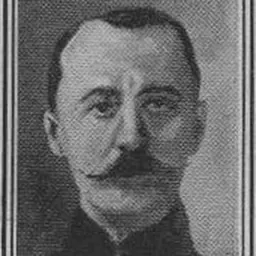

Related people
Same field, nearest in time




Contemporaries
People whose lives overlapped Ion Inculeț's

Frequently asked questions
Who was Ion Inculeț?
President of the Moldavian Democratic Republic (1884–1940)
When was Ion Inculeț born?
Ion Inculeț was born on 5 April 1884 in Răzeni.
When did Ion Inculeț die?
Ion Inculeț died on 18 November 1940 in Bucharest.
What was Ion Inculeț's occupation?
Ion Inculeț was a politician, mathematician and physicist.
What nationality was Ion Inculeț?
Ion Inculeț was Russian.
Sources & further reading
Cite this page
APA: Biography.guide. (2026). Ion Inculeț. https://biography.guide/ion-inculet/
MLA: "Ion Inculeț." Biography.guide, https://biography.guide/ion-inculet/.
Chicago: "Ion Inculeț." Biography.guide. https://biography.guide/ion-inculet/.
Data last updated: 2026-09-23 · Spot an error? Report a correction.
Portrait: Wikimedia Commons · author & licence
Page generated 2026-09-27 05:05 UTC