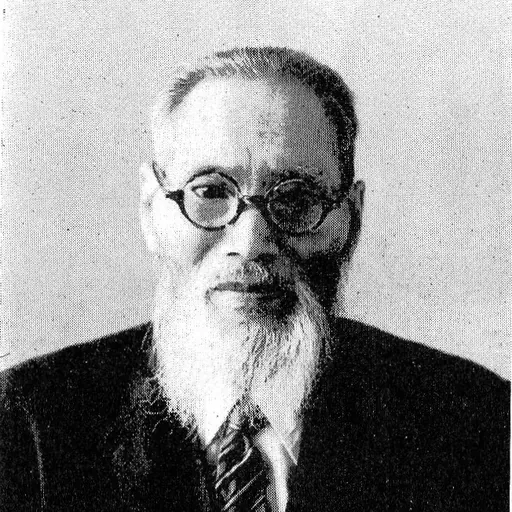
Inosuke Inoue
Japanese missionary to Taiwanese aboriginal tribes
About Inosuke Inoue
Lived 1882 – 1966 (aged 83–84). Inosuke Inoue was a Japanese missionary, physician and pastor.
Inosuke Inoue (September 2, 1882 – June 20, 1966), whose Chinese given name was Gao Tianming, was born in Kochi Prefecture, Japan. In addition to being a Christian clergyman, he also engaged in medical services.
Inosuke Inoue's father, during the early days of Taiwan under Japanese rule, went to Hualien, Taiwan, to engage in camphor harvesting. Later, during the Weili Incident, he and dozens of government officials were killed by the Taroko people. For this reason, after Inosuke graduated from the seminary, he went to Taiwan's aboriginal tribes to carry out missionary and medical work with the concept of education and service. Later, he made many contributions to the medical work of Taiwan's aborigines throughout his life; therefore, he is known as the "Father of Aboriginal Medical Services" in Taiwan. Tzu Chi Monthly called Inoue "revenge with love."
Father died In 1895, due to the victory in the Sino-Japanese War of 1895-1895, Japan obtained the territory of Taiwan. To obtain colonial economic resources, the Taiwan Governor-General, the highest administrative agency set up by Japan in Taiwan, began large-Government-General of Taiwan. Not only did the Governor-General promulgate the "Rules for the Banning of Government-owned Forestry and Camphor Manufacturing" in the same year, and the "Rules for the Banning of Camphor Business and Camphor Taxation" the following year, a few years later, a camphor bureau was set up under the Government-General's Office to conduct camphor production. Manufacturing and exclusive sales. Among them, camphor wood required for camphor is cultivated and developed in the mountainous areas of western Taiwan and as far away as the Hualien area, where most of the Taiwanese aborigines live.
Although in charge of the camphor monopoly, the Camphor Bureau of the Governor's Office still actively cooperates with companies on the Japanese island. The cooperative companies in the Hualien area include the well-known Japanese private company Kada Group. In the summer of 1906, fierce conflicts broke out in the camphor factory set up by the Hetian Group in Hualien Weilishe. There were fierce battles between the camphor-making workers, mostly Taroko people and the Japanese-dominated employers because of labor disputes. During the battle, a total of 32 Japanese people were killed. Since everyone's head was cut off on the day of the murder, some people believe that one of the causes of the incident was the grass-cutting ceremony held by the residents of the Weili community of the Taroko ethnic group. After liquidation, among the deceased were the Hualien Branch Chief of Police Oyama Juro and Inoue Inosuke's father, Inoue Yanosuke, who worked as a technician in the camphor field.
Missionary motivation Japanese priest Juji Nakada baptized Inosuke Inoue in June 1903. In September 1905, he entered the Holy Book College of the Oriental Missionary Society. When the news of his father's murder reached Japan, Inosuke, who was studying at the seminary, not only mourned but also thought from the perspective of a religious person. He believed the Taroko people did this because they were not exposed to Christian teachings. Therefore, he came up with the idea of going to Taiwan to preach: "From today on, I will pray for the Taiwanese aborigines every day, praying that someone will preach the gospel to them as soon as possible and become kind people."
Returning to Japan after the war In 1945, the Second World War ended, Japan was defeated and surrendered, and Taiwan entered the Republic of China period. Due to the change of government, the Japanese Inosuke Inoue faced the dilemma of being deported back to Japan. To stay in Taiwan and continue to provide medical services, Inosuke changed his name to Gao Tianming and was appointed by the Health Bureau as Songshan Sanatorium.
According to Yumi Kojima's research, for the Atayal people, birth is tminun utux (God is weaving), and death is mason tminun utux (God has finished weaving). Inosuke Inoue commented on this during his lifetime: Everything in the universe is the will of God, and humans can do nothing. If the war fails, they say: "God's weaving is not good." When humans are happy and victorious, they say: "God weaves well."Just as a woman weaves fabric, it can be said that God is intricately crafting the course of the world and humanity's journey. What profound and meaningful words! I have fulfilled fifty years of prayers and missions. It is an impossible task for me alone, but through God and the individuals He has chosen, the mission has been accomplished on my behalf. God is in the process of weaving, tminun Utux. I believe God will weave the ethnic groups of Taiwan into something beautiful to rescue and sanctify them in the eyes of the Japanese and the global community.
Quotation "From today onwards, I am going to pray every day for the aborigines in Taiwan, praying that someone will preach the gospel to them soon and instead become a people of goodness."
"I don't know how long it will take for the aboriginal people of Taiwan to stop killing people's heads, and I pray that through the power of God the Father, they will repent from this horrible and great sin and become good people as soon as possible."
"If the locals of Taiwan, who in the eyes of the world are considered to be the same as wild animals, are also honorable human beings made in the image of God, I am sure that God will save them...I must do it so that others can recognize God's presence in the faces of the locals."
"Now faced with the situation of not being able to preach publicly, what can I preach to those around me? Only by my daily prayers and deeds."
Don’t just read it —
keep it.
Full-length biographies made to live with: read them, listen on the way to work, watch them tonight.
- E-book
- Audio
- Video
Instant download · yours to keep · every purchase keeps this site free
Important facts
People in Inosuke Inoue's life
Named in this biography and alive at the same time
Related people
Same field, nearest in time


Contemporaries
People whose lives overlapped Inosuke Inoue's





Frequently asked questions
Who was Inosuke Inoue?
Japanese missionary to Taiwanese aboriginal tribes
When was Inosuke Inoue born?
Inosuke Inoue was born in 1882 in Japan.
When did Inosuke Inoue die?
Inosuke Inoue died in 1966.
What was Inosuke Inoue's occupation?
Inosuke Inoue was a missionary, physician and pastor.
What nationality was Inosuke Inoue?
Inosuke Inoue was Japanese.
Sources & further reading
Cite this page
APA: Biography.guide. (2026). Inosuke Inoue. https://biography.guide/inosuke-inoue/
MLA: "Inosuke Inoue." Biography.guide, https://biography.guide/inosuke-inoue/.
Chicago: "Inosuke Inoue." Biography.guide. https://biography.guide/inosuke-inoue/.
Data last updated: 2026-09-23 · Spot an error? Report a correction.
Portrait: Wikimedia Commons · author & licence
Page generated 2026-09-27 05:07 UTC