
About Ina Coolbrith
Lived 1841 – 1928 (aged 86). Ina Coolbrith was an American librarian, poet, journalist and writer.
alt=A fine charcoal portrait of Ina Coolbrith in her 30s or 40s, shown from the neck up, wearing a garment with a high, open collar made of lace, with hair curled and secured atop the head, looking slightly to the left. A fountain pen signature is below the portrait, reading "Ina Coolbrith", the letter "c" writ large to sweep underneath the next five letters.
Ina Donna Coolbrith (born Josephine Donna Smith; March 10, 1841 – February 29, 1928) was an American poet, writer, librarian, and a prominent figure in the San Francisco Bay Area literary community. Called the "Sweet Singer of California", she was the first California Poet Laureate and the first poet laureate of any American state.
Coolbrith, born the niece of the Church of Jesus Christ of Latter-day Saints founder Joseph Smith, left the Mormon community as a child to enter her teens in Los Angeles, California, where she began to publish poetry. She terminated a youthful failed marriage to make her home in San Francisco, and met writers Bret Harte and Charles Warren Stoddard with whom she formed the "Golden Gate Trinity" closely associated with the literary journal Overland Monthly. Her poetry received positive notice from critics and established poets such as Mark Twain, Ambrose Bierce, and Alfred, Lord Tennyson. She held literary salons at her home in Russian Hill —in this way she introduced new writers to publishers. Coolbrith befriended the poet Joaquin Miller and helped him gain global fame.
While Miller toured Europe and lived out their mutual dream of visiting Lord Byron's tomb, Coolbrith cared for his Wintu daughter and members of her own family. As a result, she came to reside in Oakland and accepted the position of city librarian. Her poetry suffered as a result of her long work hours, but she mentored a generation of young readers including Jack London and Isadora Duncan. After she served for 19 years, Oakland's library patrons called for reorganization, and Coolbrith was fired. She moved back to San Francisco and was invited by members of the Bohemian Club to be their librarian.
Coolbrith began to write a history of California literature, including much autobiographical material, but the fire following the 1906 San Francisco earthquake consumed her work. Author Gertrude Atherton and Coolbrith's Bohemian Club friends helped set her up again in a new house, and she resumed writing and holding literary salons. She traveled by train to New York City several times and, with fewer worldly cares, greatly increased her poetry output.
On June 30, 1915, Coolbrith was named California's poet laureate, and she continued to write poetry for eight more years. Her style was more than the usual melancholic or uplifting themes expected of women—she included a wide variety of subjects in her poems, which were noted as being "singularly sympathetic" and "palpably spontaneous". California poet laureate Carol Muske-Dukes wrote of Coolbrith's poems that, though they "were steeped in a high tea lavender style", influenced by a British stateliness, "California remained her inspiration."
Early life alt=A soft photographic portrait of a girl approximately 11 years old, shown from the neck up, wearing a simple dark garment with no collar, her hair parted in the middle and falling straight to frame her cheeks, turning to ringlets at her neck and shoulders, the head tilted slightly to the right, the eyes looking directly forward. The image shows loss of detail from wear. Ina Coolbrith was born Josephine Donna Smith in Nauvoo, Illinois, the last of three daughters of Agnes Moulton Coolbrith and Don Carlos Smith, brother to Joseph Smith, the founder of Mormonism. Coolbrith's father died of malarial fever four months after her birth, and a sister died one month after that;
Coolbrith, sometimes called "Josephina" or just "Ina", wrote poems beginning at age 11, first publishing "My Ideal Home" in a newspaper in 1856, writing as Ina Donna Coolbrith.
In April 1858, at the age of 17, Coolbrith married Robert Bruce Carsley, an iron worker and part-time actor. However, she experienced abuse at his hands, She published poems in The Californian, a new literary newspaper formed in 1864 and edited by Harte and Charles Henry Webb. In July 1868, Coolbrith supplied a poem, "Longing", for the first issue of the Overland Monthly, and served unofficially as co-editor with Harte in selecting poems, articles and stories for the periodical. She became a friend of actress and poet Adah Menken, Coolbrith also worked as a schoolteacher for extra income.
For a decade, Coolbrith supplied one poem for each new issue of the Overland Monthly. After the 1866 publication of four of her poems in an anthology edited by Harte, Coolbrith's "The Mother's Grief" was positively reviewed in The New York Times. Another poem, "When the Grass Shall Cover Me", appeared unattributed in an anthology of John Greenleaf Whittier's favorite works by other poets, entitled Songs of Three Centuries (1875); Coolbrith's poem was judged the best of that group.
Coolbrith's literary work connected her with poet Alfred, Lord Tennyson and naturalist John Muir, as well as Charles Warren Stoddard who also helped Harte edit the Overland Monthly. As editors and arbiters of literary taste, Harte, Stoddard and Coolbrith were known as the "Golden Gate Trinity". Stoddard once said that Coolbrith never had any of her literary submissions returned from a publisher. Coolbrith met writer and critic Ambrose Bierce in 1869, and by 1871 when he was courting Mary Ellen Day, Bierce organized friendly card games between himself, Day, Coolbrith and Stoddard. Bierce felt that Coolbrith's best poems were "California", the commencement ode she wrote for the University of California in 1871, and "Beside the Dead", written in 1875.
In mid-1870, Coolbrith met the eccentric poet Cincinnatus Hiner Miller, newly divorced from his second wife, and introduced him to the San Francisco literary circle at the suggestion of Stoddard. Miller quoted Tennyson in describing Coolbrith as "divinely tall, and most divinely fair". When Coolbrith discovered that Miller was enamored of the heroic, tragic life of the legendary Californio outlaw Joaquin Murrieta, she suggested that Miller take the name Joaquin Miller as his pen name, and also that he dress the part with longer hair and a more recognizably mountain man-style costume.
title=Beside the Dead It must be sweet, O thou, my dead, to lie With hands that folded are from every task; Sealed with the seal of the great mystery, The lips that nothing answer, nothing ask. The life-long struggle ended; ended quite The weariness of patience, and of pain, And the eyes closed to open not again On desolate dawn or dreariness of night. It must be sweet to slumber and forget; To have the poor tired heart so still at last; Done with all yearning, done with all regret, Doubt, fear, hope, sorrow, all forever past; Past all the hours, or slow of wing or fleet— It must be sweet, it must be very sweet! — Ina Coolbrith the second of four women so honored. This allowed the members of the club to discreetly assist her in her finances, but their help was not enough to cover her full burden. Coolbrith moved to Oakland to set up a larger household for her extended family. Coolbrith's sister Agnes died late in 1874, and the orphaned niece and nephew continued to live with Coolbrith and Calla Shasta.
To support the household, in late 1874 Coolbrith took a position as the librarian for the Oakland Library Association, a subscription library that had been established five years earlier. In 1878, the library was reformed as the Oakland Free Library, the second public library created in California under the Rogers Free Library Act (Eureka was first). Coolbrith earned a salary of $80 per month, much less than a man would have received. She worked 6 days a week, 12 hours a day. Her poetry suffered as a result. She published only sporadically over the next 19 years who later described Coolbrith as "a very wonderful" woman, with "very beautiful eyes that glowed with burning fire and passion". Magazine writer Samuel Dickson reported that, at a soirée in 1927, an aging Coolbrith told him of the famous lovers she had known, and that she had once dazzled Joseph Duncan, Isadora's father. Coolbrith said that his attentions led to the breakup of his marriage. Duncan's mother left San Francisco and settled her four children in Oakland, little knowing that Coolbrith would soon meet one of her children, and help the young dancer develop a wider knowledge of the world through reading. Duncan wrote in her autobiography that, as a librarian, Coolbrith was always pleased with the youthful dancer's book choices, and that Duncan did not find out until later that Coolbrith was "evidently the great passion of [Joseph Duncan's] life".
Coolbrith's nephew Henry Frank Peterson came to work with her at the library, and began to organize the books into a faceted classification scheme that she specified, one which used one- and two-digit numbers to stand for general subjects, and three-digit numbers to indicate individual books in that subject. Before this, Coolbrith had resisted library trustee attempts to classify the books; she had wished to continue the reading-room atmosphere that she had established. Quaker poet and former abolitionist John Greenleaf Whittier wrote to Coolbrith from Amesbury, Massachusetts, to share his opinion that her "little volume" of poetry, "which has found such favor with all who have seen it on this side of the Rocky mountains", should be republished on the East Coast.
alt=Monochrome photograph portrait of a man in his mid-20s shown from the shoulders up, wearing a dark coat, white collared shirt and dark, thin, bow tie, the man's shoulders squared forward but his head turned somewhat to the right, looking right, with light-colored hair in short, oiled waves on the head, light-colored eyebrows, and a wide, light-colored mustache extending just beyond the corners of the mouth. Until he criticized her in writing, Coolbrith considered Ambrose Bierce a good friend. Once warmly social with her, in the 1880s Ambrose Bierce turned his caustic pen to criticism of Coolbrith's work, and thus lost her as a friend. All four poems were included in Coolbrith's 1895 book, Songs from the Golden Gate—a re-issue of her earlier 1881 collection, with some 40 poems added. Peterson opened the library on Sundays and holidays and increased accessibility to the stacks—he was praised by trustees for his "management improvements". Coolbrith was commissioned to write a poem for the Exposition, and in October 1893 she brought with her to Chicago the poem "Isabella of Spain" to help dedicate Harriet Hosmer's sculpture Queen Isabella which stood before the Pampas Plume Palace within the California Pavilion. Listening to Coolbrith were well-known women such as suffragist Susan B. Anthony and journalist Lilian Whiting. During Coolbrith's visit, Charlotte Perkins Stetson, her friend from the Pacific Coast Woman's Press Association (the two women served as president and vice-president, respectively), wrote to May Wright Sewall on her behalf; Stetson observed that Coolbrith could benefit from introductions to Chicago's best writers.
Coolbrith's difficulties in Oakland, followed by her trip to Chicago, unsettled her friends, who did not wish to see her move away and "become an alien" to California. John Muir had long been in the habit of sending Coolbrith letters, as well as the occasional box of fruit (such as cherries picked from the trees on his Martinez estate). He made such an offering in late 1894, accompanied by a suggestion for a new career which he thought would keep her in the area: she could fill the position of San Francisco's librarian, recently vacated by John Vance Cheney. Coolbrith sent a response to Muir, thanking him for "the fruit of your land, and the fruit of your brain". After signing the letter "your old-time friend", she added a post-script comment: "No, I cannot have Mr. Cheney's place. I am disqualified by sex."
A second poetry collection, Songs from the Golden Gate, was published in 1895. It contained "The Mariposa Lily", a description of California's natural beauty, and "The Captive of the White City", which detailed the cruel mistreatment of Native Americans in the late 19th century.
Connections among Coolbrith's circle of friends resulted in a librarian job at San Francisco's Mercantile Library Association in 1898, and she moved back to Russian Hill in San Francisco. In January 1899, artist William Keith and poet Charles Keeler obtained for her a part-time position as librarian of the Bohemian Club, of which Keith and Keeler were members. Her first assignment was to edit Songs from Bohemia, a book of poems by Daniel O'Connell, Bohemian Club co-founder and journalist, following his death. Her salary was $50 each month, As a personal project, she began to work on a history of California literature.
Earthquake and fire
By February 1906, Coolbrith's health was showing signs of deterioration. She was often sick in bed with rheumatism, and hard-pressed to continue her work at the Bohemian Club.
A month later, disaster struck in the form of the calamitous fire that followed the great San Francisco earthquake in April 1906: Coolbrith's home at 1604 Taylor Street burned to the ground. Directly after the earthquake but before fire threatened, Coolbrith had left her house carrying a pet cat, thinking she would soon return. Her student boarder Robert Norman and her companion Josephine Zeller were unable to carry more than another cat, a few small bundles of letters and Coolbrith's scrapbook. Immediately after he spotted heavy smoke from across the bay, Joaquin Miller took the ferry from Oakland to San Francisco in order to assist Coolbrith in saving her valuables from the approaching fire, but was prevented from doing so by soldiers who had orders to use deadly force against looters. In February 1907, the San Jose Women's Club hosted an event called "Ina Coolbrith Day" to promote interest in legislating a state pension for Coolbrith, and in a book project being put forward by the Spinners' Club. In June 1907, the Spinners' Club printed a book entitled The Spinners' book of fiction whose proceeds were to be given to Coolbrith. Frank Norris, Mary Hallock Foote and Mary Hunter Austin were among the authors who contributed stories. The poet George Sterling, a friend from the Bohemian Club, submitted an introductory poem, and Bohemian Maynard Dixon was among the illustrators. The driving force behind the effort was Gertrude Atherton, a writer who saw in Coolbrith a connection to California's literary origins. When the book failed to produce sufficient funding, Atherton added enough from her own pocket to start construction.
A new house was built for Coolbrith at 1067 Broadway on Russian Hill. Settled there, she resumed hosting salons. In 1910, she received a trust fund from Atherton. During 1910–1914, with money from Atherton and a discreet grant from her Bohemian friends, Coolbrith spent time going between residences in New York City and San Francisco, writing poetry. In 1913, Ella Sterling Mighels founded the California Literature Society which met informally once a month at Coolbrith's Russian Hill home, newspaper columnist and literary critic George Hamlin Fitch presiding. Mighels, who has been called California's literary historian, credited her breadth of knowledge to Coolbrith and the society meetings. McCracken was then ushered up from her seat in the audience to join Coolbrith. by the California State Senate with no financial support attached.
In 1916, Coolbrith sent copies of her poetry collections to her cousin Joseph F. Smith who publicized her sending them to him and her identity as a niece of Joseph Smith, which upset her. She told him that "To be crucified for a faith in which you believe is to be blessed. To be crucified for one in which you do not believe is to be crucified indeed." She assured him she was not angry but she certainly was not pleased. At the age of 80, McCracken wrote to Coolbrith to complain to her dear friend of still having to work for a living: "The world has not used us well, Ina; California has been ungrateful to us. Of all the hundred thousands the state pays out in pensions of one kind and another, don't you think you should be at the head of the pensioners, and I somewhere down below?"
Death and legacy alt=A monochrome portrait photograph of an elderly woman sitting in her home with a white Persian cat resting at her feet. The woman is wearing a light-colored dressing gown, her closed hands on her lap, her head tilting to one side, looking tight-lipped at the photographer, a white lace veil and scarf over her hair and framing her face. In May 1923, Coolbrith's friend Edwin Markham found her at the Hotel Latham in New York, "very old, ill and moneyless". He asked Lotta Crabtree to gather help for her. Crippled with arthritis, Coolbrith was brought back to California where she settled in Berkeley to be cared for by her niece. In 1924, Mills College conferred upon her an honorary Master of Arts degree. In April 1926, she received visitors such as her old friend, art patron Albert M. Bender, who brought young Ansel Adams to meet her. Adams made a photographic portrait of Coolbrith seated near one of her white Persian cats and wearing a large white mantilla on her head. and was buried in Mountain View Cemetery in Oakland. Her grave (located in Plot 11 at ) was unmarked until 1986 when a literary society known as The Ina Coolbrith Circle placed a headstone. a peak near Beckwourth Pass in the Sierra Nevada mountains near State Route 70. Near her Russian Hill home, Ina Coolbrith Park, established earlier as a series of terraces ascending a steep hill, received a memorial plaque placed in 1947 by the San Francisco parlors of the Native Daughters of the Golden West. The park is known for its "meditative setting and spectacular bay views".
Wings of Sunset, a book of Coolbrith's later poetry, was published in the year after her death. Charles Joseph MacConaghy Phillips edited the collection, and wrote a brief memorial to Coolbrith's life.
In 1933, the University of California established the Ina Coolbrith Memorial Poetry Prize, given annually to authors of the best unpublished poems written by undergraduate students enrolled at the University of the Pacific, Mills College, Stanford University, Santa Clara University, Saint Mary's College of California, and any of the University of California campuses.
alt=A color photograph of a pink granite headstone amid lush green grass and yellow oxalis flowers. The headstone is engraved with a laurel wreath at the top, and reads "Ina Donna Coolbrith" 1841–1928 "California's First Poet Laureate". The Ina Coolbrith Circle emplaced this laurel wreath-engraved headstone in 1986. The California Writers Club (CWC) occasionally selects a member, one distinguished by "exemplary service", to receive the Ina Coolbrith Award. In 2009, the award was given to Joyce Krieg, editor of the CWC Bulletin. In 2011, Kelly Harrison received the award for work on the anthology West Winds Centennial. In his 1997 novel Separations, author Oakley Hall set Coolbrith and others of her 1870 literary circle as main characters in the story.
In 2001, a $63,000 sculpture by Scott Donahue was placed in Oakland's central Frank Ogawa Plaza, adjacent to Oakland City Hall. The artist said his polychrome patchwork statue was a composite image of 20 women, historic and current, important to Oakland, including Coolbrith, Isadora Duncan, Julia Morgan and more. Entitled Sigame/Follow Me, the sculpture elicited protests because the city did not follow its own process for acquiring public art and because "some people", according to Ben Hazard, Oakland's Craft and Cultural Arts Department leader, "just don't like the sculpture's looks". By late 2004, the sculpture had been removed to a remote former industrial site called Union Point Park on the Oakland Estuary, opening to the public in 2005.
The City of Berkeley in 2003 installed a series of 120 poem-imprinted cast-iron plates flanking one block of a downtown street, to become the Addison Street Poetry Walk. Former U.S. Poet Laureate Robert Hass determined that one of Coolbrith's works should be included. A plate bearing Coolbrith's poem "Copa De Oro (The California Poppy)" in raised porcelain enamel text is set into the sidewalk at the high-traffic northwest corner of Addison and Shattuck Avenues.
In 2016, a path in the Berkeley Hills was renamed for Coolbrith. When byways in the Berkeley hills were named after Bret Harte, Charles Warren Stoddard, Mark Twain, and other literati in Coolbrith's circle, women were not included. Through the efforts of the City of Berkeley, the Berkeley Historical Society, the Berkeley Historical Plaque Project, and the Berkeley Path Wanderers Association, the name of a stairway in the hills that connects Grizzly Peak Boulevard and Miller Avenue was changed from Bret Harte Lane to Ina Coolbrith Path. (Bret Harte still has three byways named for him in the area.) At the bottom of the stairway, the Berkeley Historical Society has installed a plaque to commemorate Coolbrith.
Don’t just read it —
keep it.
Full-length biographies made to live with: read them, listen on the way to work, watch them tonight.
- E-book
- Audio
- Video
Instant download · yours to keep · every purchase keeps this site free
Important facts
more
Josephine Donna Smith Carsley “Ina” CoolbrithPeople in Ina Coolbrith's life
Named in this biography and alive at the same time






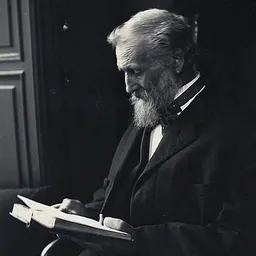
Related people
Same field, nearest in time

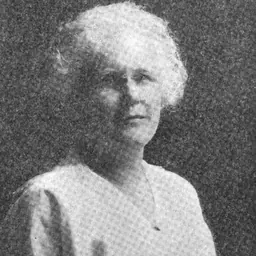
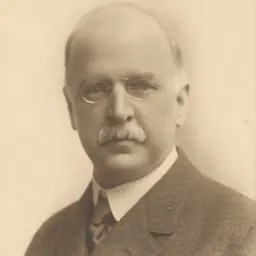
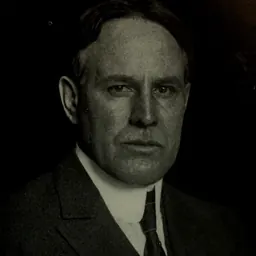
Contemporaries
People whose lives overlapped Ina Coolbrith's
Frequently asked questions
Who was Ina Coolbrith?
American poet, writer, and librarian (1841–1928)
When was Ina Coolbrith born?
Ina Coolbrith was born on 10 March 1841 in Nauvoo.
When did Ina Coolbrith die?
Ina Coolbrith died on 29 February 1928 in Oakland.
What was Ina Coolbrith's occupation?
Ina Coolbrith was a librarian, poet, journalist and writer.
What nationality was Ina Coolbrith?
Ina Coolbrith was American.
Sources & further reading
Cite this page
APA: Biography.guide. (2026). Ina Coolbrith. https://biography.guide/ina-coolbrith/
MLA: "Ina Coolbrith." Biography.guide, https://biography.guide/ina-coolbrith/.
Chicago: "Ina Coolbrith." Biography.guide. https://biography.guide/ina-coolbrith/.
Data last updated: 2026-09-20 · Spot an error? Report a correction.
Page generated 2026-09-27 05:22 UTC