
About Ilse Bing
Lived 1899 – 1998 (aged 98). Ilse Bing was a German and American photographer.
Ilse Bing (23 March 1899 – 10 March 1998) was a German avant-garde and commercial photographer who produced pioneering monochrome images during the inter-war era.
Biography
Background and early life Ilse Bing was born into a wealthy Jewish family of merchants in Frankfurt am Main, Germany, on March 23, 1899. Louis Bing and Johanna Elli Bing (née Katz) were her parents. Bing was up in a culturally active family and was exposed to the arts at a young age. Her eventual career in photography was hinted at when she took her first self-portrait with a Kodak box camera, which she obtained when she was fourteen years old. In 1924, she began work on a dissertation about the German Neo-Classical architect Friedrich Gilly (1772–1800), and to document architectural subjects for her research, Bing purchased a Voigtländer 9×12 cm camera. This practical use of photography gradually sparked a more artistic interest, and she began creating photographic works as part of her academic process, evolving into a lifelong interest in photography. When she finished her studies in the summer of 1929 and gave up her dissertation, she turned entirely to photography, bought a newly launched Leica (35mm camera) and began working in photojournalism. For the next two decades, the Leica would remain the basis of Bing's artistic work.
Paris At the end of 1930 Ilse Bing moved to Paris and continued her photographic work there. She received reportage assignments through the mediation of the Hungarian journalist Heinrich Guttmann. To develop her photos, Guttmann provided her with a garage that Bing used as a darkroom. After initially living in the Hotel Londres on Rue Bonaparte, she moved to Avenue de Maine, 146 in 1931. In the same year, Bing's work was exhibited in both France and Germany. from the critic and photographer Emmanuel Sougez, whom she met in 1931. In 1933, Bing left Avenue de Maine and moved to Rue de Varenne, No. 8. With the pianist and music teacher Konrad Wolff, who lived in the same house, she was initially only known through his piano playing, which could be heard through the courtyard. A little later they would get to know each other personally and become a couple.
When Bing visited New York in 1936, she received the offer to work as a photographer for Life magazine, which she turned down in order not to be separated from Wolff, who lived in Paris. In the same year, her work was included in the first modern photography exhibition held at the Louvre, and in 1937 she traveled to New York City where her images were included in the landmark exhibition "Photography 1839–1937" at the Museum of Modern Art.
In an interview with the German photographer Herlinde Koelbl, Bing later said: “A lot of people just call it internment camps because we weren't mistreated. I felt it was a concentration camp. To be separated from my husband, not knowing where he is, not knowing what is going on out in the world. (...) This bondage, the absolute lack of freedom and degradation. I always had a razor blade with me. I was determined not to let the Nazis intern me. Then I would have taken my life. But you can take a lot more than you think. It was worse than you could imagine and you could endure more than you thought possible.” After Wolff stood up for Bing's release at great expense, they managed to reach Marseille together. There they waited nine months for their visa to enter the USA. The Affidavit of Sponsorship required for this was issued by the author and journalist Hendrik Willem van Loon, whom Bing had already met in 1930. In 1941, Bing and Wolff finally emigrated and settled in New York.
New York In New York, Bing had to re-establish her reputation, and although she got steady work in advertising and portrait photography, she failed to receive important commissions as in Paris.
In the 1940s and 50s, Bing was best known for her portraits of children, but also photographed personalities such as Dwight D. Eisenhower and his wife Mamie.
By 1947, Bing came to the realization that New York had revitalized her art. Her style was very different; the softness that characterized her work in the 1930s gave way to hard forms and clear lines, with a sense of harshness and isolation. This was indicative of how Bing’s life and worldview had been changed by her move to New York and the war-related events of the 1940s. From 1950 Bing worked with a Rolleiflex, which she used in alternation with the Leica for the next two years, but in 1952 decided to work exclusively with the medium format of the Rolleiflex.
In 1951 and 1952 she visited Paris again and always had her camera with her. In 1957 she turned away from black-and-white photography and concentrated on working with color negatives. In 1959, Bing decided to give up photography altogether. She felt the medium was no longer adequate for her, and seemed to have tired of it. In the mid-1970s, the Museum of Modern Art purchased and showed several of her photographs. organized by the New Orleans Museum of Art. Numerous solo exhibitions followed in New York, Las Vegas, Chicago, San Francisco, Frankfurt, and many more. Bing's photographs were also featured in multitudinous group exhibitions.
Bing published her first book in 1976 under the title Words as Visions at Ilkon. Press. Another publication with the title Numbers in Images followed in 1978 by the same publisher. In 1982 Bing published the illustrated book Women from Cradle to Old Age – 1929-1955, which contains numerous monochrome as well as color photographic portraits of women. The foreword was written by Gisèle Freund.
The emerging attention that Bing has enjoyed from the 1970s through the 1980s can be traced back to the growing fascination and interest in European photography of the 1920s and 1930s.
From 1984 onwards, Ilse Bing made a number of appearances in the USA and Germany as a speaker on the development of modern art, especially photography. In the course of this activity she held i.a. Lectures in Frankfurt, Essen, Cologne, New Orleans and New York.
In the last few decades of her life, she wrote poetry, made drawings and collages, and occasionally incorporated bits of photos. She was interested in combining mathematics, words, and images.
Unposed scenes of people playing, working, or strolling were common in her honest compositions; these situations were usually skewed or off-center to add motion. Her keen sense of time allowed her to catch the exact moment a person entered or left the frame, lending her photographs a narrative element that mirrored the cadence of everyday life. Her 1932 image "Rue de Valois, Paris," which captures a guy in the middle of a finely staged moment of city life, is a noteworthy illustration of this strategy.
Printing Techniques Ilse Bing was an expert in darkroom methods and considered printing to be a vital component of her creative process. She achieved a fine balance between emotion and clarity by carefully adjusting exposure, contrast, and tonal range. Bing, who is well-known for her rich contrast and gentle grayscale, produced prints with deep blacks and seamless tonal shifts that accentuated the modernist elements of her artwork. She also experimented with solarization, which adds mood or abstraction to some photos by partially reversing tones to produce surreal, halo-like effects.
Bing was flexible even though she carefully planned her shots in-camera; she frequently edited her final images before printing to improve balance and rhythm. In order to promote intimate, direct interaction with her images, she usually printed in small formats. Her prints were as unique and expressive as her compositions thanks to her technical proficiency and imaginative darkroom techniques.
Artistic practice and subjects
Artistic practice Ilse Bing always took photos from a very individual point of view, both for portraits and for countless architectural photos. What they work best characterizes enlargement of fragments of 35mm film her Leica and the resulting idiosyncratic cropping. Her work was shaped by contemporary abstract and non-representational painting as well as by New Vision and Surrealism. She also discovered a type of solarisation for negatives independently of a similar process developed by the artist Man Ray.
Numbers in Images: Illuminations of Numerical Meanings (1976) In this work, published in 1976, Ilse Bing dedicates herself to numbers and thus returns to a certain extent to the origins of her academic training when she was still studying mathematics and physics. As in the previously published Words as Visions, the book is fully illustrated with Bing's drawings.
She introduces her thoughts and poems about numbers as follows: „this limited selection does not touch on all facets of numbers, because its function is to illuminate, and not to explain. it deals with the very lowest numbers, those which we still can count on our fingers. for these are the base of the entire numerical row, and also the fundament for all mathematical constructions.“
Use of the Leica Camera In the early 1930s, Ilse Bing was one of the first professional photographers to use the Leica 35mm camera, a ground-breaking piece of gear. Because of its small size, portability, and quick shutter, the Leica was perfect for shooting unscripted moments and dynamic compositions, which Bing used to great artistic advantage. In 1929, she bought her first Leica, which soon became a staple of her work. Bing used the Leica to experiment with radical framing, high and low angles, natural light, and deep shadows—characteristics that aligned her with the modernist movement in photography. Her Leica work captured the energy of urban life, particularly in Paris, where she documented architectural geometry, fleeting street scenes, and atmospheric interiors. Critics and peers alike took note of her innovative eye, and she was soon dubbed “The Queen of the Leica,” a nickname that reflected both her technical command and her creative vision. Her Leica breakthrough helped 35mm photography gain more widespread acceptance as a legitimate artistic medium. The expressive and journalistic possibilities of the more adaptable Leica was showcased by Bing's work during a period when many fine art photographers still preferred large-format cameras. Her photographs were displayed beside those of Man Ray, Brassaï, and Henri Cartier-Bresson and were included in magazines such as Vu, Harper's Bazaar, and Lilliput.
Awards
1990: Women’s Caucus for Art Award, New York. 1993: First Gold Medal Award for Photography vom National Arts Club, New York.
Exhibitions
1948: „Ilse Bing Photographs”, The Brookly Museum 1985: „Ilse Bing: Three Decades of Photography“, New Orleans Museum of Art 1986: „Ilse Bing“, International Center of Photography, New York 1995: „Ilse Bing – Marta Hoepffner – Abisag Tüllmann. Drei Fotografinnen in Frankfurt“, Historical Museum, Frankfurt 1996: „Ilse Bing – Fotografien 1929–1956“, Suermondt-Ludwig-Museum, Aachen 2004: „Ilse Bing: Queen of the Leica“, Victoria & Albert Museum, London 2019: “Ilse Bing (1899-1998): Fotografien”, Galerie Berinson, Berlin 2020: “Ilse Bing: Paris and Beyond”, F11 Foto Museum, Hong Kong 2020: “Ilse Bing: Queen of the Leica”, The Cleveland Museum of Art 2021: in "The New Woman Behind the Camera", The Metropolitan Museum of Art, New York
Documentary Bing was one of three female photographers portrayed in Drei Fotografinnen: Ilse Bing, Grete Stern, Ellen Auerbach, a 1993 documentary by Berlin filmmaker Antonia Lerch.
Public collections Art Institute of Chicago New Orleans Museum of Art San Francisco Museum of Modern Art Victoria & Albert Museum
Don’t just read it —
keep it.
Full-length biographies made to live with: read them, listen on the way to work, watch them tonight.
- E-book
- Audio
- Video
Instant download · yours to keep · every purchase keeps this site free
Important facts
Family & relationships
People in Ilse Bing's life
Named in this biography and alive at the same time


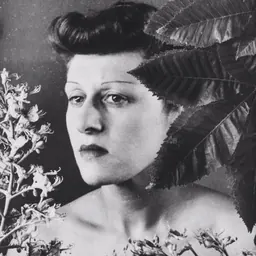
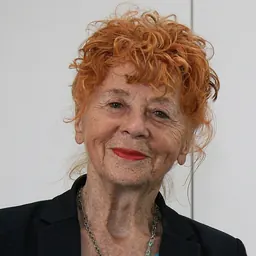
Related people
Same field, nearest in time

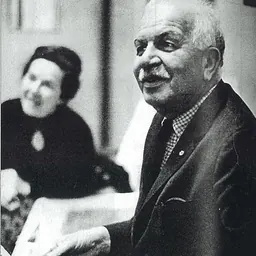


Contemporaries
People whose lives overlapped Ilse Bing's
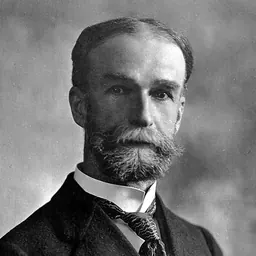

Frequently asked questions
Who was Ilse Bing?
German photographer (1899-1998)
When was Ilse Bing born?
Ilse Bing was born on 23 March 1899 in Frankfurt.
When did Ilse Bing die?
Ilse Bing died on 10 March 1998 in Manhattan.
What was Ilse Bing's occupation?
Ilse Bing was a photographer.
What nationality was Ilse Bing?
Ilse Bing was German and American.
Sources & further reading
Cite this page
APA: Biography.guide. (2026). Ilse Bing. https://biography.guide/ilse-bing/
MLA: "Ilse Bing." Biography.guide, https://biography.guide/ilse-bing/.
Chicago: "Ilse Bing." Biography.guide. https://biography.guide/ilse-bing/.
Data last updated: 2026-09-22 · Spot an error? Report a correction.
Page generated 2026-09-27 05:21 UTC