
About Jan Bułhak
Lived 1876 – 1950 (aged 73). Jan Bułhak was a Polish and Russian photographer, known for Photography.
Jan Brunon Bułhak (1876–1950) was an early 20th century photographer in Poland and present-day Belarus and Lithuania. A published theoretician and philosopher of photography, he was an exponent of pictorialism. He is best known for his landscapes and photographs of various places, especially the city of Vilnius. He was the founder of the Wilno Photoclub and Polish Photoclub, the predecessors of the modern Union of Polish Art Photographers (ZPAF), of which he was an honorary office-holder. He is also known as an ethnographer and folklorist.
Biography
Jan Bułhak was born on October 6, 1876, in Ostaszyn , near Navahrudak , Russian Empire (now Belarus). His parents were Walery Antoni Stanisław Bułhak of Syrokomla and Józefa née Haciska of Roch, both local landowners in Ostaszyn. In the village of Worończa near Navahrudak, not far from St. Ann's Roman Catholic church , there are four graves of Jan Bułhak's ancestors.
In 1888, Jan entered a gymnasium (a pre-Revolution secondary public school of the Russian Empire) in Wilno (present-day Vilnius), finishing it in 1897. From 1897 to 1899, he studied literature, history and philosophy at Jagiellonian University, Kraków, but did not graduate because of lack of money. Returning home, he lived in the village of Peresieka near Minsk, where he inherited a manor after his great-uncle's death. From there, Bułhak sent news stories to Wilno newspapers. In 1901, he married a cousin, Hanna Haciska. After his father's death, he sold the manor and bought a mansion from the Radziwiłłs in Belitsa, near Minsk. On April 27, 1906, the couple had a son, Janusz Bułhak, who would become a composer and a photographer.
Photography
Beginning Jan Bułhak grew interested in photography quite by chance in 1905, when his wife was given a camera. The same year, he took his first pictures: portraits, landscapes, environs. In the beginning, he was advised by Bolesław Ignacy Domeyko, a Navahrudak photographer, who helped him in the basics of photography.
In 1908, he created a darkroom of his own in Peresieka. That December, he made his debut and won the main award at a photo competition run by Życie Ilustrowane ("Illustrated Life"), a weekly supplement to Kurier Litewski ("Lithuanian Courier").
First successes
In 1910, Jan Bułhak participated for the first time in the World Photo Exhibition in Brussels. He corresponded with the Paris Photoclub and the French photographers Emil J. Constant Puyo, Robert de la Sizeranne, and Léonard Misonne.
Acquaintance with Ferdynand Ruszczyc It was Bułhak's publication in Fotograf Warszawski in 1910 that drew the attention of Ferdynand Ruszczyc, a Polish painter, printmaker, and a professor at the Fine Arts Department of the Stefan Batory University (now Vilnius University); and it was Ruszczyc who helped Bułhak move to Vilnius. (other sources say that he founded the photoclub and had headed it since 1927); and headed it until the start of World War II. He and Marian Dederko were the founders of the Polish Photoclub in 1929 There, he took about a thousand photographs of destroyed and restored Warsaw, and about two thousand of the western land attached to Poland.
Though Jan Bułhak's son Janusz studied music at the Vilnius Conservatory, the father taught him photography, so Janusz joined him in 1940s and all photographs made from 1945 to 1949 are signed "Jan Bułhak and son".
Bułhak took part in more than 170 international exhibitions, and received a number of high awards. For his photograph titled Radość życia ("Joy of Life"), which shows a shaded room with sun rays entering, he received the Golden Medal at the International Photographic Show in Warsaw in 1937.
He died suddenly in Giżycko during a photographic excursion on February 4, 1950.
Creative output Jan Bułhak became famous and popular for his pictures of Vilnius and its vicinity, and other towns and countryside of what is now Lithuania.
Bułhak wrote a number of books on the technique and art of photography, memoirs of Ferdynand Ruszczyc (1939), and also some poems and short stories. He published a series of albums, Wędrówki fotografa ("Photographer's Travels") (I–IX, 1931–1936). His photographs are used to illustrate a city guidebook by Juliusz Kłos, a book about Wilno by Jerzy Remer, and other publications.
Jan Bułhak's creativity had a great influence on the development of Lithuanian art photography. Practically all of Vilnius pictorialists adopted his views on art. This influence helped advance photography in the Vilnius area, Western Belarus, and all of Poland.
Photographs by Jan Bułhak are in many Polish institutions, including the National Museum in Warsaw, the Warsaw Institute of Arts, the Museum of Fine Arts in Łódź, the National Library of Poland, and the Walery Rzewuski Museum of History of Photography in Kraków. Some photographs are in the collections of the Canadian Centre for Architecture and the Iris & B. Gerald Cantor Center for Visual Arts at Stanford University (California). (he was from a Polish family), Belarus (he was born and lived in the Belarusian land for some time), Lithuania (he long lived and worked in Vilnius), and Russia (whose empire encompassed the former three).
Digital Collections
In October 2013, the University at Buffalo Libraries announced the Jan Bulhak Collection. This digital collection consists of 116 of Bulhak's photographs, mainly from Warsaw, Kraków and the Kresy region. Originally, the collection of photographs was donated to the Polish Room at the University at Buffalo in 1955 by John M. Walczak. The Jan Bulhak Collection was also integrated into the history mapping website Historypin.
Books of works by Bułhak
Lithuania in Photographs by Jan Bulhak (270 photos in six albums), 1915. Wilna, Eine Vergessene Kunststatte ("Wilno Forgotten Art"). Published by the German 10th Army, Wilno, 1917. Moja ziemia ("My Land"). Wilno, 1919. Vilniaus reginiai ("Sights of Vilnius"). Vilnius, 1921. Wilno. Wilno, 1924 Album Ostrobramskie ("Ostra Brama Album"). (Co-authored with Mieczysław Limanowski.) Wilno, 1927. Polska w krajobrazie i zabytkach, Vol. 1 ("Polish Landscapes and Landmarks"). (Co-authored with Marian Zaruski, et al.) Warsaw, 1930. Polska w krajobrazie i zabytkach, Vol. 2 (Joint work.) Warsaw, 1931. Fotografika. Zarys fotografii artystycznej ("Fine Art Photography. Outline"). Warsaw, 1931. Krajobraz wileński ("Vilnius Landscape"). Wilno, 1931. Wędrówki fotografa ("Photographer's Travels") Parts 1–4. Wilno, 1931–36. Technika bromowa ("Bromide Technique"). Wilno, 1933. Bromografika ("Bromography"). 1934. Estetyka światła ("Aesthetics of Light"). Wilno, 1936. Polska fotografia ojczysta ("Native Polish Photography"). Poznań, 1938 / 1951. 26 lat z Ferdynandem Ruszczycem ("26 Years with Ferdynand Ruszczyc"). Wilno, 1939. Fotografia ojczysta ("Native Photography"). Wrocław, 1951. Vilnius Baroque: Ninety Architectural Photographs from 1912 to 1916. Vilnius: E. Karpavicius, 2003. . Vozera Svitsiaz': Fotaalʹbom = Jezioro Switeź = Svitiaz Lake (Photo album.) Minsk, 2003. . Kraj lat dziecinnych ("Land of Childhood"). Gdynia: ASP Rymsza, 2003. About the Navahrudak area. Krai dzitsiachykh hadou / Jan Bułhak ("Land of Childhood"; translation from Polish). Minsk, Belarus, 2004. (Bel) / (Pol). Vilniaus peizažas: Fotografo kelionės ("Vilnius Landscapes. Photographer's Travels"). Vilnius: Vaga, 2006. .
Don’t just read it —
keep it.
Full-length biographies made to live with: read them, listen on the way to work, watch them tonight.
- E-book
- Audio
- Video
Instant download · yours to keep · every purchase keeps this site free
Important facts
Family & relationships
People in Jan Bułhak's life
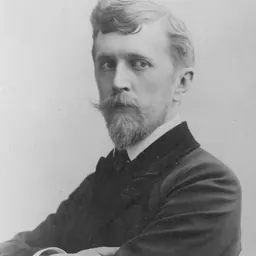
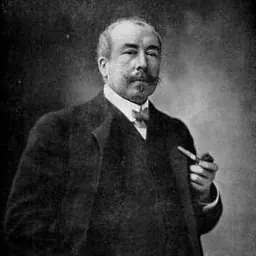
Named in this biography and alive at the same time




Related people
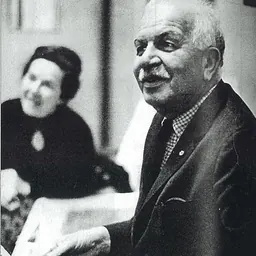
Same field, nearest in time




Contemporaries
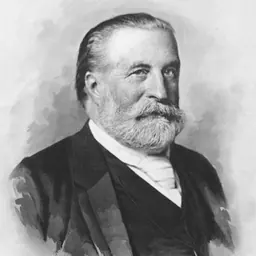
People whose lives overlapped Jan Bułhak's

Frequently asked questions
Who was Jan Bułhak?
Polish photographer (1876–1950)
When was Jan Bułhak born?
Jan Bułhak was born on 6 October 1876 in Astašyn.
When did Jan Bułhak die?
Jan Bułhak died on 4 February 1950 in Giżycko.
What was Jan Bułhak's occupation?
Jan Bułhak was a photographer.
What was Jan Bułhak known for?
Jan Bułhak was known for Photography.
What nationality was Jan Bułhak?
Jan Bułhak was Polish and Russian.
Sources & further reading
Cite this page
APA: Biography.guide. (2026). Jan Bułhak. https://biography.guide/jan-bulhak/
MLA: "Jan Bułhak." Biography.guide, https://biography.guide/jan-bulhak/.
Chicago: "Jan Bułhak." Biography.guide. https://biography.guide/jan-bulhak/.
Data last updated: 2026-09-20 · Spot an error? Report a correction.
Page generated 2026-09-27 05:29 UTC