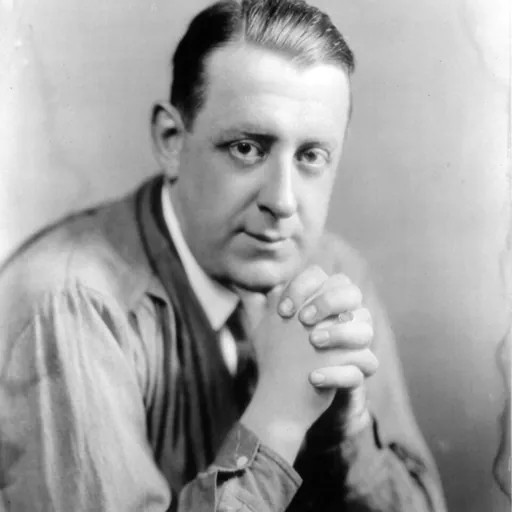
Hendrik Willem van Loon
Dutch-American historian, journalist, illustrator, and author
About Hendrik Willem van Loon
Lived 1882 – 1944 (aged 62). Hendrik Willem van Loon was a Dutch and American writer, historian, journalist, children's writer, designer and illustrator.
Hendrik Willem van Loon (January 14, 1882 – March 11, 1944) was a Dutch-American historian, journalist, and children's book author.
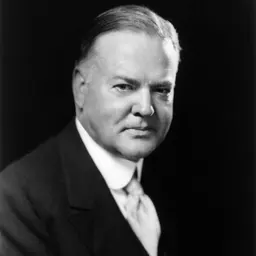
Life On December 20, 1939, a great sympathy meeting for Finland, then embroiled in the Winter War, was arranged in Madison Square Garden. In the picture from the left are former president Herbert Hoover (chairman of the Finland committee), Dr. van Loon, and the mayor of New York, Fiorello La Guardia.
Van Loon was born in Rotterdam, Netherlands, the son of Hendrik Willem van Loon and Elisabeth Johanna Hanken. He immigrated to the United States in 1902 to study at Harvard University and then Cornell University, where he received his AB in 1905. In 1906 he married Eliza Ingersoll Bowditch (1880–1955), daughter of a Harvard professor, by whom he had two sons, Henry Bowditch and Gerard Willem. The newlyweds moved to Germany, where van Loon received his Ph.D. from the Ludwig-Maximilians-Universität München in 1911 with a dissertation that became his first book, The Fall of the Dutch Republic (1913). He was a correspondent for the Associated Press during the Russian Revolution of 1905 and again in Belgium in 1914 at the start of World War I.
Career
From the 1910s until his death, Van Loon wrote many books, illustrating them himself. Best remembered among these is The Story of Mankind (1921), a history of the world intended for children, which won the first Newbery Medal in 1922. The book was later updated by Van Loon, then again by his son, and later still by other historians.
He wrote many popular books aimed at young adults. As a writer he was known for emphasizing crucial historical events and giving a full picture of individual characters, as well as the role of the arts in history. He had an informal and thought-provoking style which, particularly in The Story of Mankind, included personal anecdotes. As an illustrator of his own books, he was known for his lively black-and-white drawings and his chronological diagrams.
In 1923 and 1924, he was a professor of history at Antioch College. His book Our Battle, Being One Man's Answer to "My Battle" by Adolf Hitler (1938) earned him the respect of Franklin D. Roosevelt, in whose 1940 presidential campaign he worked, calling on Americans to fight totalitarianism.
Honors and distinctions
Van Loon was awarded the Newbery Medal in 1922 for his book The Story of Mankind.
The World War II Liberty Ship was named in his honor.
Works
A list of works by van Loon, with first publication dates and publishers. The Fall of the Dutch Republic, 1913, Houghton Mifflin Co. The Rise of the Dutch Kingdom, 1915, Doubleday Page & Co. The Golden Book of the Dutch Navigators, 1916, The Century Co. A Short History of Discovery: From the Earliest Times to the Founding of Colonies in the American Continent, 1917, David McKay Ancient man; the Beginning of Civilizations, 1920, Boni and Liveright The Story of Mankind, 1921, Boni and Liveright The Story of the Bible, 1923, Boni and Liveright Witches and Witch-Finders, 1923, article from the June 1923 Mentor Magazine The Story of Wilbur the Hat, 1925, Boni and Liveright Tolerance, 1925, Boni and Liveright The Liberation of Mankind: the story of man's struggle for the right to think, 1926, Boni and Liveright America: The Story of America from the very beginning up to the present, 1927, Boni and Liveright Adriaen Block, 1928, Block Hall Multiplex man, or the Story of Survival through Invention, 1928, Jonathan Cape Life and Times of Peter Stuyvesant, 1928, Henry Holt Man the Miracle Maker, 1928, Horace Liveright R. v. R.: the Life and Times of Rembrandt van Rijn, 1930, Horace Liveright If the Dutch Had Kept Nieuw Amsterdam, in If, Or History Rewritten, edited by J. C. Squire, 1931, Simon & Schuster Van Loon's Geography: The Story of the World We Live In, 1932, Simon & Schuster To Have or to Be—Take Your Choice, John Day (1932) "Gold" 1933, article from the Cosmopolitan March 1933 An Elephant Up a Tree, 1933, Simon & Schuster An Indiscreet Itinerary or How the Unconventional Traveler Should See Holland by one who was actually born there and whose name is Hendrik Willem Van Loon, 1933, Harcourt, Brace The Home of Mankind: the story of the world we live in, 1933, George G. Harrap The story of inventions: Man, the Miracle Maker, 1934, Horace Liveright Ships: and How They Sailed the Seven Seas (5000 B.C.-A.D.1935), 1935, Simon & Schuster Around the World With the Alphabet, 1935, Simon & Schuster Air-Storming: A Collection of 40 Radio Talks, 1935, Harcourt, Brace Love me not, 1935 A World Divided is a World Lost, 1935, Cosmos Publishing Co. The Songs We Sing (with Grace Castagnetta), 1936, Simon & Schuster The Arts (with musical illustrations by Grace Castagnetta), 1937, Simon & Schuster Christmas Carols (with Grace Castagnetta), 1937, Simon & Schuster Observations on the mystery of print and the work of Johann Gutenberg, 1937, Book Manufacturer's Institute/New York Times Our Battle: Being One Man's Answer to "My Battle" by Adolf Hitler, 1938, Simon & Schuster How to Look at Pictures: a Short History of Painting, 1938, National Committee for Art Appreciation Folk Songs of Many Lands (with Grace Castagnetta), 1938, Simon & Schuster The Last of the Troubadours: The Life and Music of Carl Michael Bellman 1740-1795 (with Grace Castagnetta), 1939, Simon & Schuster The Songs America Sings (with Grace Castagnetta), 1939, Simon & Schuster My School Books, 1939, E. I. du Pont de Nemours Invasion, being the personal recollections of what happened to our own family and to some of our friends during the first forty-eight hours of that terrible incident in our history which is now known as the great invasion and how we escaped with our lives, 1940, Harcourt, Brace The Story of the Pacific, 1940, George G. Harrap The Life and Times of Johann Sebastian Bach, 1940, Simon & Schuster Good Tidings (with Christmas songs by Grace Castegnetta), 1941, American Artists Group The Praise of Folly by Desiderius Erasmus of Rotterdam, with a short life of the Author by Hendrik Willem van Loon of Rotterdam who also illustrated the Book, 1942 Van Loon's Lives: Being a true and faithful account of a number of highly interesting meetings with certain historical personages, from Confucius and Plato to Voltaire and Thomas Jefferson, about whom we had always felt a great deal of curiosity and who came to us as dinner guests in a bygone year, 1942, Simon & Schuster Christmas Songs, 1942 The Message of the Bells (with music by Grace Castagnetta), 1942, New York Garden City Fighters for Freedom: the Life and Times of Thomas Jefferson and Simon Bolivar, 1943, Dodd, Mead & Co. The Life and Times of Scipio Fulhaber, Chef de Cuisine, 1943 Adventures and Escapes of Gustavus Vasa, and how they carried him from his rather obscure origin to the throne of Sweden, 1945 Report to Saint Peter, upon the kind of world in which Hendrik Willem van Loon spent the first years of his life - an unfinished, posthumously published autobiography, 1947, Simon & Schuster
Don’t just read it —
keep it.
Full-length biographies made to live with: read them, listen on the way to work, watch them tonight.
- E-book
- Audio
- Video
Instant download · yours to keep · every purchase keeps this site free
Important facts
People in Hendrik Willem van Loon's life
Named in this biography and alive at the same time



Related people
Same field, nearest in time





Contemporaries
People whose lives overlapped Hendrik Willem van Loon's



Frequently asked questions
Who was Hendrik Willem van Loon?
Dutch-American historian, journalist, illustrator, and author (1882-1944)
When was Hendrik Willem van Loon born?
Hendrik Willem van Loon was born on 14 January 1882 in Rotterdam.
When did Hendrik Willem van Loon die?
Hendrik Willem van Loon died on 11 March 1944 in Old Greenwich.
What was Hendrik Willem van Loon's occupation?
Hendrik Willem van Loon was a writer, historian, journalist, children's writer, designer and illustrator.
What nationality was Hendrik Willem van Loon?
Hendrik Willem van Loon was Dutch and American.
Sources & further reading
· Wikipedia: Hendrik Willem van Loon
· DBpedia: Hendrik Willem van Loon
Cite this page
APA: Biography.guide. (2026). Hendrik Willem van Loon. https://biography.guide/hendrik-willem-van-loon/
MLA: "Hendrik Willem van Loon." Biography.guide, https://biography.guide/hendrik-willem-van-loon/.
Chicago: "Hendrik Willem van Loon." Biography.guide. https://biography.guide/hendrik-willem-van-loon/.
Data last updated: 2026-09-23 · Spot an error? Report a correction.
Portrait: Wikimedia Commons · author & licence
Page generated 2026-09-27 05:06 UTC