
About Ignác Gyulay
Lived 1763 – 1831 (aged 68). Ignác Gyulay was a Hungarian and Austrian military officer and politician.
Count Ignác Gyulay de Marosnémeti et Nádaska, Ignácz Gyulay, Ignaz Gyulai (11 September 1763 – 11 November 1831) was a Hungarian military officer, joined the army of the Habsburg monarchy, fought against Ottoman Turkey, and became a general officer during the French Revolutionary Wars. From 1806 he held the title of Ban of Croatia. In the struggle against the First French Empire during Napoleonic Wars, he commanded army corps. At the time of his death, he presided over the Hofkriegsrat, the Austrian Council of War.
While fighting against the Turks, Gyulay rose in rank to become a field officer. From 1793 to 1796, he served on the upper Rhine in combat with the armies of the First French Republic. In 1799 he led a brigade in Germany and the following year he commanded a division. From 1801 until 1831, he was Proprietor (Inhaber) of a Hungarian infantry regiment.
During the Napoleonic Wars, Gyulay fought in the 1805 campaign against the First French Empire and later served his emperor as a negotiator in the peace talks. He commanded an Austrian army corps in the 1809 campaign in Italy. Again leading a corps, he fought at the decisive Battle of the Nations in 1813. During the subsequent French campaign in 1814, he led one of the corps in the victorious Allied armies.
Early career Born in Nagyszeben (Hermannstadt) in the region of Transylvania in modern-day Sibiu, Romania on 11 September 1763, Gyulay was the oldest son of the Austrian Feldmarschallleutnant Count Sámuel Gyulay de Maros-Németh und Nádaska (1723–1802) and his wife, Baroness Anna Bornemisza de Kászon et Impérfalva (1734–1814).
In 1781, he joined his father's unit, the Gyulay Infantry Regiment # 32, as a Fähnrich (cadet). He fought in the Austro-Turkish War (1787–91), becoming a Major in the 2nd Banal Grenz Infantry Regiment # 70 on 25 March 1789. Within a year he earned promotion to Oberst-Leutnant and commanded a battalion of the Gyulay Freikorps. He led this unit in the storm of Cetin Castle on 20 July 1790.
French Revolutionary Wars
War of the First Coalition In 1793, the army assigned Gyulay to the Army of the Upper Rhine under the command of Dagobert von Wurmser. On 13 October that year, he led a brigade under Friedrich von Hotze in the First Battle of Wissembourg. In November, he held the village of Mertzwiller for three weeks in the face of French attacks during the Battle of Haguenau. This action earned him the Knight's Cross of the Military Order of Maria Theresa in 1794. Their son Ferencz Gyulai was born in 1798 and went on to become a high-ranking Austro-Hungarian general. Archduke Charles ordered him to command a force linking the Army of the Upper Rhine and Fröhlich's corps. After the Battle of Ettlingen, Gyulay led Fröhlich's rearguard, earning praise from his superior as a skillful commander of outposts. Later that fall, he greatly distinguished himself in action at Memmingen. For eight hours on 22 September, he held up the advance 6,000 French with only 1,200 soldiers. On 16 May 1797 he was elevated in rank to General-Major. Gyulay fought well, but he had too few troops under his orders to influence the outcome of the battle, which ended in a decisive French victory. Later, he escaped from Ulm with Archduke Ferdinand Karl Joseph of Austria-Este and others. On 4 November, Gyulai served on a council of war convened by Emperor Francis II to determine how to save Vienna. Soon afterward, the emperor ordered him to negotiate secretly with Emperor Napoleon I of France.
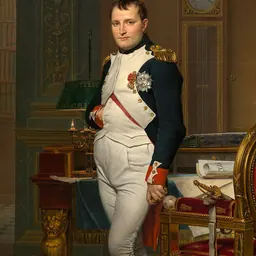
On 25 November, Gyulay accompanied Johann Philipp Stadion, Count von Warthausen on a mission to negotiate a treaty with Emperor Napoleon I of France. During the talks Gyulay demanded that France compensate Austria for the loss of Venetia. A frustrated Napoleon wrote to Charles Maurice de Talleyrand-Périgord that Gyulay, "talked to me of the Teutonic Order, of the Diet in Ratisbonne, and I don't know what else". Though the discussions continued with Talleyrand, Napoleon became more focused on defeating his enemies and nothing came out of the peace talks. After the disaster at the Battle of Austerlitz, at which Gyulay was not present, he and Johann I Josef, Prince of Liechtenstein negotiated the Peace of Pressburg with the First French Empire. Emperor Francis II appointed Gyulay the Ban of Croatia in 1806, a position he held throughout his lifetime. The IX Armeekorps fought at the Battle of Sacile on 16 April 1809. During the fighting, the surprise intervention of the IX Armeekorps on the right flank was important in securing the Austrian victory over the Franco-Italian army of Eugène de Beauharnais. His brother Albert led VIII Armeekorps in the same battle.
When Emperor Napoleon defeated Archduke Charles at the Battle of Eckmühl on the Danube, Archduke John was thrown on the defensive. The archduke assigned elements of Gyulay's corps to defend Dalmatia and other places. At the Battle of the Piave on 8 May, Gyulay led a considerably reduced IX Armeekorps of 12,720 men. As at Sacile, his brother Albert Gyulay led the VIII Armeekorps. After Eugène's army passed to the east in pursuit of Archduke John's army, Gyulay operated against Graz. On 25 June, his 22,000 troops attacked Jean-Baptiste Broussier's division which was besieging Graz. Broussier retreated into the hills and successfully defended himself until the arrival of Auguste Marmont's corps on the 27th. Gyulay was able to reprovision the Graz garrison before he withdrew. In the fighting, many of the hastily raised Austrian Landwehr and Hungarian insurrections militia fled the field. However, Gyulay's Austrian line infantry fought hard and suffered 164 dead and 816 wounded and captured. Reports of French casualties range from 263 to 900.
War of the Sixth Coalition When Austria entered the War of the Sixth Coalition, Gyulay was appointed commander of the Left Wing. His forces included the infantry divisions of Nikolaus Weissenwolf and Alois Liechtenstein, plus the mixed infantry-cavalry division of Louis Charles Folliot de Crenneville. This organization fought at the Battle of Dresden on 26–27 August 1813, where it fought on the left flank and suffered serious losses.
Napoleon retreats after being defeated at the Battle of Leipzig. After a reorganization, Gyulay's formation became known as III Armeekorps, with each infantry division consisting of two, rather than three brigades. The new division commanders were Crenneville, Albrecht Murray de Melgum, and Prince Philipp of Hessen-Homburg. This was the organization used at the Battle of Leipzig on 16–19 October. Before the battle, Gyulay's corps reached a position to the west of Napoleon's Grand Army, potentially cutting off the retreat of the French and their allies. On the 16th, he attacked the suburb of Lindenau and had success at first, forcing Marshal Michel Ney to divert Henri Gatien Bertrand's IV Corps to hold the position. Without this important reinforcement, Napoleon's attacks on the main Austro-Russian army failed. On the 18th, Bertrand drove Gyulay away from Lindenau, clearing the way for Napoleon's retreat.
Gyulay continued to lead the III Armeekorps in the 1814 campaign. He fought at the Battle of La Rothière on 1 February and defeated the French at the Battle of Bar-sur-Aube on 27 February. On 20–21 March, he led his corps in action at the Battle of Arcis-sur-Aube. He participated in the Battle of Paris when the Allied armies captured the French capital, compelling Napoleon to abdicate in the Treaty of Fontainebleau on 11 April. He received numerous awards, including the Austrian Order of Leopold and the Military Honor Cross, the Russian Order of St. Alexander Nevsky, the Prussian Order of the Red Eagle - 1st Class, and the Bavarian Military Order of Max Joseph.
Later career From 1814 to 1823, Gyulay commanded the Banal Military Border with Turkey. He became proprietor of the 1st Banal Grenz Regiment # 10 and the 2nd Banal Grenz Regiment # 11 in 1823, and held these titles for the rest of his life. He was made a Knight of the Order of the Golden Fleece and received the Order of Saint Stephen of Hungary, both in 1830. He briefly sat as president of the Hofkriegsrat (Aulic Council) from 7 October 1830 until his death on 11 November 1831 in Vienna.
Footnotes
Don’t just read it —
keep it.
Full-length biographies made to live with: read them, listen on the way to work, watch them tonight.
- E-book
- Audio
- Video
Instant download · yours to keep · every purchase keeps this site free
Important facts
People in Ignác Gyulay's life
Named in this biography and alive at the same time





Related people
Same field, nearest in time

Contemporaries
People whose lives overlapped Ignác Gyulay's



Frequently asked questions
Who was Ignác Gyulay?
Hungarian general & statesman (1763-1831)
When was Ignác Gyulay born?
Ignác Gyulay was born on 11 September 1763 in Sibiu.
When did Ignác Gyulay die?
Ignác Gyulay died on 11 November 1831 in Vienna.
What was Ignác Gyulay's occupation?
Ignác Gyulay was a military officer and politician.
What nationality was Ignác Gyulay?
Ignác Gyulay was Hungarian and Austrian.
Sources & further reading
Cite this page
APA: Biography.guide. (2026). Ignác Gyulay. https://biography.guide/ignac-gyulay/
MLA: "Ignác Gyulay." Biography.guide, https://biography.guide/ignac-gyulay/.
Chicago: "Ignác Gyulay." Biography.guide. https://biography.guide/ignac-gyulay/.
Data last updated: 2026-09-20 · Spot an error? Report a correction.
Page generated 2026-09-27 05:31 UTC