
About Henri Gatien Bertrand
Lived 1773 – 1844 (aged 70). Henri Gatien Bertrand was a French politician, military personnel, military engineer, count and planter class.
Henri-Gatien Bertrand (; 22 March 1773 – 31 January 1844) was a French general who served during the French Revolutionary Wars and the Napoleonic Wars. Under the Empire he was the third and last Grand marshal of the palace, the head of the Military Household of emperor Napoleon, whom he followed in both the exiles to Elba and Saint Helena.
Early life and education Bertrand was born at Châteauroux, in the province of Berry, to a well-to-do bourgeois family.
Military career At the outbreak of the French Revolution, he had just finished his studies at the Prytanée National Militaire, and he entered the army as a volunteer. During the expedition to Egypt, Bonaparte named him colonel (1798), then brigadier-general, and after the Battle of Austerlitz his aide-de-camp. His life was henceforth closely bound up with that of Napoleon, who had the fullest confidence in him, honoring him in 1808 with the title of count and at the end of 1813, with the title of Grand Marshal of the Palace.
Napoleon's Tomb by Horace Vernet, 1821. Bertrand and his family are on the leftIt was Bertrand who in 1809 directed the building of the bridges by which the French army crossed the Danube at Wagram. In 1811, the Emperor appointed Bertrand governor of the Illyrian Provinces and during the German campaign of 1813, he commanded IV Corps which he led in the battles of Großbeeren, Dennewitz, Wartenburg and Leipzig.
In 1813, after the Battle of Leipzig, it was due to his initiative that the French army was not totally destroyed. He accompanied the Emperor to Elba in 1814, returned with him in 1815, held a command in the Waterloo campaign, and then, after the defeat, accompanied Napoleon to Saint Helena. Condemned to death in 1816, he did not return to France until after Napoleon's death, and then Louis XVIII granted him amnesty allowing him to retain his rank. Bertrand was elected deputy in 1830 but defeated in 1834. In 1840 he was chosen to accompany the Prince of Joinville to St. Helena to retrieve and bring Napoleon's remains to France, in what became known as the retour des cendres.
During his exile on St Helena he compiled Napoléon's confidences in a book entitled "Les cahiers de Sainte Hélène". The manuscript was codified and later decodified and commented by Paul Fleuriot de Langle. According to historians, this document is more accurate than Las Cases' "Memorial de Sainte Hélène" which reached a much larger amount of readers in the 19 century as it was designed for propangada purposes.
Bertrand's fourth child, Arthur, born on St. Helena, quickly became a favorite of Napoleon's. Arthur is otherwise best known for his affair with French actress Mademoiselle Rachel, with which he had a son.
Personal life In 1808 Bertrand married Fanny (1785–1836), the daughter of general Arthur Dillon and through her mother a cousin of the Empress Joséphine. They had six children, with one being born on Elba and another on Saint Helena.
Death and burial He died at Châteauroux on 31 January 1844 and was buried in Les Invalides. Detail of Charles de Steuben's portrait of Napoleon's death, showing Bertrand and his son Napoleon.
In popular culture Alexandre Dumas mentions Bertrand in the earlier pages of his well-known novel The Count of Monte Cristo. He is also mentioned in Book II Chapter 1 of Les Misérables by Victor Hugo.
Don’t just read it —
keep it.
Full-length biographies made to live with: read them, listen on the way to work, watch them tonight.
- E-book
- Audio
- Video
Instant download · yours to keep · every purchase keeps this site free
Important facts
People in Henri Gatien Bertrand's life
Named in this biography and alive at the same time
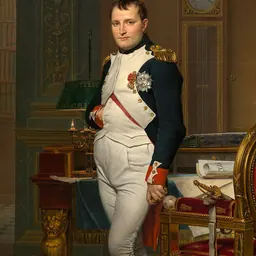

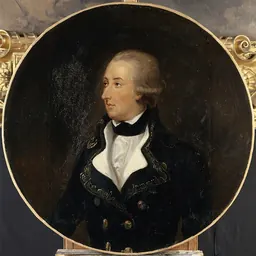
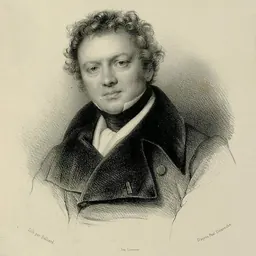
Related people
Same field, nearest in time

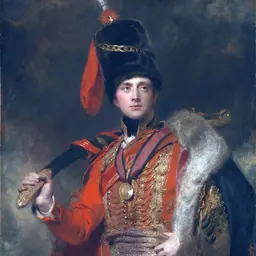


Contemporaries
People whose lives overlapped Henri Gatien Bertrand's



Frequently asked questions
Who was Henri Gatien Bertrand?
French general (1773-1844)
When was Henri Gatien Bertrand born?
Henri Gatien Bertrand was born on 28 March 1773 in Châteauroux.
When did Henri Gatien Bertrand die?
Henri Gatien Bertrand died on 31 January 1844 in Châteauroux.
What was Henri Gatien Bertrand's occupation?
Henri Gatien Bertrand was a politician, military personnel, military engineer, count and planter class.
What nationality was Henri Gatien Bertrand?
Henri Gatien Bertrand was French.
Sources & further reading
· Wikipedia: Henri Gatien Bertrand
· DBpedia: Henri-Gatien Bertrand
Cite this page
APA: Biography.guide. (2026). Henri Gatien Bertrand. https://biography.guide/henri-gatien-bertrand/
MLA: "Henri Gatien Bertrand." Biography.guide, https://biography.guide/henri-gatien-bertrand/.
Chicago: "Henri Gatien Bertrand." Biography.guide. https://biography.guide/henri-gatien-bertrand/.
Data last updated: 2026-09-20 · Spot an error? Report a correction.
Page generated 2026-09-27 05:20 UTC