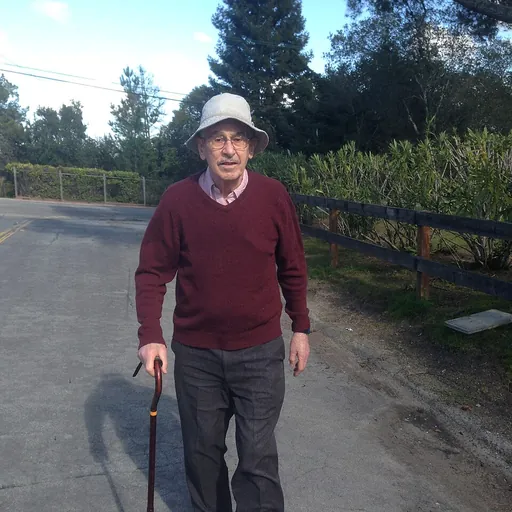
Ian Read Gibbons
Research Cell Biologist, University of California, Berkeley
About Ian Read Gibbons
Lived 1931 – 2018 (aged 86). Ian Read Gibbons was a British university teacher and biophysicist, known for Dynein.
Ian Read Gibbons, (30 October 1931 – 30 January 2018) was a biophysicist and cell biologist. He discovered and named dynein, and demonstrated energy source as ATP is sufficient for dynein to walk on microtubules. In 2017, he and Ronald Vale received the Shaw Prize for their research on microtubule motor proteins.
He was elected a Fellow of the Royal Society of Great Britain in 1983. The Society stated: He discovered, named and characterised the founding member of the dynein ATPase family of motor proteins and other microtubular components in cilia and flagella. By elegantly combining biochemical techniques with light and electron microscopy, he greatly advanced our understanding of microtubule-based motility, particularly by the direct visual demonstration of active dynein-dependent sliding between adjacent microtubules in structurally weakened flagella.
Early life and education Gibbons's passion for science stemmed from his interest in radio. He entered Queen Elizabeth's Grammar School in Faversham in 1943, where he developed an interest towards applied physics. Following 18 months in the Royal Air Force as a radar engineer, he was admitted into King's College, Cambridge, in 1951 to read physics. He graduated with a bachelor's degree and then, in 1957, a PhD degree from Cambridge. His PhD research concerns using electron microscopes to study the organisation of chromosomes during mitosis and meiosis. Gibbons then went to the University of Pennsylvania as a postdoctoral researcher, where he stayed for 1 year. He subsequently moved to the Department of Biology, Harvard University, to take up the post of director of the newly founded electron microscopy laboratory. Two years later, he purified two regions of the protein, known as its two "arms", naming the protein "dynein". During his last year at Harvard, Gibbons demonstrated the protein making up microtubules was distinct from actin, in that the former was associated with guanine nucleotides while the latter with adenine nucleotides, but refrained from naming it; Hideo Mohri from the University of Tokyo named it tubulin afterwards. Throughout the 1970s, Gibbons and his wife Barbara showed the sliding of microtubules caused cilia motility (known as the sliding tubule mechanism), and that this sliding was dependent on the energy generated from ATP hydrolysis by ATPase. When microtubules visibly slid out of the ends of the flagellar fiber, the flagella disintegrated. He then extended the mechanism to mammals, confirming the motility mechanism of bull sperm cilia is the same as that for sea urchins. After these findings, Gibbons switched his focus to the molecular biology of dyneins, and determined the DNA sequence of the largest subunit of dynein in 1991. In 1993, he became the director of the Kewalo Marine Laboratory. E.B. Wilson Medal, American Society for Cell Biology (1994) Fellow of the Royal Society (1983) Guggenheim Fellowship in Molecular and Cellular Biology, John Simon Guggenheim Memorial Foundation (1973)
Personal life Gibbons met his wife Barbara while in Harvard University; they married in 1961. Gibbons also died in 2018.
Don’t just read it —
keep it.
Full-length biographies made to live with: read them, listen on the way to work, watch them tonight.
- E-book
- Audio
- Video
Instant download · yours to keep · every purchase keeps this site free
Important facts
People in Ian Read Gibbons's life
Named in this biography and alive at the same time





Related people
Same field, nearest in time



Contemporaries
People whose lives overlapped Ian Read Gibbons's
Frequently asked questions
Who was Ian Read Gibbons?
Research Cell Biologist, University of California, Berkeley (1931-2018)
When was Ian Read Gibbons born?
Ian Read Gibbons was born on 30 October 1931 in Hastings, Rye.
When did Ian Read Gibbons die?
Ian Read Gibbons died on 30 January 2018 in Orinda.
What was Ian Read Gibbons's occupation?
Ian Read Gibbons was a university teacher and biophysicist.
What was Ian Read Gibbons known for?
Ian Read Gibbons was known for Dynein.
What nationality was Ian Read Gibbons?
Ian Read Gibbons was British.
Sources & further reading
Cite this page
APA: Biography.guide. (2026). Ian Read Gibbons. https://biography.guide/ian-read-gibbons/
MLA: "Ian Read Gibbons." Biography.guide, https://biography.guide/ian-read-gibbons/.
Chicago: "Ian Read Gibbons." Biography.guide. https://biography.guide/ian-read-gibbons/.
Data last updated: 2026-09-23 · Spot an error? Report a correction.
Portrait: Wikimedia Commons · author & licence
Page generated 2026-09-27 05:06 UTC