
About Ian Parker
Born 1956. Ian Parker is a British psychologist and psychoanalyst.
Ian Parker (born 1956) is a British psychologist and psychoanalyst. He is Emeritus Professor of Management in the School of Business at the University of Leicester.
Biography Parker went to Ravens Wood School in Keston, Bromley, UK, studied psychology at Plymouth Polytechnic and the University of Southampton, lectured at Manchester Polytechnic from 1985, was appointed Professor of Psychology at Bolton Institute in 1996, and returned to Manchester as Professor of Psychology at Manchester Metropolitan University in 2000. In 2012 he was suspended for questioning, in his capacity as departmental union representative for the University and College Union, work-load and appointment procedures. There was an international campaign for his reinstatement, and an online petition which claimed 'victory' with 3772 signatures. In 2013 he resigned his post, and moved to the University of Leicester, and also took up visiting professorial positions at Ghent University, Belgium, Universidade de Sao Paulo, Brasil, University of the Witwatersrand, South Africa, Universidad Complutense de Madrid, Spain, Birkbeck University of London, UK, University of Roehampton, UK and University of Manchester, UK.
Thought Parker has worked in three traditions of critical psychology: discursive analysis, Marxist psychology, and psychoanalysis, with a focus on questions of ideology and power.
Discursive analysis Discursive analysis appears in his earliest writing, which is focused on the 'crisis' in laboratory-experimental social psychology during the 1960s through to the 1980s. In his first book, The Crisis in Modern Social Psychology, and How to End It (1989), Parker uses structuralist and post-structuralist theories to disrupt the claims that psychologists make to speak a professional expert 'truth' about human psychology. Toward the end of the book he moves beyond the 'turn to language' in social psychology to a 'turn to discourse', and this, he argues, will enable critical researchers to treat psychology itself as a set of discourses or stories about people rather than as things that are universally true. Analyses of 'psychologisation' are then necessary to critical discursive work.
This argument is taken forward in Discourse Dynamics: Critical Analysis for Social and Individual Psychology (1992), but now there is a discussion of the relationship between discourse and reality, and at this point Parker seems to think that ‘critical realism' might be helpful to avoid problems with 'relativism' in the social sciences. He returns to these issues ten years later in Critical Discursive Psychology (2002), but by this time he is pessimistic about the critical potential of a purely discursive approach. He prefers the term 'discursive practice'. His book on methodology, Qualitative Psychology: Introducing Radical Research (2005) includes a new version of discourse analysis that attempts to break down the divisions between the researcher and those they study.
Critical responses and commentaries on the impact of Ian Parker’s work on discourse analysis have often focused on what is seen as a reification of ‘discourse’: his conceptual work on discourse has been criticised on this basis from a traditional social psychological position (e.g., Abrams and Hogg, 1990 ) and from a 'discursive' position (e.g., Potter et al., 1990; Potter & Edwards, 1999 ). Critical commentaries on his work on discourse analysis were included in his book Critical Discursive Psychology in 2002, and in the second edition of that book in 2015.
Marxist psychology Parker employed Marxist arguments in his first book, and that book on the 'crisis' ends with a discussion of 'transitional demands' that borrow from Trotskyist politics (and these demands are designed to start from what it is reasonable to ask for but in such a way as to lead to a questioning of oppression). A co-edited book, Psychology and Society: Contradiction and Coexistence (1996) is explicitly concerned with Marxist approaches to psychology, and a note indicates that the original title was to be Psychology and Marxism. All the contributors to this book are Marxists, but using a variety of different psychological theories (and Parker’s chapter is on Trotsky and psychoanalysis).
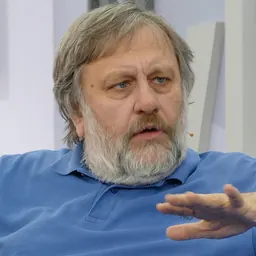
Discussion of Marxist psychology is scattered throughout Parker’s work, and he defines himself as a Marxist, and supporter of the Fourth International. Recent interviews and has written on psychoanalytic social theory, in his book Slavoj Žižek: A Critical Introduction (2004).
Parker’s discussion of psychoanalysis sometimes appears to be situated within a discursive or Marxist theoretical framework, but he then seems to use psychoanalytic theory as a framework to understand pathology in contemporary society. The original research in his 1997 book Psychoanalytic CultureHand 2009 book Psychoanalytic Mythologies is critical also of psychoanalysis itself. His argument is that psychoanalysis and a form of 'psychoanalytic subjectivity' has developed under capitalism, and so it is necessary to take it seriously to change society and enable individuals to change. for Routledge.
Publications Parker is author or co-author of 25 books, and editor or co-editor of 15 books. His books and articles have been published in 17 languages. Parker edited a four-volume 'major work' Critical Psychology for Routledge in 2011, and a Handbook of Critical Psychology in 2015. A collection of published and previously unpublished work appeared in six books published by Routledge in the series 'Psychology After Critique'. He edits the 'Concepts for Critical Psychology' series for Routledge, and is managing editor of the Annual Review of Critical Psychology. Psychoanalysis and Revolution: Critical Psychology for Liberation Movements, co-authored with David Pavón-Cuéllar was first published in Russian, and then in Italian and English in 2021, and then in Spanish, Bahasa Indonesian and Portuguese in 2022.
Books Parker, I. (1989) The Crisis in Modern Social Psychology, and how to end it, London and New York: Routledge. Parker, I. (1992) Discourse Dynamics: Critical Analysis for Social and Individual Psychology, London and New York: Routledge. Banister, P., Burman, E., Parker, I., Taylor, M. and Tindall, C. (1994) Qualitative Methods in Psychology: A Research Guide, Milton Keynes: Open University Press. Foster, J. J. and Parker, I. (1995) Carrying Out Investigations in Psychology, Leicester: British Psychological Society. Parker, I., Georgaca, E., Harper, D., McLaughlin, T. and Stowell Smith, M. (1995) Deconstructing Psychopathology, London: Sage. Parker, I. (1997) Psychoanalytic Culture: Psychoanalytic Discourse in Western Society, London: Sage. Parker, I. and the Bolton Discourse Network (1999) Critical Textwork: An Introduction to Varieties of Discourse and Analysis, Buckingham: Open University Press. Parker, I. (Ed.) (1999). Deconstructing psychotherapy. London: Sage. Parker, I. (2002) Critical Discursive Psychology. London: Palgrave. Parker, I. (2005) Qualitative Psychology: Introducing Radical Research. Buckingham: Open University Press. Parker, I. (2007) Revolution in Psychology: Alienation to Emancipation. London: Pluto Press. Parker, I. (2008) Japan in Analysis: Cultures of the Unconscious. London: Palgrave. Parker, I. (2009) Psychoanalytic Mythologies. London: Anthem Press. Parker, I. (2014) The Crisis in Modern Social Psychology, and how to end it. Abingdon/New York: Routledge [Psychology Revivals, original published 1989]. Parker, I. (2014) Discourse Dynamics: Critical Analysis for Social and Individual Psychology. Abingdon/New York: Routledge [Psychology Revivals, original published 1992]. Parker, I. (2014) Revolução na Psicologia: da alienação à emancipação. Campinas, Brazil, Alínea. Parker, I. and Pavón-Cuéllar, D. (comps) (2014) Lacan, Discurso, Acontecimeinto: Nuevo Análisis de la Indeterminación Textual. Mexico DF: Plaza y Valdes. Parker, I. and Pavón-Cuéllar, D. (eds) (2014) Lacan, Discourse, Event: New Psychoanalytic Approaches to Textual Indeterminacy. Abingdon/New York: Routledge. Parker, I. (2015) Handbook of Critical Psychology. London and New York: Routledge. Parker, I. (2015) Critical Discursive Psychology (2nd Edition). London: Palgrave Macmillan. Parker, I. (2015) Psychology After the Crisis: Scientific paradigms and political debate. Abingdon/New York: Routledge. Parker, I. (2015) Psychology After Deconstruction: Erasure and Social Reconstruction. Abingdon/New York: Routledge. Parker, I. (2015) Psychology After Discourse Analysis: Concepts, methods, critique. Abingdon/New York: Routledge. Parker, I. (2015) Psychology After Psychoanalysis: Psychosocial studies and beyond. Abingdon/New York: Routledge. Parker, I. (2015) Psychology After the Unconscious: From Freud to Lacan. Abingdon/New York: Routledge. Parker, I. (2015) Psychology After Lacan: Connecting the clinic and research. Abingdon/New York: Routledge. Parker, I. (2017) Revolutionary Keywords for a New Left. Washington/Winchester. Zero Books. Parker, I. and Pavón-Cuéllar, D. (eds) (2017) Marxismo, psicología y psicoanálisis. Morelia, Mexico: Paradiso editors, Universidad Michoacana de San Nicolás de Hidalgo. Parker, I. (2018) Psy-Complex in Question: Critical Review in Psychology, Psychoanalysis and Social Theory. Washington/Winchester. Zero Books. Parker, I. (2019) Psychoanalysis, Clinic and Context: Subjectivity, History and Autobiography. Abingdon/New York: Routledge. Parker, I. (2020) Psychology through Critical Auto-Ethnography: Academic Discipline, Professional Practice and Reflexive History. Abingdon/New York: Routledge. Parker, I. (2020) Socialisms: Revolutions Betrayed, Mislaid and Unmade. London: Resistance Books. Parker, I. (2020) Mapping the English Left Through Film: Twenty-Five Uneasy Pieces. London: Folrose. Parker, I. and Pavón-Cuéllar, D. (2021) Psychoanalysis and Revolution: Critical Psychology for Liberation Movements. London: 1968 Press. Parker, I. (2022) Radical Psychoanalysis and Anti-Capitalist Action. London: Resistance Books. Parker, I. (2022) Stalinist Realism and Open Communism: Malignant Mirror or Free Association. London: Resistance Books.
Don’t just read it —
keep it.
Full-length biographies made to live with: read them, listen on the way to work, watch them tonight.
- E-book
- Audio
- Video
Instant download · yours to keep · every purchase keeps this site free
Important facts
People in Ian Parker's life
Named in this biography and alive at the same time
Related people
Same field, nearest in time





Contemporaries
People whose lives overlapped Ian Parker's


Frequently asked questions
Who is Ian Parker?
British psychologist
When was Ian Parker born?
Ian Parker was born in 1956 in United Kingdom.
What is Ian Parker's occupation?
Ian Parker is a psychologist and psychoanalyst.
What nationality is Ian Parker?
Ian Parker is British.
Sources & further reading
· DBpedia: Ian Parker (psychologist)
Cite this page
APA: Biography.guide. (2026). Ian Parker. https://biography.guide/ian-parker-psychologist/
MLA: "Ian Parker." Biography.guide, https://biography.guide/ian-parker-psychologist/.
Chicago: "Ian Parker." Biography.guide. https://biography.guide/ian-parker-psychologist/.
Data last updated: 2026-09-20 · Spot an error? Report a correction.
Page generated 2026-09-27 05:17 UTC