
About Hyon Jun-hyok
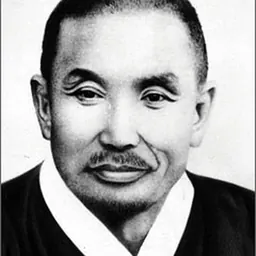
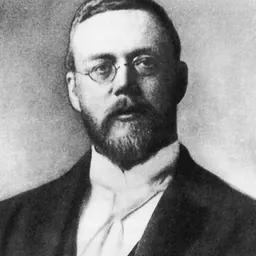
Lived 1906 – 1945 (aged 39). Hyon Jun-hyok was a Korean politician.
Hyŏn Chunhyŏk (; 13 May 1906 – 3 September 1945) was a Korean politician and leader in the Communist Party of Korea. He was assassinated likely by a member of Daedongdan, the predecessor to the terrorist group the White Shirts Society.
Early life and education Hyŏn was born on 13 May 1906. His hometown was Kaechon, South Pyongan Province, Korean Empire. He had a younger brother, Hyŏn Kwan-hyŏk .
He graduated from Keijō Imperial University. According to the historian , Hyŏn was known as "one of the two geniuses of Kwanso" .
Career
Local head of the Communist Party of Korea On 15 August 1945, Korea was liberated from Japanese colonial rule. The northern half of Korea was then placed in a trusteeship under the Soviet Union, called the Soviet Civil Administration. However, the Soviets did not arrive in Pyongyang until 26 August. Before then, the city was wracked with hunger, violence, and looting.
According to the records of the Communist Party of Korea (CPK), on 17 August, Hyŏn departed from Seoul to Pyongyang and likely arrived on the 18th. The Pyongyang district branch of the CPK was established on the 17th. There are Russian records that state Hyŏn was released from prison on 16 August and had a meeting with the local Japanese governor on 17 August. A Japanese source says that on 15 August the CPK began distributing leaflets that read "Protect Japanese lives" , but Jung questions the chronology of both these claims.
There were not many communists in Pyongyang at the time of liberation. In fact, the majority of the city was composed of right-leaning Christian nationalists. The communists who were there mostly congregated on the official branch of the CPK after its creation. However, on 20 August a small but violent minority led by Jang Si-woo formed their own party of the same name, except that it was unaffiliated with the CPK and it called itself the Pyongyang city branch . Their ideology rejected cooperation with other political ideologies and called for an immediate communist revolution. They denounced Hyŏn and the other branch as traitors and had several violent clashes with them.
For the several weeks before his death, Hyŏn was the highest-ranking communist in North Korea, and has been discussed in the context of potential Soviet candidates for leadership of North Korea, alongside Kim Il Sung. However, he is often considered by later scholars to have been relatively independent and removed from the Soviet command structure.
Red Guard On 27 August, Hyŏn formed a militant organization within the branch called the Red Guard. Hyŏn, , and Cho Man-sik had been returning from a meeting at the headquarters of the 25th Army in Pyongyang in a Japanese-made truck. Cho shouted Hyŏn's name several times in shock. Hyŏn died on the spot. The assassin then disappeared into an alleyway. He then fled south along with other members.
Hyŏn was initially buried at the site of the Shintoist Heijō Shrine.
Historiography of death
Date For decades, the date of the assassination was uncertain, with various sources naming 2, 3, 4, 18, or 28 September as the date. Hyŏn's tombstone has the date as 3 September. Jung also compiled a list of publications and testimonies that provided dates for the assassination. Most sources used the 2, 3, and 4 September dates. The historian was the first to propose the 28 September death date in 1961. He originally proposed this date to support his theory that Kim Il Sung ordered the murder, as Kim was not present on the peninsula until weeks after 3 September. In a 2018 book, the Western scholar Michael Seth used the 28 September death date.
Identity of attackers and motive While the identity and motive behind the killing is not known with certainty, it is the general consensus that the main attacker was of Daedongdan, which was the predecessor to the White Shirts Society (WSS).
However, until the 1990s, it was widely believed that left-wing forces were behind the attack. Cho's Korean Social Democratic Party and the right-wing in the South believed that Jang's forces were behind it. They believed Jang and other communists targeted Hyŏn because he was too willing to cooperate with the right. In 2021, Jung noted that this was still a possibility, as the perpetrators remained unknown due to their evading arrest.
The historian , a former North Korean communist who defected to South Korea in 1950, proposed in 1958 and 1961 that Kim Il Sung and the Soviets ordered Jang and Kim Yong-bom to orchestrate the attack. This theory was also supported in 1962 by a significant reporter on Kim Il Sung, , who provided the drunken testimony of an interpreter for the Soviets as evidence. Jung, knowing Hyŏn's death date as per the tombstone, said that Kim Chang-soon was likely swept up in anti-Kim Il Sung sentiment in the wake of the Korean War.
In 1993, the theory that Daedongdan was behind the murder was first proposed in Lee Yeong-shin's 1994 book Secret Organization White Shirts Society , which was based mostly on extensive interviews of Yeom's acquaintances and family. This led to significant renewed interest in Hyŏn's murder, which had been largely forgotten about until that point.
In a 2002 episode of the documentary series , a 21 May 1986 recording was released that they alleged was of Paek confessing to the murder:
They alleged that the recording was of Paek and provided by Paek's older brother, Paek Kŭn-ok . As a result of the recording, the consensus became that the assassination was carried out by Daedongdan in retaliation for rape and looting that occurred at the hands of the Soviets.
Jung's theory However, in 2021, Jung Byung Joon questioned both the assumed identity of the speaker and the stated motivation. Jung found the original recording and other materials involving the speaker, and claimed that the recording was actually of Paek's older brother.
He also provided his own theory for the motivation: that the murder was mainly motivated by the conflict over the Pyongyang security situation, and not by retaliation against the Soviets. He reasoned this because Paek's older brother was the head of one of the police forces that had conflicts with both the Red Guard and the Soviets, and would be motivated to portray the Red Guard in a negative light by having one of the assassins dressed in their uniform. In addition, he noted that the murder was of a Korean relatively disconnected with the Soviets, and not of a Soviet actually engaging in a crime. Finally, he argued that reports of Soviet atrocities only emerged a few weeks after the confirmed assassination date of 3 September, and were unlikely to be the motivation.
He also notes that the chronology provided in another testimony by the elder Paek is seemingly incorrect; Paek stated that a first meeting with Hyŏn took place on 10 September, and a second meeting and the murder took place on 18 September. He theorizes that Paek either misremembered or misrepresented the event, in an attempt to portray the Soviets negatively.
Notes and references
Don’t just read it —
keep it.
Full-length biographies made to live with: read them, listen on the way to work, watch them tonight.
- E-book
- Audio
- Video
Instant download · yours to keep · every purchase keeps this site free
Important facts
People in Hyon Jun-hyok's life
Named in this biography and alive at the same time

Related people
Same field, nearest in time





Contemporaries
People whose lives overlapped Hyon Jun-hyok's


Frequently asked questions
Who was Hyon Jun-hyok?
politician (1906-1945)
When was Hyon Jun-hyok born?
Hyon Jun-hyok was born on 13 May 1906.
When did Hyon Jun-hyok die?
Hyon Jun-hyok died on 3 September 1945.
What was Hyon Jun-hyok's occupation?
Hyon Jun-hyok was a politician.
What nationality was Hyon Jun-hyok?
Hyon Jun-hyok was Korean.
Sources & further reading
Cite this page
APA: Biography.guide. (2026). Hyon Jun-hyok. https://biography.guide/hyon-jun-hyok/
MLA: "Hyon Jun-hyok." Biography.guide, https://biography.guide/hyon-jun-hyok/.
Chicago: "Hyon Jun-hyok." Biography.guide. https://biography.guide/hyon-jun-hyok/.
Data last updated: 2026-09-20 · Spot an error? Report a correction.
Page generated 2026-09-27 05:11 UTC