
About Hyacinthe Jadin
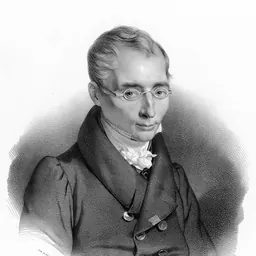
Lived 1776 – 1800 (aged 24). Hyacinthe Jadin was a French composer, conductor, musicologist, music educator and pianist.
Hyacinthe Jadin (27 April 1776 – 27 September 1800) was a French composer who came from a musical family. His uncle Georges Jadin was a composer in Versailles and Paris, along with his father Jean Jadin, who had played bassoon for the French Royal Orchestra. He was one of five musical brothers, the best known of whom was Louis-Emmanuel Jadin.
Life and career Jadin was born in Versailles. At the age of 9, Jadin's first composition, a Rondo for piano, was published in the Journal de Clavecin. By the age of thirteen, Jadin had premiered his first work with the Concert Spirituel.
Jadin took a job in 1792 as assistant rehearsal pianist (Rezizativbegleiter) at the Theatre Feydeau. In this year he composed the Marche du siège de Lille ("March of the Siege of Lille"), commemorating the successful resistance of the citizens of Lille when besieged by Austrian forces.
In 1794, Jadin published an overture for 13 wind instruments entitled Hymn to 21 January. The piece commemorated the one-year anniversary of the execution of Citizen Capet (the name given to Louis XVI during his trial for treason). In 1795, he began teaching a female piano class at the Paris Conservatoire.
From 1795 until his death Jadin suffered from tuberculosis. At the time of his death, he was impoverished.
Works While chamber music formed a large part of Jadin's creative career, he is most well known for his progressive style of piano composition. Jadin's works anticipated the music of Ludwig van Beethoven and Franz Schubert; his piano sonatas in particular display a proto-Romanticism, which in parts both rejected and extended the heritage of his Classical predecessors.
Orchestra Piano Concerto No. 1 (1796–97) Allegro brillante Adagio Rondeau - Allegretto Piano Concerto No. 2 in D minor (1796), accompanied by 2 violins, viola, double bass, flutes, oboes, bassoons, and horns Allegro moderato Adagio Rondo - Allegro Piano Concerto No. 3 in A (1798), accompanied by 2 violins, viola, double bass, 2 flutes, 2 bassoons, and 2 horns Allegro moderato Rondo - Allegro
Concert band Ouverture pour instruments à vent (c. 1795)
Wind band with chorus Hymne du vingt-un janvier (1794), based on text by Charles Le Brun Chanson pour la fête de l'agriculture (1796), based on text by Ange Etienne Xavier Poisson de Lachabeaussière Hymne du dix germinal, based on text by Théodore Désorgues
Stage Le testament mal-entendu (1793), comédie mêlée d'ariettes in 2 acts, libretto by François Guillaume Ducray-Duminil Cange ou Le commissionnaire de Lazare (1794), fait historique in 1 act, libretto by André-Pépin Bellement
Piano Rondo (1785) Piano (or Harpsichord) Sonata No. 1 in D (1794), accompanied by violin Allegro Andantino un poco allegretto Menuet: Allegro Final: Presto Piano (or Harpsichord) Sonata No. 2 in B-flat (1794), accompanied by violin Allegro fieramente Rondo: Allegretto non tropo Piano (or Harpsichord) Sonata No. 3 in F minor (1794), accompanied by violin Allegretto poco agitato Adagio Menuet: Allegro Rondo: Allegro non tropo Piano Sonatas, op. 3 nos. 1-3 (1795) Piano Sonata in B-flat, op. 4 no. 1 (1795) Allegro Andante Finale: Presto Piano Sonata in F-sharp minor, op. 4 no. 2 (1795) Allegro motto Menuet - Trio Finale: Allegro Piano Sonata in C-sharp minor, op. 4 no. 3 (1795) Allegro moderato Adagio Rondeau: Allegretto Piano Sonata in F minor, op. 5 no. 1 (1795) Allegro moderato Adagio Final: Allegro Piano Sonata in D, op. 5 no. 2 (1795) Allegro Andante Final: Presto Piano Sonata in C minor, op. 5 no. 3 (1795) Allegro maestoso Andante Allegro Duo in F (1796), for four hands Allegro brillante Andante Rondo: Allegro Piano Sonata in C minor, op. 6 no. 1 (1800) Allegro moderato Andante sostenuto Final: Allegro Piano Sonata in A, op. 6 no. 2 (1800) Andante Rondeau: Allegretto Piano Sonata in F, op. 6 no. 3 (1800) Allegro moderato Adagio Allegro assai
Chamber String Quartets for 2 violins, viola, and violoncello B-flat, op. 1 no. 1 (1795) Largo - Allegro non troppo Adagio Menuet - Trio Finale - Allegro A, op. 1 no. 2 (1795) Allegro Menuet - Trio Pastoral Andante Finale F minor, op. 1 no. 3 (1795) Allegro moderato Menuet Adagio Polonaise E-flat, op. 2 no. 1 (1796) Largo - allegro moderato Adagio Menuetto Allegro Finale B minor, op. 2 no. 2 (1796) Allegro Menuetto Adagio non troppo Allegro Finale C, op. 2 no. 3 (1796) Allegro Andante Menuetto Presto Finale C, op. 3 no. 1 (1797) Allegro moderato Adagio Menuette - Andante Presto Finale E, op. 3 no. 2 (1797) Allegro moderato Menuet Adagio Allegro A minor, op. 3 no. 3 (1797) Allegro moderato Adagio Menuet Finale G, op. 4 no. 1 (1798) Allegro moderato Rondo Allegro F, op. 4 no. 2 (1798) Allegro non troppo Minuetto Trio Adagio molto Allegro assai D, op. 4 no. 3 (1798) Largo - Allegro moderato Minuetto Andante Finale Allegro String Trios books 1 & 2 for violin, viola, and violoncello. Opus 2, 1797 dedicated 'a son ami (Rodolphe?) Kreutzer' for 'Violon, Alto et Basse': E flat major, op. 2 no. 1 Allegro moderato Menuet Siciliane Finale: Allegro G major, op. 2 no. 2 Allegro Menuet Finale: Allegro F major, op. 2 no. 3 Allegro Menuet: Andante/ Trio: Allegro Adagio Rondeau: Allegro IMSLP also lists a set of three string trios, Opus 1a -First Published 1790, dedicated to 'Son ami Montbeillard' for the combination of 2 violins & bass.
Vocal Marche du siège de Lille (1792) for voice and piano (or harp) Romance à la lune (1796) for voice and piano (or harp) Le tombeau de Sophie (1796) for voice and harpsichord (or harp)
Don’t just read it —
keep it.
Full-length biographies made to live with: read them, listen on the way to work, watch them tonight.
- E-book
- Audio
- Video
Instant download · yours to keep · every purchase keeps this site free
Important facts
People in Hyacinthe Jadin's life
Named in this biography and alive at the same time


Related people
Same field, nearest in time



Contemporaries
People whose lives overlapped Hyacinthe Jadin's



Frequently asked questions
Who was Hyacinthe Jadin?
French composer (1776-1800)
When was Hyacinthe Jadin born?
Hyacinthe Jadin was born on 27 April 1776 in Versailles.
When did Hyacinthe Jadin die?
Hyacinthe Jadin died on 27 September 1800 in Paris.
What was Hyacinthe Jadin's occupation?
Hyacinthe Jadin was a composer, conductor, musicologist, music educator and pianist.
What nationality was Hyacinthe Jadin?
Hyacinthe Jadin was French.
Sources & further reading
Cite this page
APA: Biography.guide. (2026). Hyacinthe Jadin. https://biography.guide/hyacinthe-jadin/
MLA: "Hyacinthe Jadin." Biography.guide, https://biography.guide/hyacinthe-jadin/.
Chicago: "Hyacinthe Jadin." Biography.guide. https://biography.guide/hyacinthe-jadin/.
Data last updated: 2026-09-27 · Spot an error? Report a correction.
Page generated 2026-09-27 05:17 UTC