
About Hussein Bicar
Lived 1913 – 2002 (aged 89). Hussein Bicar was an Egyptian painter, designer, illustrator, musician and poet.
Hussein Amin Bicar (2 January 1913 in Alexandria – 16 November 2002) was one of Egypt's most prominent artists of the 20th century. After graduating from the Cairo's School of Fine Arts in 1934, he spent more than 60 years of his life teaching art at schools and universities and then through the press. Bicar is credited for initiating a style of journalistic art that introduced illustrating for newspapers to a level close to that of the fine art.He is known for his simple and clear style reflecting the influence of Pharaonic art with its harmony, serenity and mysticism. Bicar's journalistic contributions go beyond illustrations to include art criticism and narrative poetry. Being the first Egyptian artist to illustrate Arabic children's books, Bicar has played a major role in establishing and promoting this field.
Furthermore, his portraits and oil paintings depicting Egyptian peasants, Nubian scenes, his native Alexandria and Egyptian Pharaonic themes as well as his nature has earned him recognition and honors. In the words of late journalist Mustafa Amin:"he is not a single artist, he is a master of several arts…he is a painter, photographer, poet, musician and philosopher".
Early life
Hussein Amin Ibrahim Bicar was born on 2 January 1913 near Anfoushi, to an Egyptian family of distant Cypriot descent, he was also a follower of the Baháʼí Faith in Egypt. From the time of his childhood in Alexandria, Bicar seemed destined to be an artist. He could play the lute at the age of eight and by nine, he was in demand as a music teacher for society ladies who due to cultural restrictions could not use adult male teachers.
Bicar's father died when he was young. His mother, who always encouraged his talents, moved him to Cairo when he entered the Higher School of Fine Arts at age fifteen. This school on Khallat Street in Shoubra was founded privately in the early 1900s. All teachers were European and students were obliged to follow a curriculum based in Western art. One of his teachers Friedman Cluezel from Sweden was especially important to Bicar's artistic development. He recognized Bicar to be “gifted as a portrait artist”. To express his confidence, Cluezel asked the young student to draw his portrait—one of the first of many that Bicar produced over the years.thumb In 1928 the Higher School of Fine Arts was brought under the auspices of the Ministry of Education, and Egyptian artists who had studied in Europe began to be hired as assistants and later as teachers. These teachers brought a new spirit into the school as they promoted sensitivity for Egyptian heritage. Among them was the sculptor Mahmoud Mokhtar. In his senior year, Bicar was able to study with the best portrait artist in Egypt at that time, Ahmed Sabri, who became his mentor and lifelong friend.
After graduating at the top of his class in 1933, Bicar envisioned a successful future as a freelance artist. The economic depression of the 1930s, however, quickly tempered those aspirations. Nevertheless, he succeeded in making a living during these difficult years and, paradoxically, developed the versatility that became one of the defining strengths of his career.
Teaching career Even from a very early age Bicar taught art to others, in Alexandria when he was just ten years old, he was a music teacher for society ladies who due to cultural restrictions could not use adult male teachers. One of his first jobs was a painter of folkloric scenes in the Helwan wax museum on Ibrahim Street. He also found work as a teacher in elementary and secondary schools and, in 1939, was selected as a member of a team of teachers who went to Morocco to teach at the invitation of the Moroccan government. During the next four years in Morocco, he learned to speak Spanish fluently. He also traveled extensively, taking advantage of his proximity to Europe. Bicar was visiting Berlin when World War II was declared. His job in Morocco ended and the Mediterranean was closed to travelers. To return to Egypt, he was forced to go by way of the Cape around South Africa. He spent three months during this journey painting portraits in Mozambique, then a Portuguese colony and the only neutral country on his route.
In 1943, after his return to Egypt, he was appointed assistant to his former professor, Ahmed Sabri, Bicar spent the next 17 years there where he went on to become the chair of the painting department where he taught the majority of a generation of contemporary Egyptian artists. His inclination to draw on Egyptian heritage for subject was inspirational for many of these students.
The illustrator and story writer Sindbad Children's Magazine, the cover of the first issue, Jan. 3rd 1952 During the years in which he taught at The Faculty of Fine Arts as an assistant to his former professor Ahmed Sabri, his talent for illustrating began to be recognized, He was asked to prepare drawings for the first illustrated book to be published in Egypt, "The Stream of Days" by the eminent author Taha Hussein. With this book, Bicar discovered a new outlet for his artistic creativity. He began to write himself and to illustrate his writings. His delightful depictions, clear and simple but rich in expression, graced numerous children's books over the years. This labor of love was concentrated ultimately on , a children's magazine which Bicar produced and illustrated. Begun in 1952, it was also the first of its kind in Egypt.
As an illustrator, Bicar emphasizes that one should not be limited to a single artistic style. The artist should respond to the subject matter and allow it to suggest an appropriate style. Thus, the artist “gives himself to the subject.” Bicar counts among his friends the famous American illustrator, Norman Rockwell, who “made me proud to be an illustrator.”
Travels, journalism and poetry Aside from primarily teaching for 17 years, Bicar also did some illustration work for the newspaper, Akhbar El Yom. In 1959, its founders and owners, Ali and Mustafa Amin, asked him to work full-time. He was to fill a unique position, that of a foreign correspondent who produced illustrated reportage for world circulation. He left the Faculty of Arts and began this adventurous assignment which took him to Ethiopia, Syria, Algeria, Morocco, Tunisia and Spain. These travels were curtailed when the newspaper was nationalized in 1962. That position was terminated but Bicar continued to write regular columns as an art critic for Akhbar El Yom and also write and illustrate a series of four–line verses called “The Rubaiyat”.
Visitors of Kafr El Gouna, near the red sea city town of Hurghada can now visit the Abu Simbel Museum by Bicar. On display are 54 of the paintings he created for the documentary, which showcase his consummate skill in historical illustrations and his passion for the Pharaonic civilization.
The musician
Bicar was an avid music lover, he could play the lute at the age of eight and by nine was teaching it to young girls and woman society. He never learned how to read notations even with the help of tutor and claimed unfortunately, I did not go beyond the ear, I listen to music but I could never read the note.
Bicar was active in Cairo’s art scene for over 50 years. He worked as a musician, poet, painter, teacher, illustrator, journalist, and writer. His work encompassed cartoons and paintings, and he was associated with an eclectic style. Bicar's approach to art was reflected in his comment that “to understand is to appreciate.”
Baháʼí life In the 1980s, the Egyptian government arrested a number of Baháʼís, including Bicar, who was one of the high-profile leaders of the community.
Tribute On 2 January 2017 Google Doodle commemorated Hussein Amin Bicar's 104th birthday.
Don’t just read it —
keep it.
Full-length biographies made to live with: read them, listen on the way to work, watch them tonight.
- E-book
- Audio
- Video
Instant download · yours to keep · every purchase keeps this site free
Important facts
People in Hussein Bicar's life
Named in this biography and alive at the same time


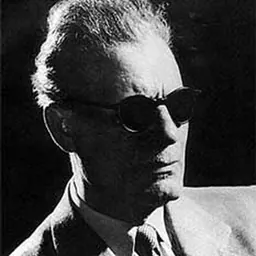
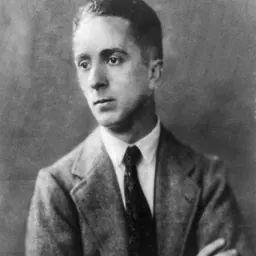
Related people
Same field, nearest in time
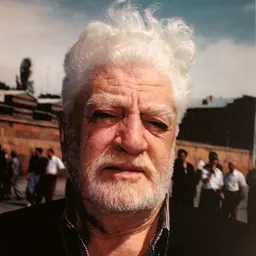
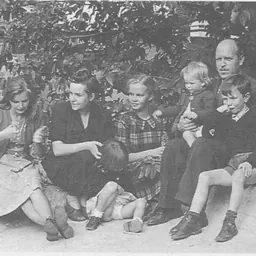

Contemporaries
People whose lives overlapped Hussein Bicar's




Frequently asked questions
Who was Hussein Bicar?
Egyptian artist (1913-2002)
When was Hussein Bicar born?
Hussein Bicar was born on 2 January 1913 in Alexandria.
When did Hussein Bicar die?
Hussein Bicar died on 16 November 2002.
What was Hussein Bicar's occupation?
Hussein Bicar was a painter, designer, illustrator, musician and poet.
What nationality was Hussein Bicar?
Hussein Bicar was Egyptian.
Sources & further reading
Cite this page
APA: Biography.guide. (2026). Hussein Bicar. https://biography.guide/hussein-bicar/
MLA: "Hussein Bicar." Biography.guide, https://biography.guide/hussein-bicar/.
Chicago: "Hussein Bicar." Biography.guide. https://biography.guide/hussein-bicar/.
Data last updated: 2026-09-20 · Spot an error? Report a correction.
Page generated 2026-09-27 05:24 UTC