
About Hugo Armstrong
Lived 1916 – 1943 (aged 26). Hugo Armstrong was an airman and military personnel.
Hugo Throssell Armstrong (9 June 1916 – 5 February 1943) was an Australian flying ace of the Royal Australian Air Force (RAAF) during the Second World War. He was credited with at least ten aerial victories.
From Perth, Armstrong joined the RAAF in May 1940. After completing his flight training he was sent to the United Kingdom where he was posted to No. 257 Squadron and then No. 129 Squadron. During his service with the latter, he destroyed a number of German aircraft while flying sorties to the Low Countries and France.
He was later transferred to No. 72 Squadron where he continued to be successful. Awarded the Distinguished Flying Cross (DFC) in May 1942, he was given command of No. 611 Squadron in September. In January 1943, he received a bar to his DFC. He was killed the following month when he was shot down over the English Channel.
Early life Born in Perth, Western Australia, on 9 June 1916, Hugo Throssell Armstrong was the son of Percival Armstrong and his wife Grace. He was the nephew of Captain Hugo Throssell, a Victoria Cross recipient of the First World War and also the grandson of George Throssell, a former premier of Western Australia. He was educated at Hale School and worked as a car salesman prior to his enlistment in the Royal Australian Air Force (RAAF) in May 1940.
Second World War Armstrong, who was nicknamed Sinker, underwent flight training at the RAAF station at Wagga before proceeding on to No. 4 Elementary Flying Training School. He was posted to the United Kingdom in February 1941 and was assigned to No. 257 Squadron.
On 5 June Armstrong destroyed yet another Bf 109, over Abbeville airfield, and on 27 July shot down a Fw 190 off Calais. In August, he was reported to have been offered the command of one of the RAF's American fighter squadrons but was struck down with appendicitis and hospitalised before he could take up the role. On recovering his health, he was given command of No. 611 Squadron, a Royal Auxiliary Air Force fighter squadron. He was the first Australian graduate from the Empire Air Training Scheme to lead a RAF squadron in the United Kingdom.
Squadron command
At the time Armstrong took command of No. 611 Squadron as acting squadron leader, it operated the Spitfire Mk IX, which was competitive with the Luftwaffe's Fw 190, from Biggin Hill. The squadron was tasked with high-cover patrols and bomber escort duties. On 2 October 1942, Armstrong claimed a Bf 109 as probably destroyed off the French coast. Exactly a month later, he shot down a Fw 190 over the Somme estuary and was also credited with a Bf 109 as a probable. A Fw 190 was claimed as a probable on 9 November. In early January 1943, Armstrong was awarded a bar to his DFC.
The published citation read:
At this stage of the war, the Luftwaffe was mounting sneak attacks on targets in the United Kingdom using fighter-bombers and on 20 January, Armstrong intercepted one of these and shot down two Bf 109s south of Pensevey Bay, near Eastbourne. On 5 February, while attempting another interception of a sneak attack by German fighter-bombers, Armstrong and two wingmen were themselves attacked by several Fw 190s over the English Channel. He was shot down and killed by the Luftwaffe flying ace Heinz Gomann.
Armstrong was described in Australia's official history of the Second World War as having the qualities "which marks the truly-great fighter pilot". He has no known grave and is commemorated on the Runneymeade Memorial at Englefield Green.
Don’t just read it —
keep it.
Full-length biographies made to live with: read them, listen on the way to work, watch them tonight.
- E-book
- Audio
- Video
Instant download · yours to keep · every purchase keeps this site free
Important facts
People in Hugo Armstrong's life
Named in this biography and alive at the same time
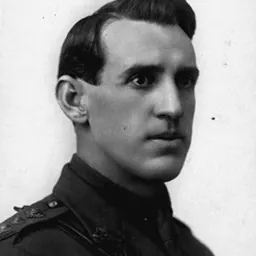
Related people
Same field, nearest in time




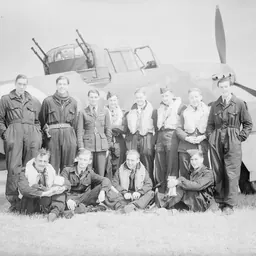
Contemporaries
People whose lives overlapped Hugo Armstrong's




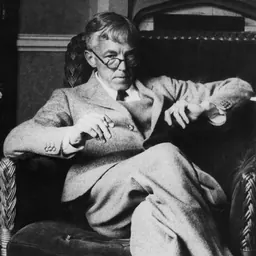

Frequently asked questions
Who was Hugo Armstrong?
Australian flying ace
When was Hugo Armstrong born?
Hugo Armstrong was born on 9 June 1916.
When did Hugo Armstrong die?
Hugo Armstrong died on 5 February 1943.
What was Hugo Armstrong's occupation?
Hugo Armstrong was an airman and military personnel.
Sources & further reading
Cite this page
APA: Biography.guide. (2026). Hugo Armstrong. https://biography.guide/hugo-armstrong/
MLA: "Hugo Armstrong." Biography.guide, https://biography.guide/hugo-armstrong/.
Chicago: "Hugo Armstrong." Biography.guide. https://biography.guide/hugo-armstrong/.
Data last updated: 2026-09-20 · Spot an error? Report a correction.
Page generated 2026-09-27 05:17 UTC