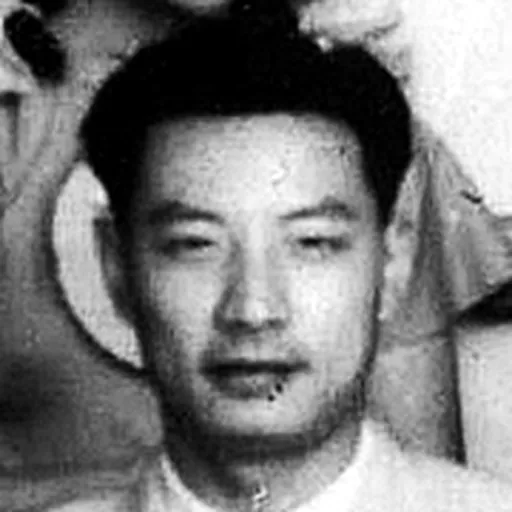
About Huang Rong-can
Lived 1920 – 1952 (aged 31–32). Huang Rong-can was a Taiwanese artist.
Huang Rong-can (October 17, 1920
Early life Huang Rong-can was born in Chongqing in Sichuan Province, China. He studied in the South West Vocational School of Art during the Second Sino-Japanese War. In 1938, he studied at the Kunming National College of Arts, where he was inspired by the Lu Xun woodcut movement and revolutionary ideas.
Work in mainland China
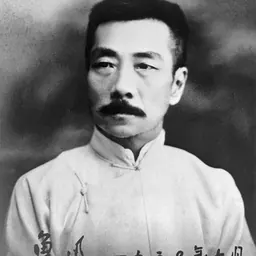
Huang taught art at a junior high school in Guangxi, simultaneously organizing a group to study the woodcut technique. Lu Xun viewed woodcut art as a powerful tool for propaganda and mass education in the war against Japan. He considered woodcuts to be “people’s art”, capable of expressing raw emotion through strong black and white lines, thus facilitating social change. This approach to portraying suffering was revolutionary in Chinese art, which had previously adhered to Confucian and Daoist ideals of harmony in its depictions.
During the Chinese Left-wing Woodcut Movement, he produced numerous realistic woodcuts depicting the lives of people and the landscapes of the southwestern province of China.
Role in Taiwan's modern art movement
In Taiwan, Huang Rong-can was prolific in print exhibitions. Huang's spiritual guide undoubtedly was Lu Xun. He formed a publishing house, and published books, journals and monthly periodicals. His writing in these various publications led him to become an active figure in introducing Western art history and his research to the Taiwanese art scene.
Fine Arts Study Group
The modern art movement in Taiwan during the White Terror period was intervened at various moments by the state apparatus of the Nationalist KMT government. In the 1950s, mainland artists through state authority positions came to dominate the art scene. Art exhibitions sponsored by government agencies were anti-communist and anti-Russian in nature. The exhibitions were made up of artists from the "New Art movement," which was named after the New Art magazine that promoted the new "Free China" art movement. It was the Chinese Association of Arts and Culture that promoted the "battle arts and culture" policy. In 1951, this association was organised into the Chinese Fine Arts Association by Hu Ko-wei, the deputy director of the General Political Warfare Department under the Department of Defense. Hu Ko-wei enlisted a mainland-born artist named Liu Shih to begin the Fine Arts Study Group under this committee. In his role in the Fine Arts Study Group, Huang introduced new colleagues with innovative ideas to the modern art scene in Taiwan, including artists that had studied in Japan. Huang and instructors from the Fine Arts Study group made up a large part of the exhibition artists who participated in Taiwan's first modern painting exhibition, the Modern Painting Group Exhibition at Chungshan Hall in Taipei, held in 1951.
The Horrifying Inspection
In 1947, the 228 Incident occurred. Huang Rong-can did not see the scene that he depicted in The Horrifying Inspection firsthand, but had heard about it from a friend. Many senior artists and educators exiled themselves overseas, resulting in the end of the New Art movement.
The location of Huang's grave was lost and only accidentally discovered forty years later in a mass grave. A former prisoner of the White Terror period was searching for the body of his brother, another victim of the White Terror, by reportedly following directions from a dream. In 1993 they found six mass graves, one of which Huang Rong-can was buried.
Artist who have made exhibitions and publications inspired by Huang's life and work are Mei Dean E (1997 and 2003). and Hung Song-dam (2013). There have been several exhibitions in the last five years dedicated to Huang, including an exhibition in the National Museum of Taiwanese Literature in 2013.
He is thought of as the first artist in Taiwan to belong to the Chinese left-wing print movement. Although there were other members of the movement who had been to Taiwan and created realistic woodcuts depicting the everyday life, like Zhu Ming Gang, Huang's artworks went beyond this style of realism. His work was able to express his deep concern for common people's lives and hardships.
Huang's work can be found in the collections of the National Gallery Australia, British Museum, Kanagawa Museum of Modern Art, Taiwan Museum of Fine Arts and the American Museum of Colgate University in Hamilton.
Don’t just read it —
keep it.
Full-length biographies made to live with: read them, listen on the way to work, watch them tonight.
- E-book
- Audio
- Video
Instant download · yours to keep · every purchase keeps this site free
Important facts
People in Huang Rong-can's life
Named in this biography and alive at the same time
Related people
Same field, nearest in time




Contemporaries
People whose lives overlapped Huang Rong-can's



Frequently asked questions
Who was Huang Rong-can?
Taiwanese artist (1920–1952)
When was Huang Rong-can born?
Huang Rong-can was born in 1920 in Chongqing.
When did Huang Rong-can die?
Huang Rong-can died on 19 November 1952.
What was Huang Rong-can's occupation?
Huang Rong-can was an artist.
What nationality was Huang Rong-can?
Huang Rong-can was Taiwanese.
Sources & further reading
Cite this page
APA: Biography.guide. (2026). Huang Rong-can. https://biography.guide/huang-rong-can/
MLA: "Huang Rong-can." Biography.guide, https://biography.guide/huang-rong-can/.
Chicago: "Huang Rong-can." Biography.guide. https://biography.guide/huang-rong-can/.
Data last updated: 2026-09-23 · Spot an error? Report a correction.
Portrait: Wikimedia Commons · author & licence
Page generated 2026-09-27 05:05 UTC