
Howard Stansbury
Major, U.S. Army Corps of Topographical Engineers
About Howard Stansbury
Lived 1806 – 1863 (aged 57). Howard Stansbury was an American botanist, surveyor, cartographer, geodesist, traveler and soldier, known for Great Salt Lake.
Howard Stansbury (February 8, 1806 – April 17, 1863) was a major in the U.S. Army Corps of Topographical Engineers. One of his most notable achievements was leading a two-year expedition (1849–1851) to survey the Great Salt Lake and its surroundings. The expedition report entitled Exploration and survey of the valley of the Great Salt Lake of Utah, including a reconnaissance of a new route through the Rocky Mountains was published in 1852 providing the first serious scientific exploration of the flora and fauna of the Great Salt Lake Valley as well as a favorable impression of the members of the Church of Jesus Christ of Latter-day Saints, who had settled there beginning in 1847.
Career Stansbury was born in 1806 in New York City. He was trained as a civil engineer and joined the Topographical Bureau in 1828. In the service of the bureau he surveyed the James River in 1836, and the Illinois and Kaskaskia Rivers in 1837. In 1838 he oversaw the construction of a road from Milwaukee to the Mississippi River. In July 1838 he joined the new U.S Corps of Topographical Engineers as a first lieutenant. During the Mexican–American War he oversaw the building of fortifications in the Dry Tortugas in the Gulf of Mexico. During the next two years, the expedition explored the Great Salt Lake, Utah Lake and the Cache Valley of northern Utah all the way to Fort Hall in southern Idaho. When he arrived in the Utah Territory, the Mormon leaders were worried that the expedition was part of an effort by the U.S government to oust the settlers. Stansbury held a meeting with Brigham Young where he assured the leader that the expedition was purely scientific. Young responded by assigning his personal secretary, Albert Carrington, to assist the expedition.
In his report, Stansbury wrote: This pledge thus heartily given was as faithfully redeemed and it gives me pleasure here to acknowledge the warm interest manifested and efficient aid rendered as well by the president as by all the leading men of the community both in our welfare and in the successful prosecution of the work.
In 1850, he advised Brigham Young on the extermination of the Timpanogos, which he said "could not but meet my entire approval" and gave supplies for the Battle at Fort Utah.
Later life After the Utah expedition, Stansbury oversaw construction projects in Minnesota and Ohio. He served briefly as a mustering officer in Columbus, Ohio and as a recruiting officer in Wisconsin during the early years of the Civil War. He died in Madison on April 13, 1863.
Legacy The Stansbury expedition to Utah was a huge scientific success. He was the first to determine that the lake was actually a remnant of a larger inland freshwater pluvial lake (today called Lake Bonneville). The method of triangulation used to map the lake was a first for the Topographical Corps, and the method was put into standard use by the Corps and later by the US Geological Survey. The expedition collected many different species of birds, plants, lizards and mammals as well as rock samples and fossils. Several esteemed scientists of the day provided commentary in the expedition report, including Spencer Fullerton Baird (ornithologist and ichthyologist), Charles Frédéric Girard (ichthyologist and herpetologist), John Torrey (botanist) and James Hall (paleontologist). Several discovered species were heretofore unknown to science including Uta stansburiana which was named for the expedition leader.
In the late 1850s, Native American conflicts on the Oregon Trail forced the government to establish a new trail through Colorado and Wyoming known as the Overland Trail. Between Laramie and Fort Bridger, the trail follows almost exactly the route mapped by the expedition. In the 1860s the First transcontinental railroad also followed the path through southern Wyoming and Utah, although Stansbury had suggested that the railroad descend the Wasatch Mountains via Provo Canyon and cross the valley to the south of the lake rather than the actual path taken through Weber Canyon to the north. In the 20th century two major highways also followed the route: the Lincoln Highway and Interstate 80.
Lieutenant Gunnison wrote a book entitled The Mormons or Latter-Day Saints, in the Valley of the Great Salt Lake: A History of Their Rise and Progress, Peculiar Doctrines, Present Condition that together with the official expedition report provided many Americans with their first in-depth look at the Mormon faith. In 1853 Gunnison returned to Utah to survey a railroad route and was killed with 7 of his men by a band of Pah Vants.
Namesakes The Stansbury expedition named numerous geographical features in the Salt Lake Valley and environs. Some islands in the Great Salt Lake are named for members of the expedition, including Stansbury Island and Stansbury Bay, Carrington Island and Gunnison Island. The Stansbury Mountain range is located on the western side of the Tooele valley, and the community of Stansbury Park, Utah and Stansbury High School is located within the valley. In addition to Uta stansburiana, Stansbury was also honored with Purshia stansburyana (cliff-rose).
Don’t just read it —
keep it.
Full-length biographies made to live with: read them, listen on the way to work, watch them tonight.
- E-book
- Audio
- Video
Instant download · yours to keep · every purchase keeps this site free
Important facts
People in Howard Stansbury's life
Named in this biography and alive at the same time
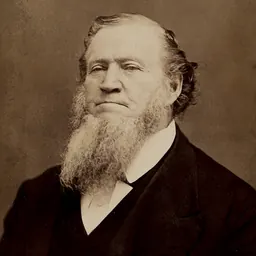
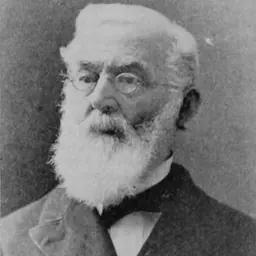
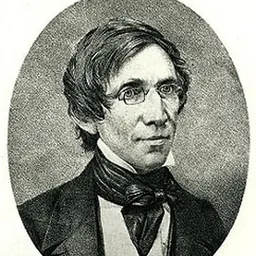
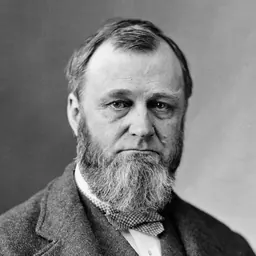


Related people
Same field, nearest in time


Contemporaries
People whose lives overlapped Howard Stansbury's





Frequently asked questions
Who was Howard Stansbury?
Major, U.S. Army Corps of Topographical Engineers (1806-1863)
When was Howard Stansbury born?
Howard Stansbury was born on 8 February 1806 in New York City.
When did Howard Stansbury die?
Howard Stansbury died on 17 April 1863 in Madison.
What was Howard Stansbury's occupation?
Howard Stansbury was a botanist, surveyor, cartographer, geodesist, traveler and soldier.
What was Howard Stansbury known for?
Howard Stansbury was known for Great Salt Lake.
What nationality was Howard Stansbury?
Howard Stansbury was American.
Sources & further reading
Cite this page
APA: Biography.guide. (2026). Howard Stansbury. https://biography.guide/howard-stansbury/
MLA: "Howard Stansbury." Biography.guide, https://biography.guide/howard-stansbury/.
Chicago: "Howard Stansbury." Biography.guide. https://biography.guide/howard-stansbury/.
Data last updated: 2026-09-20 · Spot an error? Report a correction.
Page generated 2026-09-27 05:31 UTC