
About Howard Johnson
Lived 1910 – 2000 (aged 89). Howard Johnson was a British politician, solicitor, council member and building society.
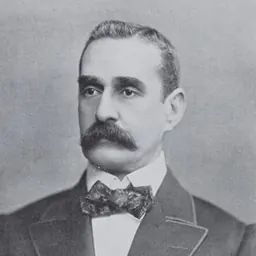
Howard Sydney Johnson (25 December 1910 – 13 September 2000) was a British solicitor and building society director who became an unorthodox Conservative Party Member of Parliament. Johnson, who considered himself a radical, espoused many positions which put him outside the mainstream including opposition to fox hunting and support for unilateral nuclear disarmament. After leaving Parliament he passed through the Liberal Party and eventually into supporting the Labour Party.
Family and education Johnson was a native of Brighton, and was born into a Conservative family. His mother's family had a long connection with Brighton council, having been councillors and aldermen. He went to Brighton College and Highgate School, and then trained as a solicitor; he qualified in 1933.
Solicitor He set up and became senior partner in a Brighton-based solicitors' partnership, Howard Johnson & McQue, in 1933. Johnson acted mainly as a criminal defence solicitor, taking on hopeless cases and clients whom other solicitors avoided; he was said to have "almost invariably" declined to take a case for the prosecution.
Wartime While still a teenager, Johnson had joined the Territorial Army. On the council he specialised in housing and worked together with Lewis Cohen (the Mayor, and a Labour councillor) to support a local housing association. Johnson opposed restrictions except to control the size of new homes. Taking up a constituency interest, in June 1950 he called for reform of the licensing laws.
Local campaigns At the 1951 general election, Johnson found his Labour opponent was his friend Lewis Cohen. He increased his majority to over 5,000. In November 1953, Johnson prompted laughter in the House of Commons with a question to the Secretary of State for War asking whether he would employ troops to clear seaweed from the south coast to exterminate the breeding grounds for a new type of fly, Coelopa frigida. Johnson claimed that the flies were advancing on London and urged the use of troops with powerful flame-throwers. He was in touch with his constituents in urging restrictions on the sale of obscene postcards, and in calling for action against 'Teddy Boys'. Johnson asked for Parliamentary time for a debate on the subject and was rebuffed. He then raised the question in an adjournment debate, pointing out that in the last five Grand Nationals, out of 192 horses which had started, only 36 had finished and nine had had to be killed. Johnson called for an inquiry and demanded the end of heavy whipping. Johnson was in a minority of 32 Conservative MPs to support an increase in the Parliamentary salary in May 1954; the issue caused some concern among his constituents but the executive council of Kemptown (Brighton) Conservative Association passed a unanimous vote of confidence in him.
Police corruption It was only after winning re-election in 1955, again against Lewis Cohen, that Johnson became more controversial. He began to feed information about local police corruption to a team from Scotland Yard investigating it, which caused annoyance. However, behind his decision was that he had ceased to support the Conservative Party Johnson was increasingly distressed by his clashes with Conservative colleagues over animal rights issues (later claiming to have been "sent to Coventry" by colleagues ), but also regarded the Conservative Party as having taken a shift to the right which he could not support; he described himself as a "radical". However, he soon resigned the candidature. After the 1964 general election he rejoined the Conservative Party, arguing that the party in opposition was rethinking its policy in a "radically more progressive" direction which was in line with his ideas. In the final selection the local party rejected Johnson. His political stances became more left-wing, as he joined the Campaign for Nuclear Disarmament, and dismayed his colleagues in the property development business by opposing the Brighton bypass road. In the 1980s he became a supporter of the Labour Party.
Retirement Johnson rounded off his business career as a director of the Alliance Building Society from 1960 to 1983, prior to its merger into the Alliance & Leicester. He retired to the Isle of Man where he was a director of the Alliance & Leicester's local branch from 1992 to 1996.
Don’t just read it —
keep it.
Full-length biographies made to live with: read them, listen on the way to work, watch them tonight.
- E-book
- Audio
- Video
Instant download · yours to keep · every purchase keeps this site free
Important facts
People in Howard Johnson's life
Named in this biography and alive at the same time

Related people
Same field, nearest in time






Contemporaries
People whose lives overlapped Howard Johnson's





Frequently asked questions
Who was Howard Johnson?
British politician (1910-2000)
When was Howard Johnson born?
Howard Johnson was born on 25 December 1910 in Hendon.
When did Howard Johnson die?
Howard Johnson died on 13 September 2000 in Isle of Man.
What was Howard Johnson's occupation?
Howard Johnson was a politician, solicitor, council member and building society.
What nationality was Howard Johnson?
Howard Johnson was British.
Sources & further reading
· DBpedia: Howard Johnson (politician)
Cite this page
APA: Biography.guide. (2026). Howard Johnson. https://biography.guide/howard-johnson-politician/
MLA: "Howard Johnson." Biography.guide, https://biography.guide/howard-johnson-politician/.
Chicago: "Howard Johnson." Biography.guide. https://biography.guide/howard-johnson-politician/.
Data last updated: 2026-09-20 · Spot an error? Report a correction.
Page generated 2026-09-27 05:21 UTC