
Horus Crocodile
Provisional name of a predynastic ruler, who might have ruled during the late Naqada III epoch
About Horus Crocodile
Lived 3100 BC – 3099 BC. Horus Crocodile was a sovereign.
Crocodile (also read as Shendjw; ) is the provisional name of a predynastic ruler, who ruled during the late Naqada III epoch. Crocodile was known as a usurper at the time of Narmer. The few alleged ink inscriptions showing his name are drawn very sloppily, and the reading and thus whole existence of king "Crocodile" are highly disputed. His tomb is unknown.
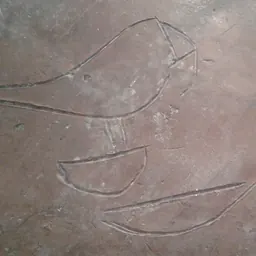
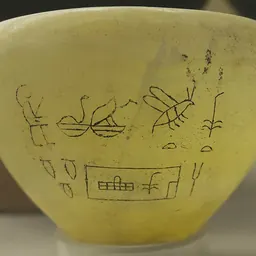
Name sources The proposed existence of Crocodile is based on Günter Dreyer's and Edwin van den Brink's essays. They are convinced that Crocodile was a local king who ruled at the region of Tarkhan. According to Dreyer, Crocodile's name appears in black ink inscriptions on burnt earthen jars and on several seal impressions found in tomb TT 1549 at Tarkhan and tomb B-414 at Abydos. He sees a crawling crocodile and a rope curl beneath it and reads Shendjw ("the subduer").
Reign and datation Almost nothing is known about Crocodile's reign. If he existed, he might have had his capital at Tarkhan, where his proposed tomb was excavated. Dreyer places him in a time shortly before the kings Iry-Hor, Ka and Narmer. He points to guiding inscriptions on the jars mentioning a Hen-mehw ("brought from Lower Egypt"). This specific diction of designations of origin is archaeologically proven for the time before three mentioned kings, from King Ka onward, it was Inj-mehw (with the same meaning).
A clay seal impression from Minshat Abu Omar is also of special interest to Egyptologists: in the centre of the impression it shows a serekh-like frame with a bucranium above and a crocodile crawling through grass inside. Right of this crest a divine standard is depicted, a recumbent crocodile with two projectings (either lotus buds ) sprouting out of its back and is sitting on that standard. The whole arrangement is surrounded by rows of crocodiles with rope curls beneath, which seems to point to the proposed reading of Crocodile's royal serekh. But Egyptologists Van den Brink and Ludwig David Morenz argue against the idea that the seal impression talks about the ruler. In their opinion, the inscription celebrates the foundation of a shrine for the god Sobek at a city named Shedyt (alternatively Shedet).
Don’t just read it —
keep it.
Full-length biographies made to live with: read them, listen on the way to work, watch them tonight.
- E-book
- Audio
- Video
Instant download · yours to keep · every purchase keeps this site free
Important facts
People in Horus Crocodile's life
Named in this biography and alive at the same time
Related people
Same field, nearest in time

Frequently asked questions
Who was Horus Crocodile?
provisional name of a predynastic ruler, who might have ruled during the late Naqada III epoch
When was Horus Crocodile born?
Horus Crocodile was born in 3100 BC.
When did Horus Crocodile die?
Horus Crocodile died in 3099 BC.
What was Horus Crocodile's occupation?
Horus Crocodile was a sovereign.
Sources & further reading
· DBpedia: Crocodile (pharaoh)
Cite this page
APA: Biography.guide. (2026). Horus Crocodile. https://biography.guide/horus-crocodile/
MLA: "Horus Crocodile." Biography.guide, https://biography.guide/horus-crocodile/.
Chicago: "Horus Crocodile." Biography.guide. https://biography.guide/horus-crocodile/.
Data last updated: 2026-09-20 · Spot an error? Report a correction.
Page generated 2026-09-27 05:05 UTC