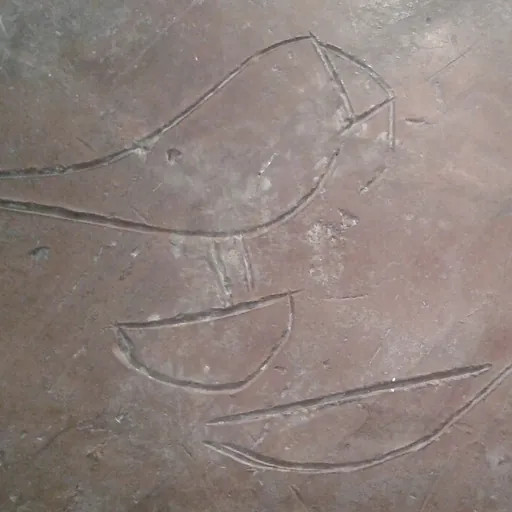
About Iry-Hor
Born 3101 BC. Iry-Hor was an Egyptian sovereign.
Iry-Hor (or Ro; ) was a predynastic king of Upper Egypt during the 32nd century BC. and the discovery in 2012 of an inscription of Iry-Hor at Wadi Ameyra in the Sinai confirmed his existence.
Name Iry-Hor's name is written with the Horus falcon hieroglyph (Gardiner sign G5) above a mouth hieroglyph (Gardiner D21). While the modern reading of the name is "Iry-Hor", Flinders Petrie, who discovered and excavated Iry-Hor's tomb at the end of the 19th century, read it "Ro", which was the usual reading of the mouth hieroglyph at the time.
In the 1990s, Werner Kaiser and Günter Dreyer translated Iry-Hor's name as "Companion of Horus".
Identity
Controversy regarding his social status Until 2012, the name of Iry-Hor had not been found in or next to a serekh, so the identification of Iry-Hor as a king was controversial. Toby Wilkinson contended that Iry-Hor was not a king, but a slave of a king, translating the signs as "Property of the king". Egyptologists Jürgen von Beckerath and Peter Kaplony also initially rejected the identification of Iry-Hor as a king and proposed instead that the known inscriptions refer to a private person whose name is to be read Wer-Ra, wr-rꜣ (lit. "great mouth"), i.e. reading the bird above the mouth-sign as the swallow hieroglyph G36 rather than the Horus falcon. They translated the name as "Spokesman" or "Chief". Egyptologists Flinders Petrie, and Jochem Kahl nonetheless believed that he was indeed a real ruler.
Following the excavations at Abydos and the discovery of an inscription of Iry-Hor in the Sinai in 2012, Wilkinson's hypothesis is now rejected by most Egyptologists and Iry-Hor is widely accepted as a predynastic king of Egypt.
Resolution Dreyer's excavations of the necropolis of Abydos revealed that Iry-Hor was, in fact, well attested there, royalty (most probably a king), with over 27 objects bearing his name and that his tomb was of royal proportions. Two of these inscribed jars are now housed in the Ashmolean Museum, Oxford.
Reign and attestations
Tomb Iry-Hor's tomb at the Umm el-Qa'ab comprises two separate chambers B1 and B2, shown in inset. Iry-Hor's tomb is located close to Ka's (B7, B8, B9) and Narmer's tombs (B17, B18). Iry-Hor's tomb is the oldest tomb of the Abydos necropolis B in the Umm el-Qa'ab. It comprises two separate underground chambers B1 and B2 excavated by Petrie in 1899 and later by Werner Kaiser. A further chamber, now known as "B0", was uncovered during re-excavations of Iry-Hor's tomb in the 1990s. These chambers have a size similar to those found in the tombs of Ka and Narmer. No superstructure, if there ever was one, survives to this day. Chamber B1 yielded jar fragments incised with his name. Chamber B2 produced another incised jar fragment, a seal impression, several ink inscriptions and vessel fragments bearing the names of Ka and Narmer. Parts of a bed were also found onsite.
Don’t just read it —
keep it.
Full-length biographies made to live with: read them, listen on the way to work, watch them tonight.
- E-book
- Audio
- Video
Instant download · yours to keep · every purchase keeps this site free
Important facts
Related people
Same field, nearest in time


Frequently asked questions
Who was Iry-Hor?
predynastic pharaoh of Upper Egypt during the 32nd century BCE
When was Iry-Hor born?
Iry-Hor was born in 3101 BC in Upper Egypt.
What was Iry-Hor's occupation?
Iry-Hor was a sovereign.
What nationality was Iry-Hor?
Iry-Hor was Egyptian.
Sources & further reading
Cite this page
APA: Biography.guide. (2026). Iry-Hor. https://biography.guide/iry-hor/
MLA: "Iry-Hor." Biography.guide, https://biography.guide/iry-hor/.
Chicago: "Iry-Hor." Biography.guide. https://biography.guide/iry-hor/.
Data last updated: 2026-09-22 · Spot an error? Report a correction.
Portrait: Wikimedia Commons · author & licence
Page generated 2026-09-27 05:03 UTC