About Djet
Lived 3000 BC – 2970 BC. Djet was an Egyptian sovereign.
Djet, also known as Wadjet, Wadj, Zet, and Uadji (in Greek possibly the pharaoh known as Uenephes or possibly Atothis; ), was the fourth pharaoh of the First Dynasty, successor of Djer. Djet's Horus name means "Horus Cobra" or "Serpent of Horus".
Family
Djet's queen was his sister Merneith, who may have ruled as a pharaoh in her own right after his death. There is a possibility that a woman known as Ahaneith was also one of his wives. Djet and Merneith's son was Den, and their grandson was Anedjib.
Reign
How long Djet ruled is unknown. Only one Seker festival is attested by ivory labels dating to his reign, whose duration is estimated to be anywhere between six and ten years. According to Wolfgang Helck he reigned 10 years, though various reconstructions of the Palermo Stone suggest a reign between 12 and 16 years.
Details of Djet's reign are lost in the lacunas of the Palermo Stone. However, finds of vessel fragments and seal impressions prove that there were intense trading activities with Syria and Canaan at the time. Graves at Tarkhan and Saqqara dating to his reign yielded pottery from Canaan. Other activities can be inferred from the only two known years tablets of the ruler, one of which is preserved in two copies. The reading of the events described on the tablets is highly problematic. Helck translated: "Year of the planning of the underground/basement (?) of the dual plant, birth of lotus buds, standing in the crown shrine of the two Ladies." The other year tablet mentions a victory, the production (birth) of a statue and perhaps the creation of a fortress. Finally, in Marsa Alam in Nubia, the short inscription "Hemka" below "Djet" was discovered.
Clay seals prove that the official Amka begun his career under King Djer, as manager of the "Hor-sekhenti-dju" estate. Under Djet, Amka became royal steward. In the early years of the king's successor Amka died after he was appointed to regional responsibilities in the western Nile Delta. Other senior officials under Djet were Sekhemkasedj and Setka.
Manetho mentions that in his reign a great famine seized Egypt. He also says that he erected pyramids near Kôchômê.
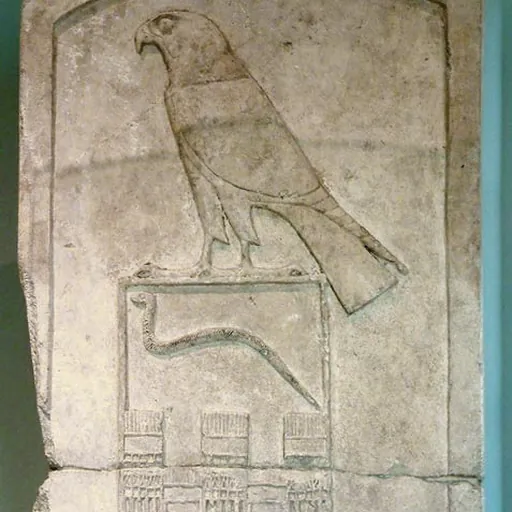
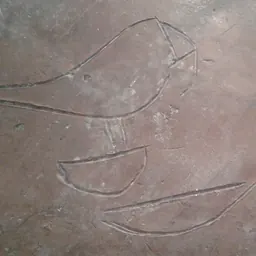
Fragment of an object bearing the serekh of Djet and the name of a court official Sekhemkasedj, Egyptian Museum. Tomb Label of King Djet (Ashmolean). Abydos, Umm el-Qaab, Tomb Z. Djet's tomb is located at Abydos in Petrie's Tomb Z. It is located west of his father, King Djer's tomb. Surrounding Djet's tomb are 174 subsidiary burials most of them being retainers that were sacrificed upon Djet's death to serve him in the afterlife. Found within Djet's tomb was a stele. This stele was a snake surmounted by a falcon (Horus) and could be interpreted to mean "Horus the snake". Also found within the tomb was an ivory comb with the name of Djet on it, along with a picture of the stele. Copper tools and pottery were also found in the tomb, a common find in Egyptian tombs. There is evidence that Djet's tomb was intentionally burned, along with other tombs at Abydos from this time period. The tombs were later renovated because of the association with the cult of Osiris.
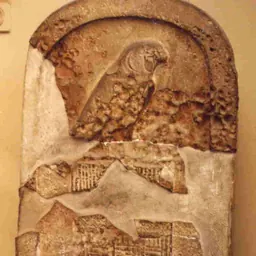
Djet owes his fame to the survival, in well-preserved form, of one of his artistically refined tomb steles. It is carved in relief with Djet's Horus name, and shows that the distinct Egyptian style had already become fully developed at that time. This stela was discovered in 1904 by Émile Amélineau and is today on display at the Louvre museum. Another artistic landmark dated to Djet's reign is his ivory comb now housed in the Egyptian Museum. It is the earliest surviving depiction of the heavens symbolised by the outspread wings of a falcon. The wings carry the bark of Seker, below the celestial bark Djet's serekh is surrounded by two Was scepters and one Ankh-sign.
Don’t just read it —
keep it.
Full-length biographies made to live with: read them, listen on the way to work, watch them tonight.
- E-book
- Audio
- Video
Instant download · yours to keep · every purchase keeps this site free
Important facts
Family & relationships
People in Djet's life
Named in this biography and alive at the same time
Related people
Same field, nearest in time


Contemporaries
People whose lives overlapped Djet's


Frequently asked questions
Who was Djet?
Egyptian pharaoh
When was Djet born?
Djet was born in 3000 BC.
When did Djet die?
Djet died in 2970 BC.
What was Djet's occupation?
Djet was a sovereign.
What nationality was Djet?
Djet was Egyptian.
Sources & further reading
Cite this page
APA: Biography.guide. (2026). Djet. https://biography.guide/djet/
MLA: "Djet." Biography.guide, https://biography.guide/djet/.
Chicago: "Djet." Biography.guide. https://biography.guide/djet/.
Data last updated: 2026-09-21 · Spot an error? Report a correction.
Portrait: Wikimedia Commons · author & licence
Page generated 2026-09-27 04:58 UTC