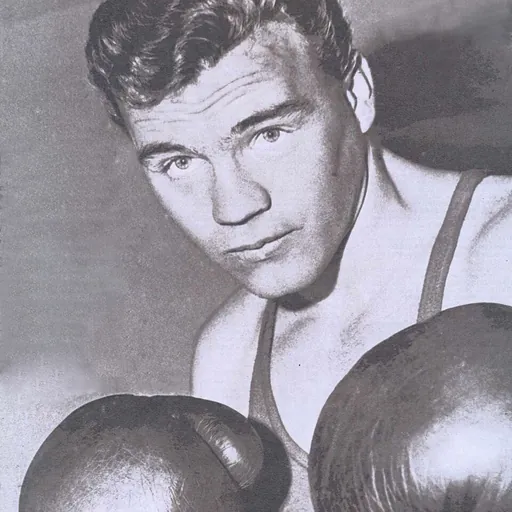
About Horst Stump
Lived 1944 – 2018 (aged 73–74). Horst Stump was a Romanian boxer.
Horst Adolf Stump (9 January 1944 – November 2018), also known as Horst Stumpf or Horst Stumf, was a Romanian amateur boxer in the late 1960s and early 1970s.
Early life Stump was born on 9 January 1944 in Sibiu, the 9th child of a Transylvanian Saxon family. His parents were killed by Russians during World War II, shortly after his birth, and Stump was raised together with his brothers by his grandparents.
Boxing career He reached four Romanian amateur boxing championship finals, winning one in 1970 against Alec Năstac and losing the other three, two to Năstac and one to Ion Covaci. He won a bronze medal at the 1971 European Amateur Boxing Championships from Madrid, defeating Antonio dos Santos and Harald Skog before losing in the semi-finals to Mate Parlov. In 1972, Stump participated at the first edition of the Golden belt international tournament, organized by Romania, reaching the final where he lost in front of Gilberto Carrillo.
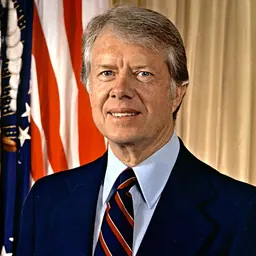
After boxing After his boxing career, Stump struggled with alcoholism and served several prison sentences after being involved in fights. In 1977, Stump was used by Romania's Securitate to terrorize Paul Goma, a dissident and leading opponent of the communist regime. In March 1977, Stump was sent to Goma's home on three occasions in order to assault him. Goma mentioned the events in three of his books: "Scrisuri I" (Writings I), "Culorile Curcubeului" (The colors of the rainbow) and "Infarct" (Stroke). In April 1977, Associated Press and Agence France-Presse wrote about the incident and United States president, Jimmy Carter showed his concern for Goma. According to former Securitate general Ion Mihai Pacepa's book "Orizonturi roșii" (Red horizons), Romanian dictator Nicolae Ceaușescu, who wanted to foster a good relationship with Carter sent someone to lie to Carter about the "Goma problem", but that person told Carter the truth in codified language. Following this, Stump was sent once again to assault Goma, Pacepa saying in his book that the following day the Deputy of the Ministry of Internal Affairs, Nicolae Pleșiță described to him in detail how Stump had beaten Goma. Pacepa also says in his book that Ceaușescu asked for Stump to be disguised as a street sweeper in order to catch and assault a foreign diplomat who had refused to spy for Romania.
Horst Stump died in November 2018 in Popești-Leordeni, after spending the last years of his life struggling with poverty and living in a shipping container.
Don’t just read it —
keep it.
Full-length biographies made to live with: read them, listen on the way to work, watch them tonight.
- E-book
- Audio
- Video
Instant download · yours to keep · every purchase keeps this site free
Important facts
People in Horst Stump's life
Named in this biography and alive at the same time




Related people
Same field, nearest in time



Contemporaries
People whose lives overlapped Horst Stump's


Frequently asked questions
Who was Horst Stump?
Romanian boxer
When was Horst Stump born?
Horst Stump was born on 9 January 1944 in Sibiu.
When did Horst Stump die?
Horst Stump died in 2018 in Popești-Leordeni.
What was Horst Stump's occupation?
Horst Stump was a boxer.
What nationality was Horst Stump?
Horst Stump was Romanian.
Sources & further reading
Cite this page
APA: Biography.guide. (2026). Horst Stump. https://biography.guide/horst-stump/
MLA: "Horst Stump." Biography.guide, https://biography.guide/horst-stump/.
Chicago: "Horst Stump." Biography.guide. https://biography.guide/horst-stump/.
Data last updated: 2026-09-23 · Spot an error? Report a correction.
Portrait: Wikimedia Commons · author & licence
Page generated 2026-09-27 05:08 UTC