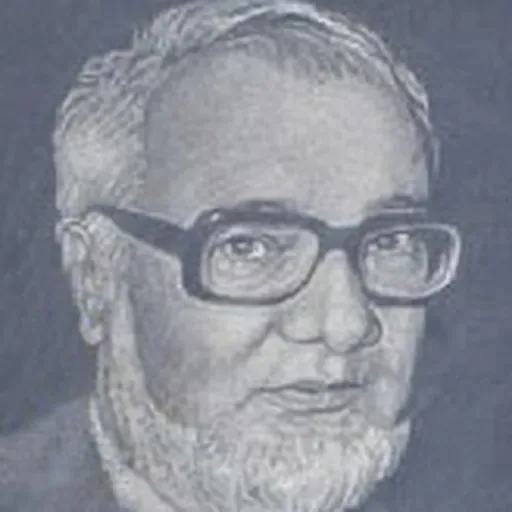
About Paul Goma
Lived 1935 – 2020 (aged 84). Paul Goma was a novelist, essayist, writer, diarist and dissident.
Paul Goma (; October 2, 1935 – March 24, 2020) was a Romanian writer, known for his activities as a dissident and leading opponent of the communist regime before 1989. Forced into exile by the communist authorities, he became a political refugee and resided in France as a stateless person. After 2000, Goma expressed opinions on World War II, the Holocaust in Romania and the Jews, claims which have led to widespread allegations of antisemitism.
Biography
Early life Goma was born to a Romanian family in Mana village, Orhei County, then in the Kingdom of Romania, now part of Moldova.
In March 1944, the Goma family took refuge in Sibiu, Transylvania. In August 1944, finding themselves in danger of involuntary "repatriation" to the Soviet Union, they fled to the village of Buia, by the Târnava Mare River. From October to December 1944, the family hid in the forests around Buia. On January 13, 1945, they were captured by Romanian shepherds and turned over to the Gendarmerie in Sighișoara, where they were interned at the "Centrul de Repatriere" ("Repatriation Center"). There, Eufimie Goma forged documents for his family; however, Maria Goma's brother, who didn't have forged papers, was "repatriated to Siberia". In June 1945, taking advantage of the forged documents, they returned to Buia. Later on, Paul Goma would describe his family's refugee saga in the novels Arta refugii ("The Art of Refuge", a wordplay on the Romanian words for "refuge" and "taking flight"), Soldatul câinelui ("Dog's Soldier"), and Gardă inversă ("Reverse Guard").
Dissident in Romania
Goma graduated from Făgăraș’ Radu Negru High School in 1953. In 1954, he was admitted to the Faculty of Letters of the University of Bucharest. In November 1956, he was part of the Bucharest student movement of 1956: during a seminar, he read out to other students parts of a novel he had written about a student who establishes a movement that is similar to the ones in Hungary during the Hungarian Revolution of 1956.
In February 1977, Romania's dictator Nicolae Ceaușescu made a speech in which he attacked the "traitors of the country", referring to the two letters Goma wrote. In the meantime, Goma gained the support of two intellectuals: psychiatrist Ion Vianu and literary critic Ion Negoițescu; in all, he had 75 signatures. A week later, a former boxer, Horst Stump, broke into Goma's flat and attacked him; the attacks repeated the following days. As he was barricading himself with some friends in his apartment, he gave an interview to French TV station Antenne 2.
Exile in France
On 3 February 1981, Goma and Nicolae Penescu (former Interior Minister) received parcels in their post. Penescu opened his parcel to find a book and when he lifted its cover an explosion wounded him. Goma, who had received two death threats since his arrival in France, called the police. Both packages had been sent on instructions by Carlos the Jackal.
In 1982, the Securitate planned to assassinate Goma. Matei Haiducu, the secret agent sent by the Securitate to carry out the plan, turned to French counter-intelligence (DST). With the help of the DST, Haiducu simulated an attempt on Goma's life, by poisoning his drink at a restaurant; the drink was then spilled by a French agent, pretending to be a "clumsy guest".
Although Goma's numerous works (both fiction and non-fiction) were translated worldwide, his books, except the first one, were published in Romania only after the 1989 Revolution. He lived in Paris as a stateless political refugee, his Romanian citizenship having been revoked after 1978 by the communist government.
Death On March 18, 2020, Paul Goma was hospitalized at Pitié-Salpêtrière Hospital in Paris after being infected with COVID-19 and died on March 24, 2020. He was 84.
Controversies
Michael Shafir described Goma as a "deflective negationist", i.e. as blaming the victims of the Holocaust in Romania for their own fate.
Despite the fact that his wife is Jewish, some of Goma's post-2005 articles and essays have been criticized for their strong antisemitic nature. In particular, in his "essay" Săptămâna Roșie [The Red Week], he tried to rewrite the Romanian history of the years 1940–1944, claiming that the Jews exaggerated the numbers of the victims of the Romanian holocaust, that communist Jews made things up and that Jews were not the victims, but the perpetrators of several of the heinous crimes of those times, using thus strategies common to holocaust denial. Goma rejects these criticisms and claims that he has filed libel lawsuits against his accusers. He asserted that his wife was Jewish and stated that similar arguments were used against him by the Securitate in the 1980s. On January 30, 2007, Goma was awarded the "Citizen of Honor" distinction by the Municipal Council of Timișoara. In February 2007, the Federation of Jewish Communities of Romania and the Israeli Embassy protested against the distinction, arguing that Paul Goma was the author of multiple antisemitic articles.
On April 5, 2006 he was invited to become a member of the Tismăneanu Commission, a body charged with researching the crimes of the communist dictatorship in Romania. Nine days later he was dismissed by the Commission's president, Vladimir Tismăneanu, who explained the exclusion based on Goma's questioning the moral and scientific credibility of the president of the Commission, and disclosing of their private correspondence.
Literary contributions Goma's literary debut came in 1966 with a short story published in the review Luceafărul with which he collaborated as well as with Gazeta literară, Viața românească and Ateneu. In 1968 he published his first volume of stories, Camera de alături ("The Room Next Door"). After Ostinato and its West German publication in 1971 came Ușa ("Die Tür" or "The Door") in 1972, also in Germany. After his forced emigration in 1977 and until his books could again be published in Romania after the 1989 revolution, all his books appeared in France and in French. (His novel Gherla had in fact been published in 1976 first in French by Gallimard of Paris before he left Romania.) There followed such novels as Dans le cercle ("Within the Circle", 1977); Garde inverse ("Reverse Guard", 1979); Le Tremblement des Hommes ("The Trembling of People", 1979); Chassée-croisé ("Intersection", 1983); Les Chiens de la mort ("The Dogs of Death", 1981), which details his prison experiences in Pitești in the 1950s; and Bonifacia (1986). The autobiographical Le Calidor appeared in French in 1987 and was subsequently published in Romanian as Din Calidor: O copilărie basarabeană ("In Calidor: A Bessarabian Childhood", 1989, 1990; translated as My Childhood at the Gate of Unrest) in the Romanian émigré journal Dialog, edited by Ion Solacolu.
In its totality, Goma's literary work comprises a "persuasive and grimly fascinating exposure of totalitarian inhumanity" from which, in his own case, even foreign exile was no guarantee of a safe haven. In such later novels as Bonifacia and My Childhood at the Gate of Unrest, the biographical element dominates as he focuses on his childhood in Bessarabia. Several sets of diaries, all published in Romania in 1997 and 1998, shed light on Goma's later life and career: Alte Jurnale ("Other Journals"), which covers his stay in the United States in autumn 1978 but concentrates primarily on 1994–96; Jurnal I: Jurnal pe sărite ("Journal I: By Leaps and Bounds", 1997); Jurnal II: Jurnal de căldură mare ("Journal II: Journal of Great Heat", 1997), covering June and July 1989; Jurnal III: Jurnal de noapte lungă ("Journal of the Long Night", 1997), covering September to December 1993; and Jurnalul unui jurnal 1997 ("The Journal of a Journal, 1997"), focusing just on that year.
Published works Camera de alături, Bucharest, 1968. Ostinato, Suhrkamp, Frankfurt am Main, 1971. La Cellule des libérables, Éditions Gallimard, Paris, 1971. Ostinato, Bruna & Zoon, Utrecht, 1974. Ostinato, Editura Univers, 1992. Die Tür, 1972. Elles étaient quatre, Éditions Gallimard, Paris, 1974. Ușa noastră cea de toate zilele, Editura Cartea Românească, Bucharest, 1992. Gherla, Éditions Gallimard, Paris, 1976. Gherla, 1978. Gherla, Humanitas, Bucharest, 1990. Dossier Paul Goma. L'écrivain face au socialisme du silence., Paris, 1977 Dans le cercle, Éditions Gallimard, Paris, 1977. In cerc, 1995. Garde inverse, Éditions Gallimard, Paris, 1979. Gardă inversă, Univers, 1997. Le Tremblement des Hommes: peut-on vivre en Roumanie aujourd'hui?, Éditions du Seuil, Paris, 1979. . 1980. Culorile curcubeului '77, Humanitas, Bucharest, 1990. Culoarea curcubeului ’77. Cod "Bărbosul", Polirom, 2005. Les chiens de mort, ou, La passion selon Pitești, Hachette, Paris, 1981. Het vierkante ei, Elsevier Manteau, Antwerp, 1983. Die rote Messe, Thule, Köln, 1984. Patimile după Pitești, 1990. Patimile după Pitești, Dacia, 1999. Chassé-croise, Hachette, Paris, 1983. Soldatul câinelui, Humanitas, Bucharest, 1991. Le calidor, Albin Michel, 1987. Din calidor, 1989. My Childhood at the Gate of Unrest, Readers International, July 1990. Din calidor: O copilărie basarabeană, Polirom, 2004. L'art de la fugue, Julliard, 1990. Arta refugii, Editura Dacia, Cluj, 1991. Arta refugii, Editura Basarabian, Chișinău, 1995. Sabina, 1991. Sabina, 1993. Sabina, Universal Dalsi, Bucharest, 2005. Astra, 1992. Astra, Editura Dacia, 1992. Bonifacia, 1993. Bonifacia, Albin Michel 1998. Bonifacia, Anamarol, 2006. Adameva, Loreley, Iași, 1995. (not distributed) Amnezia la români, Litera, 1995. Scrisori întredeschise – singur impotriva lor, Multiprint "Familia", Oradea, 1995. Justa Editura Nemira, Bucharest, 1995. Jurnal pe sărite, Editura Nemira, Bucharest, 1997 Jurnal de căldura mare, Edutura Nemira, Bucharest, 1997 Altina – grădina scufundată, Editura Cartier, Chișinău, 1998. Scrisuri. 1972–1998, Editura Nemira, Bucharest, 1999. Roman intim, Editura Allfa, 1999. Jurnal de Noapte Lungă, Dacia, Bucharest, 2000. Jurnal unui jurnal, Dacia, Cluj, 2000. Jurnal de Apocrif, Dacia, Cluj, 2000. Profil bas, Des Syrtes, 2001. Săptămîna Roșie. 28 Iunie–3 Iulie 1940 sau Basarabia și evreii, Museum, Chișinău, 2003. Jurnal, Criterion, Bucharest, 2004. Alfabecedar, Editura Victor Frunză, 2005.
Awards and honours
"Chevalier dans l'ordre des Arts et des Lettres" (France), 1986 Writers' Union of Moldova's Prize for Prose, March, 1992. Writers' Union of Romania's Prize for Prose, May 25, 1992. "Honorary Citizen" by the Municipal Council of Timișoara, January 30, 2007.
Don’t just read it —
keep it.
Full-length biographies made to live with: read them, listen on the way to work, watch them tonight.
- E-book
- Audio
- Video
Instant download · yours to keep · every purchase keeps this site free
Important facts
People in Paul Goma's life
Named in this biography and alive at the same time




Related people
Same field, nearest in time
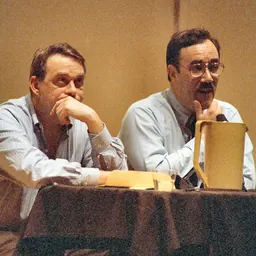





Contemporaries
People whose lives overlapped Paul Goma's




Frequently asked questions
Who was Paul Goma?
Romanian writer (1935–2020)
When was Paul Goma born?
Paul Goma was born on 2 October 1935 in Mana.
When did Paul Goma die?
Paul Goma died on 25 March 2020 in Paris.
What was Paul Goma's occupation?
Paul Goma was a novelist, essayist, writer, diarist and dissident.
What nationality was Paul Goma?
Paul Goma's recorded nationality: Socialist Republic of Romania, Kingdom of Romania.
Sources & further reading
Cite this page
APA: Biography.guide. (2026). Paul Goma. https://biography.guide/paul-goma/
MLA: "Paul Goma." Biography.guide, https://biography.guide/paul-goma/.
Chicago: "Paul Goma." Biography.guide. https://biography.guide/paul-goma/.
Data last updated: 2026-09-24 · Spot an error? Report a correction.
Portrait: Wikimedia Commons · author & licence
Page generated 2026-09-27 05:08 UTC