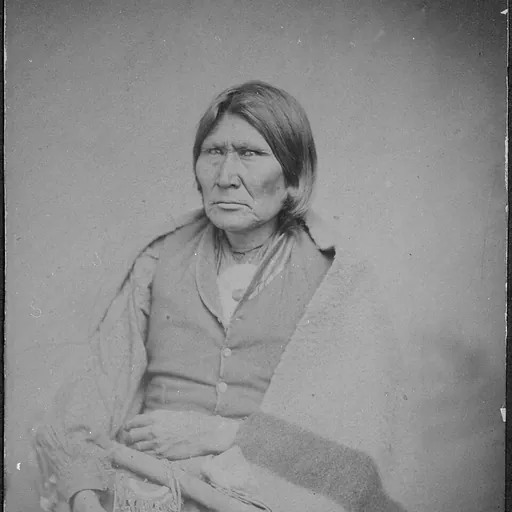
Horseback
Nokoni Comanche chief
About Horseback
Lived 1801 – 1888 (aged 86–87).
Young man: warrior and war chief
Tʉhʉya Kwahipʉ was born at some moment around the years 1805 and 1810, in what was then the viceroyalty of New Spain. When he came to the world, the bands that made up the Comanchería were a semi-autonomous region (akin to the Roman foederati) of the Spanish Empire as a result of the peace of Pecos, secured by famed governor Juan Bautista de Anza in 1786 and which set the terms for the integration of the Comanche into the late imperial network. This situation fell apart as a result of the independence of Mexico in 1821, when the bankrupt nation stopped paying tributes to the Lords of the plains, restarting a period of war between the colonial settlers and the Comanche.
In his prime, he made his career under the elder Huupi-pahati (Tall Tree), head chief of the Nokoni band, and Quenah-evah (Eagle Drink), second chief and later successor to Huupi-pahati himself possibly after the smallpox and cholera epidemics occurred in 1849; during the 1840s and 1850s he gained a good fame as a war leader against the Comanche's Indian enemies and a raider through Texas.
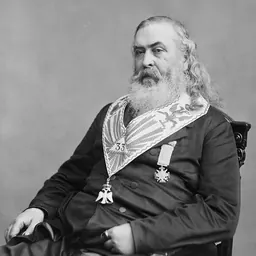
Diplomat and peaceful leader In 1861, along with the Yamparika head chief Ten Bears and the Penateka chiefs Tosahwi (White Knife) and Asa-havey a.k.a. Esihabit (Milky Way), went to Fort Cobb where they met General Albert Pike (C.S.A.), and the Comanche chiefs (including Quena-evah) signed for an allegiance with the Confederate States of America. He became head chief of the Nokoni after Quena-evah's death or retirement, possibly in 1866. Not a long time after Peta Nocona (Lone Wanderer)'s death about 1864, and having become Parua-ocoom (Bull Bear) the new first chief of the Kwahadi Comanche, Kobe (Wild Horse) second Chief of Kwahadi took with him the two adolescent sons of the dead Kwahadi chief and grandsons of Iron Jacket, Quanah Parker and Pecos, to complete their training as young men and warriors; the two youngsters settled with the Nokonis, their foster grandfather Tabby-nocca (Lean Elk)'s kinsmen, under the supervision of Horseback.
Horseback was involved, like Esihabit and some other chiefs, in the policy of ransoming white prisoners from the other Comanche bands, and in January 1867 he or Esihabit (according to two different versions) were the makers of young Theodore "Dot" Babb (kidnapped in September 1865 or 1866) ransoming, bypassing the U.S. authorities.
Horseback signed for the Nokoni the Medicine Lodge Treaty (Oct. 21 1867), emerging as the leader of the "peaceful" faction of the band, but the second-ranking chief, Big Red Meat, took the leadership of the uncompromising faction, and on the same "hostile" line was Tahka (Arrowpoint), war chief of Tʉhʉyakwahipʉ's own party.
The last fight for freedom Like Tosahwi, Horseback managed to keep out the Nokoni preventing their involvement in the Red River War in 1873–1874, but only a minor faction of Nokoni band followed him along the "peace road", and he lost most of his former followers, while Big Red Meat joined the hostile Comanche and Kiowa faction, uniting himself and his Nokoni warriors to Quanah Parker, Parra-ocoom, Kobay-oburra (Wild Horse), Kobay-otoho (Black Horse), Isatai'i, and their Quahadi Comanche, to Mow-way and his Kotsoteka, to Tabananika (Sound-of-the-Sunrise), Isa-rosa (White Wolf) and Hitetetsi aka Tuwikaa-tiesuat (Little Crow), son to Ten Bears, and their Yamparika, and to the Kiowa led by Guipago, Satanta, Zepko-ete (Big Bow), Tsen-tainte (White Horse) and Mamanti (Walking-above).
The sunset years After the Palo Duro campaign (1874) and the surrendering of the last hostile Comanche groups coming back from the Staked Plains, Horseback was appointed by the Army as head chief of all the Comanches, and was ordered to pick out the "worst" Comanche, to send them to Fort Marion, Florida; the same happened to Kicking Bird for the Kiowas, and the Kiowa chief pointed out 27 chiefs and warriors, but Horseback was able to sacrifice only nine men (one Black Horse - Tu-ukumah -, but probably not Kobay-otoho third chief of the Quahadi band, and eight "outlawed" warriors), preventing the deportation of all the defeated chiefs (but, unfortunately, not the life of Parua-ocoom, dead on June 27–28, 1874, during the Adobe Walls fighting, and that of Big Red Meat, dead in the icehouse – temporarily used as a jail – of Fort Sill on January 1, 1875. Together with Quanah and some of the old chiefs, Horseback was a constant point of reference for the Comanche people in the reservation until his death in 1888.
Don’t just read it —
keep it.
Full-length biographies made to live with: read them, listen on the way to work, watch them tonight.
- E-book
- Audio
- Video
Instant download · yours to keep · every purchase keeps this site free
Important facts
People in Horseback's life
Named in this biography and alive at the same time






Contemporaries
People whose lives overlapped Horseback's






Frequently asked questions
Who was Horseback?
Nokoni Comanche chief
When was Horseback born?
Horseback was born in 1801.
When did Horseback die?
Horseback died in 1888.
Sources & further reading
· DBpedia: Horseback (Comanche)
Cite this page
APA: Biography.guide. (2026). Horseback. https://biography.guide/horseback/
MLA: "Horseback." Biography.guide, https://biography.guide/horseback/.
Chicago: "Horseback." Biography.guide. https://biography.guide/horseback/.
Data last updated: 2026-09-23 · Spot an error? Report a correction.
Portrait: Wikimedia Commons · author & licence
Page generated 2026-09-27 05:05 UTC