
Ten Bears
American indigenous leader
About Ten Bears
Lived 1790 – 1872 (aged 81–82). Ten Bears was a traditional leader or chief.
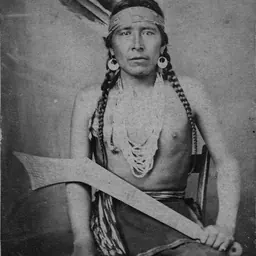
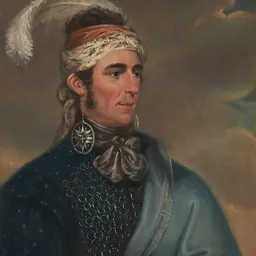
Ten Bears (Comanche: Pawʉʉrasʉmʉnurʉ, Anglicized as Parua-wasamen and Parry-wah-say-mer in treaties and older documents) (November 23, 1872) was the principal chief of the Yamparika or "Root Eater" division of the Comanche from ca. 1860-72. He was the leader of the Ketahto ("The Barefeet") local subgroup of the Yamparika, probably from the late 1840s.
The ethnonym (group name), Yamparika or "Root Eater" Comanche was known to the Spaniards of New Mexico as early as the 1750s, but until about 1790, they were generally north of the Arkansas River and so were seldom specifically mentioned in Spanish documents. After that time, with the advance of Cheyennes (Comanche: paka naboo 'striped arrows'), and Cuampes, likely Arapahos, some Yamparika local groups, including the Ketahto, relocated to the valley of the North Canadian River in New Mexico and Texas.
Early life Ten Bears was orphaned as a baby when his family group was murdered by Lakotas. Later Comanche oral history states that in his young adult years, he was noted for leading horse-mounted spear attacks on Lakota villages. In 1840 the Yamparika chief, Ten Bears, was one among the principal promoters (together with the Kiowa chiefs Dohasan and Satank and the Arapaho Hosa Little Raven) of the peace and large alliance between the Comanche and Kiowa alliance and the Cheyenne and Arapaho alliance after the Cheyenne and Arapaho's victory at Wolf Creek during the spring 1838. To reach his purpose, Ten Bears (Parrawasamen) was able to gain the approval of such chiefs as the Kotsoteka Shaved Head (Wulea-boo) and, even through Shaved Head’s support, Big Eagle (a.k.a. Sun Eagle) (Tawaquenah), likely the Nokoni Tall Tree (Huupi-pahati) and certainly the Penateka Buffalo Hump (Pocheha-quehip, Potsʉnakwahipʉ) and Yellow Wolf (Isaviah) and probably the Kwahadi Iron Jacket (Pohebits-quasho); together with Ten Bears (Parrawasamen), probably Tawaquenah and Huupi-pahati, certainly Buffalo Hump (Pocheha-quehip) and eventually Iron Jacket (Pohebits-quasho) represented Comanche nation during the negotiation near the Two Butte Creek, resulting in a peace agreement and a strong alliance between the two groups.
Ten Bears first came to the attention of Anglo-Americans in 1853 when he, among others, signed the Treaty of Fort Atkinson. His name was written as "Parosawano" and translated as 'Ten Sticks', a confusion of /pawʉʉra/ 'bear' with /paria/ 'dogwood stick'. The error was corrected in the 1854 revision of the treaty.
Ten Bears became the principal Yamparika chief about 1860 after the death of the man known to Anglos as 'Shaved Head' (Wulea-boo, possibly a Kotsoteka rather than a Yamparika Comanche); the latter's Comanche name is uncertain as there were several men whom Anglos called by that name.
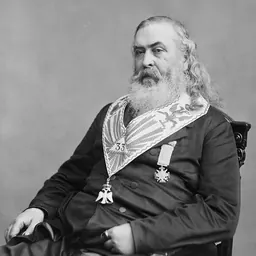
In August 1861 Ten Bears (likely being himself the chief named as “Bistevana”) signed the Fort Cobb Treaty with gen. Albert Pike, the Confederate Indian Commissioner, sanctioning an alliance with the “Gray Jackets”.
In 1863, along with a delegation of Western Indians, including Southern Cheyennes, Southern Arapahoes, and Kiowas, Ten Bears visited Washington, but he was unable to get any major concessions for his people from the U.S. government.
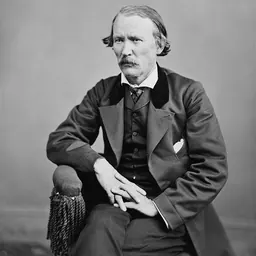
In November 1864, Ten Bears was the chief of the Yamparika Comanches nearest the ruins of the Bent brothers' old adobe trading post (the first Adobe Walls, Texas, built ca 1840) when troops under Col. Christopher 'Kit' Carson attacked a nearby Kiowa village . Warriors from Ten Bear's village led the counterattack which drove off Carson's men, although one of Ten Bears' sons, Ekamoksu 'Red Sleeve' was killed.
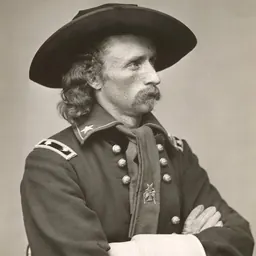
Death A year later in December 1868, a number of Yamparika local bands, including Ten Bear's, were along the Washita River in western Indian Territory, near their allied Cheyennes and within the boundaries of the latter's reservation. When troops under Lt. Col George Armstrong Custer attacked the Cheyenne village under Black Kettle, Yamparika warriors from the village of Esarosavit 'White Wolf' joined in the counter attack, and "rode over" the detachment of Major Joel Elliot.
In 1872, Ten Bears again visited Washington, along with a delegation that included his grandson Cheevers (probably from the Spanish chiva 'goat', although Attocknie argues that it was tsii putsi 'little pitied one'), as well as other Comanches and Kiowas. But the hope that promises would be kept was ultimately futile. Ten Bears died soon after his return, November 23, 1872, at Fort Sill where he is buried.
In popular media Ten Bears, played by the Muscogee actor Will Sampson, is portrayed in the film The Outlaw Josey Wales as a Comanche chief defending his home who then makes a "live and let live" peace with the title character, portrayed by Clint Eastwood.
In Michael Blake's novel "Dances with Wolves," the character Ten Bears may be based on the Comanche leader of the same name. While the movie portrays the Native band as Lakota Sioux, the book names them specifically as Comanche. In the book, Ten Bears is portrayed as a wise, respected leader.
Don’t just read it —
keep it.
Full-length biographies made to live with: read them, listen on the way to work, watch them tonight.
- E-book
- Audio
- Video
Instant download · yours to keep · every purchase keeps this site free
Important facts
more
Parooway SemehnoPeople in Ten Bears's life
Named in this biography and alive at the same time



Related people
Same field, nearest in time



Contemporaries
People whose lives overlapped Ten Bears's




Frequently asked questions
Who was Ten Bears?
American indigenous leader
When was Ten Bears born?
Ten Bears was born in 1790.
When did Ten Bears die?
Ten Bears died on 23 November 1872 in Lawton.
What was Ten Bears's occupation?
Ten Bears was a traditional leader or chief.
Sources & further reading
Cite this page
APA: Biography.guide. (2026). Ten Bears. https://biography.guide/ten-bears/
MLA: "Ten Bears." Biography.guide, https://biography.guide/ten-bears/.
Chicago: "Ten Bears." Biography.guide. https://biography.guide/ten-bears/.
Data last updated: 2026-09-20 · Spot an error? Report a correction.
Page generated 2026-09-27 05:33 UTC