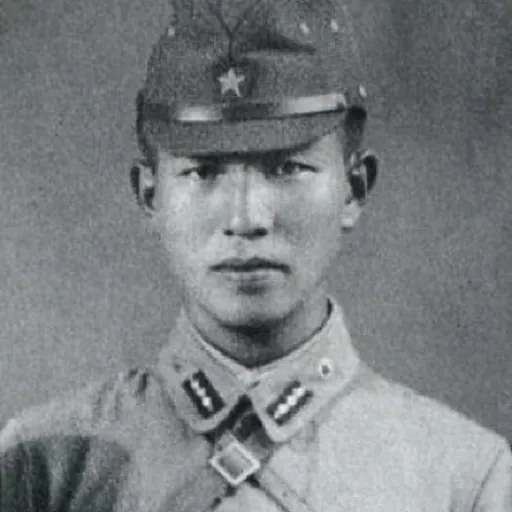
Hiroo Onoda
Imperial Japanese Army intelligence officer
About Hiroo Onoda
Lived 1922 – 2014 (aged 91). Hiroo Onoda was a Japanese military officer, autobiographer, teacher, soldier and entrepreneurship.
) was a Japanese soldier who served as a second lieutenant in the Imperial Japanese Army during World War II. One of the last Japanese holdouts, Onoda continued fighting for nearly 29 years after the war's end in 1945, carrying out guerrilla warfare on Lubang Island in the Philippines until 1974.
Onoda initially held out with three other soldiers. One surrendered in 1950, and two were killed, one in 1954 and one in 1972. The men did not believe flyers and letters from their families stating that the war was over. They survived on wild fruits, game, and stolen rice, and occasionally engaged in shootouts (using their service rifles) with locals and police. Onoda was contacted in the jungles of Lubang by Japanese adventurer Norio Suzuki in 1974 but still refused to surrender until he was formally relieved of duty by his former commanding officer, Major Yoshimi Taniguchi, who flew from Japan to the island to issue the order.
Onoda surrendered on 10 March 1974 and received a hero's welcome when he returned to Japan. That year, he wrote and published an autobiography and later moved to Brazil, where he became a cattle rancher. In 1984, Onoda returned to Japan, where he died in 2014 at the age of 91.
Early life and service Onoda was born on 19 March 1922, in Kamekawa, Wakayama, in the Empire of Japan. In 1939, he went to work at a branch of the Tajima Yoko trading company in Wuhan, China, and in 1942 was conscripted into the Imperial Japanese Army.
On 26 December 1944, Onoda was sent to lead guerrilla warfare operations on Lubang Island in the Japanese-occupied Philippines. His mission was to destroy the island's airstrip and the pier at its harbor ahead of the Allied invasion as well as to destroy any enemy planes or boats that attempted to land. His orders explicitly stated that under no circumstances was he to surrender or take his own life.
Time in hiding While in hiding, Onoda and his companions continued their mission, carrying out guerrilla activities, surviving on bananas, coconuts, stolen rice and cattle, and on several occasions engaging in shootouts with locals and police.
First time seeing surrender announcement The first time Onoda's group saw a leaflet announcing that Japan had surrendered was in October 1945: a separate group of Japanese holdouts showed them a note left behind by islanders that read: "The war ended on 15 August. Come down from the mountains!" The men concluded that the leaflet was Allied propaganda and reasoned that they would not have been fired on before if the war had ended. Near the end of 1945, leaflets with a surrender order from General Tomoyuki Yamashita of the Japanese Fourteenth Area Army were dropped by air on Lubang. Onoda's group studied them to determine whether they were genuine and decided that they were not.
Despite repeated attempts by Japanese authorities to convince him that the war had ended through leaflets, search missions, and radio broadcasts, Onoda remained convinced that these messages were a form of enemy propaganda. He continued his attacks on civilians, allegedly killing up to 30 people on the island.
According to Beatrice Trefalt, a Japan scholar of Monash University, Onoda's claim that he was unaware of the war's conclusion is questionable.
Onoda was thus relieved of duty, and on 10 March 1974 surrendered to Philippine forces at Lubang's radar base. On 11 March, a formal surrender ceremony was held by Philippine President Ferdinand Marcos at Malacañang Palace in Manila, which attracted attention from the international press. Marcos granted Onoda a full pardon for any crimes he had committed while in hiding. Onoda turned over his sword, a functioning Type 99 rifle, 500 rounds of ammunition, and several hand grenades, as well as a dagger his mother had given him in 1944 to kill himself if captured. He had held out for 28 years, 6 months, and 8 days (10,416 days) after Japan's surrender in 1945. Only Private Teruo Nakamura, arrested on 18 December 1974 in Indonesia, held out longer.
Later life Onoda, who had been declared dead by the Japanese government in 1959, was the subject of widespread attention from the press and public upon his return to Japan in 1974. He was reportedly unhappy at receiving such attention and at what he saw as the withering of traditional Japanese values. He wrote No Surrender: My Thirty-Year War, an autobiography published in 1974. However, in 1976, Tsuda Shin, the book's ghostwriter, published the book The Imaginary Hero: Three Months with Officer Onoda, in which he stated that Onoda's autobiography was not a purely personal account but a carefully constructed narrative shaped by Onoda and Japanese publishing professionals. He later expressed regret for his role in writing Onoda's book.
After the war, Filipino news media interviewed villagers who had lived on Lubang during Onoda's time in hiding and alleged that he and his men had killed up to thirty civilians. Onoda had not mentioned these deaths in his autobiography, however. In 1996, he visited the town of Looc on Lubang after his wife Machie (née Honoku) arranged a US$10,000 scholarship donation on his behalf to the local school. The town council presented Onoda with a resolution asking him to compensate the families of seven people whom he had allegedly killed, and about fifty close relatives of the alleged victims staged a protest against his visit.
After 1984, Onoda spent three months of the year in Brazil and the rest in Japan. For allowing the Brazilian Air Force to conduct training sessions on his land, he was awarded the Santos-Dumont Merit Medal on 6 December 2004. On 21 February 2010, the Legislative Assembly of Mato Grosso do Sul awarded him honorary citizenship.
In 2006, his wife Machie became head of the conservative Japan Women's Association, which had been established in 2001 by the ultranationalist organization Nippon Kaigi.
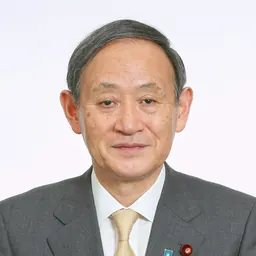
Death On 16 January 2014, Onoda died of heart failure resulting from pneumonia at St. Luke's International Hospital in Tokyo. Chief Cabinet Secretary Yoshihide Suga commented on his death, saying, "I vividly remember that I was reassured of the end of the war when Mr. Onoda returned to Japan".
Don’t just read it —
keep it.
Full-length biographies made to live with: read them, listen on the way to work, watch them tonight.
- E-book
- Audio
- Video
Instant download · yours to keep · every purchase keeps this site free
Important facts
People in Hiroo Onoda's life
Named in this biography and alive at the same time




Related people
Same field, nearest in time



Contemporaries
People whose lives overlapped Hiroo Onoda's

Frequently asked questions
Who was Hiroo Onoda?
Imperial Japanese Army intelligence officer (1922-2014)
When was Hiroo Onoda born?
Hiroo Onoda was born on 19 March 1922 in Kainan.
When did Hiroo Onoda die?
Hiroo Onoda died on 16 January 2014 in Tokyo.
What was Hiroo Onoda's occupation?
Hiroo Onoda was a military officer, autobiographer, teacher, soldier and entrepreneurship.
What nationality was Hiroo Onoda?
Hiroo Onoda was Japanese.
Sources & further reading
Cite this page
APA: Biography.guide. (2026). Hiroo Onoda. https://biography.guide/hiroo-onoda/
MLA: "Hiroo Onoda." Biography.guide, https://biography.guide/hiroo-onoda/.
Chicago: "Hiroo Onoda." Biography.guide. https://biography.guide/hiroo-onoda/.
Data last updated: 2026-09-24 · Spot an error? Report a correction.
Portrait: Wikimedia Commons · author & licence
Page generated 2026-09-27 05:08 UTC