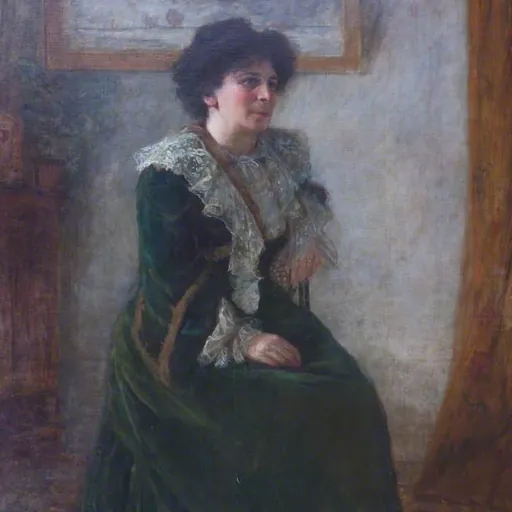
About Hertha Ayrton
Lived 1854 – 1923 (aged 69). Hertha Ayrton was a British mathematician, electrical engineer, physicist, inventor, women's rights activist and suffragette.
Phoebe Sarah Hertha Ayrton (born Phoebe Sarah Marks; 28 April 1854 – 26 August 1923), Her father died in 1861, leaving Sarah's mother with seven children and an eighth expected. Sarah then took up some of the responsibility for caring for the younger children.
At the age of nine, Sarah was invited by her aunts, who ran a school in northwest London, to live with her cousins and be educated with them. She was known to her peers and teachers as a fiery, occasionally crude personality. Her cousins introduced Ayrton to science and mathematics. By age 16, she was working as a governess, but she had not renounced her ambitions.
Ayrton was brought up as Jewish but was agnostic by her teens. She adopted the name "Hertha" after the eponymous heroine of a poem by Algernon Charles Swinburne that criticised organised religion. It was first given to her as a nickname by her friend, the German-Jewish émigré Ottilie Blind.
In 1873, Blind introduced Ayrton to Barbara Bodichon, who had co-founded Girton College, Cambridge four years prior. She would become one of Ayrton's most significant early mentors. She encouraged Ayrton to apply to Girton College and introduced Ayrton to feminist and supporter of women's education George Elliot. Elliot became fast friends with Ayrton and personally supported Ayrton's application to Girton College, Cambridge. Alongside Bodichon, fellow suffragette Helen Taylor, and Lady Louisa Goldsmid, she helped cover Ayrton's tuition fees of £92 per year alongside. Taylor paid £25 and the other three contributed the remaining sum every year.
At Girton, Ayrton studied mathematics and was coached by physicist Richard Glazebrook. She also constructed a sphygmomanometer (blood pressure meter), led the choral society, founded the Girton fire brigade, and, together with Charlotte Scott, formed a mathematical club.
Mathematics and electrical engineering work
Upon her return to London, Ayrton earned money by teaching and embroidery, ran a club for working girls, and cared for her invalid sister. a line-divider, an engineering drawing instrument for dividing a line into any number of equal parts and for enlarging and reducing figures. Ayrton's patent application was financially supported by Louisa Goldsmid and feminist Barbara Bodichon, who together advanced her enough money to take out patents; the invention was shown at the Loan Exhibition of Women's Industries and received much press attention. Ayrton's 1884 patent was the first of many – from 1884 until her death, Ayrton registered 26 patents: five on mathematical dividers, 13 on arc lamps and electrodes, the rest on the propulsion of air.
In 1884 Ayrton began attending evening classes on electricity at Finsbury Technical College, delivered by Professor William Edward Ayrton, a pioneer in electrical engineering and physics education and a fellow of the Royal Society. On 6 May 1885 she married her former teacher, and thereafter assisted him with experiments in physics and electricity. Then, she began her own investigation into the characteristics of the electric arc.
By the late nineteenth century, Ayrton's work in the field of electrical engineering was recognised more widely, domestically and internationally. At the International Congress of Women held in London in 1899, she presided over the physical science section. Ayrton also spoke at the International Electrical Congress in Paris in 1900.
In 1902, Ayrton published The Electric Arc, a summary of her research and work on the electric arc, with origins in her earlier articles from the Electrician published between 1895 and 1896. With this publication, her contribution to the field of electrical engineering began to be cemented. However, initially at least, Ayrton was not well received by the more prestigious and traditional scientific societies such as the Royal Society. In the aftermath of the publication of The Electric Arc, Ayrton was proposed as a Fellow of the Royal Society by renowned electrical engineer John Perry in 1902. Her application was turned down by the Council of the Royal Society, who decreed that married women were not eligible to be Fellows. In 1906, she was awarded the Royal Society's prestigious Hughes Medal "for her experimental investigations on the electric arc, and also on sand ripples."
Support for women's suffrage As a teenager, Ayrton became deeply involved in the women's suffrage movement. In her 50s, she joined the WSPU in 1907 after attending a celebration with released prisoners. In 1909 Ayrton opened the second day of the Knightsbridge "Women's Exhibition and Sale of Work in the Colours" which included new model bicycles painted in purple, white and green and raised from 50 stalls and tea etc. £5,664 for the movement.
In 1912, Ayrton permitted Christabel Pankhurst to transfer sums to her bank account to avoid confiscation, and hosted Pankhurst in times of recovery from imprisonment and force feeding. One attempt to re-arrest Pankhurst on 29 April 1913 to continue her sentence was driven back by suffragists picketing outside, but Pankhurst was eventually re-arrested outside Ayrton's home on her way to the funeral of Emily Davison (who had been killed after running in front of the King's horse at the Derby). Ayrton's London home was later described as "a centre for suffragist endeavour" and she also hosted Emmeline Pankhurst while Pankhurst recovered her health in the aftermath of her prison hunger strikes in early 1913.
Ayrton was a close friend of the scientist Marie Curie and gave her daughter, Irène Curie, mathematics lessons. Although Curie usually chose to withhold her name from petitions, Ayrton managed to persuade her to sign a protest against the imprisonment of suffragists through her daughter. Bodichon helped to make it financially possible for Ayrton to attend Girton and went on to support her financially throughout her education and career, including bequeathing her estate to Ayrton.
Later life and research
Ayrton delivered seven papers before the Royal Society between 1901 and 1926, the last posthumously. She also presented the results of her research before audiences at the British Association and the Physical Society. Ayrton also invented a hand-operated fan to get rid of poisonous gases from the trenches at the front. The device had a waterproof canvas supported by braces of a cane with two hinges and a hickory handle. The invention was dismissed by the War Office initially, until press exchanges followed, and they finally issued 104,000 "Ayrton Fans" to soldiers on the western front.
Ayrton spent the rest of her career involved in research to clear noxious vapours from mines and sewers and became involved in the newly founded International Federation of University Women. Ayrton helped found the International Federation of University Women in 1919 and the National Union of Scientific Workers in 1920.
Ayrton died of blood poisoning (resulting from an insect bite) on 26 August 1923 at New Cottage, North Lancing, Sussex.
Personal life In 1885, Ayrton married the widower William Edward Ayrton, a physicist and electrical engineer who was supportive of her scientific endeavours. Ayrton honoured Barbara Bodichon by naming her first child, a daughter born in 1886, Barbara Bodichon Ayrton (1886–1950). The daughter was called "Barbie", and she later became a member of Parliament for the Labour Party.
Ayrton's house at 41 Norfolk Square in Paddington received an English Heritage blue plaque in 2007.
Commemoration Two years after her death in 1923, Ayrton's lifelong friend Ottilie Hancock endowed the Hertha Ayrton Research Fellowship at Girton College. Recipients of the fellowship include geologist Dorothy Helen Rayer, who held it from 1936-1938. A blue plaque unveiled in 2007 commemorates Ayrton at 41 Norfolk Square in Paddington. In 2009, the Panasonic Trust inaugurated the Hertha Marks Ayrton Fellowship to mark the trust's 25th anniversary. Its purpose is to promote the further education of under-represented groups in the engineering profession by supporting a suitably qualified engineer to study a full-time master's degree course specifically related to sustainable development or some other environmental technology. In 2010, a panel of female Fellows of the Royal Society and science historians selected Ayrton as one of the ten most influential British women in the history of science. In 2015, the British Society for the History of Science created the Ayrton Prize for web projects and digital engagement in history of science. It awarded the inaugural prize to Voices of Science , a project of the British Library. On 28 April 2016, Google commemorated Ayrton's 162nd birthday with a Google Doodle on its homepage. In 2016 the Council of the University of Cambridge approved the use of Ayrton's name to mark a physical feature of the North West Cambridge Development. Ayrton's paper on 'The Origin and Growth of Ripple Marks' inspired a tapestry by Yelena Popova, Artist in Residence at Girton College 2016-2017, called Ripple-Marked Radiance. In 2017 Sheffield Hallam University named their new STEM centre after Ayrton. In February 2018, a Blue Plaque was unveiled in Ayrton's honour on Queen Street, Portsmouth. The city also boasts a street named after her on The Hard, in postcode PO1 3DS. In September 2021 a recently extended berth at Portsmouth International Port (UK) was given the ceremonial name of 'The Ayrton Berth'. Since April 2024, Birmingham Hippdrome have been developing a musical based on Hertha Ayrton's years at Girton College by Helen Arney, Brian Mackenwells and Jenni Pinnock, titled "The Cambridge First All-Ladies Fire Brigade" Poet Jessy Randall's 2022 collection Mathematics for Ladies includes a poem honoring Ayrton. In April 2026, classroom 1.008 of the Engineering Forum, in the University of Edinburgh's School of Engineering, was named Hertha Ayrton Teaching Room.
Don’t just read it —
keep it.
Full-length biographies made to live with: read them, listen on the way to work, watch them tonight.
- E-book
- Audio
- Video
Instant download · yours to keep · every purchase keeps this site free
Important facts
Family & relationships
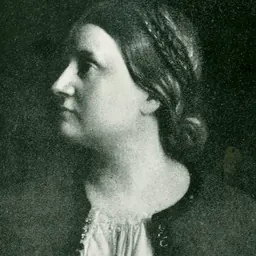
People in Hertha Ayrton's life
Named in this biography and alive at the same time



Related people
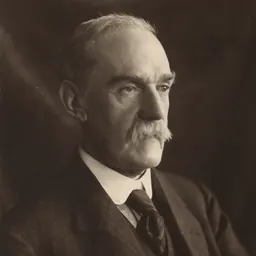
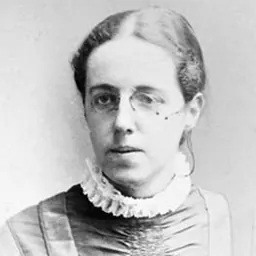
Same field, nearest in time
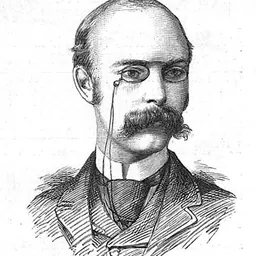
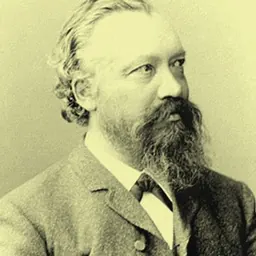
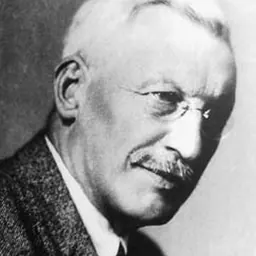
Contemporaries
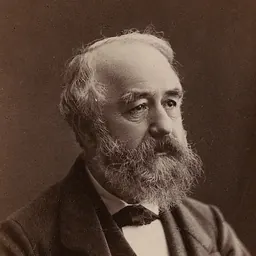
People whose lives overlapped Hertha Ayrton's





Frequently asked questions
Who was Hertha Ayrton?
English electrical engineer (1854–1923)
When was Hertha Ayrton born?
Hertha Ayrton was born on 28 April 1854 in Portsea Island.
When did Hertha Ayrton die?
Hertha Ayrton died on 23 August 1923 in Lancing.
What was Hertha Ayrton's occupation?
Hertha Ayrton was a mathematician, electrical engineer, physicist, inventor, women's rights activist and suffragette.
What nationality was Hertha Ayrton?
Hertha Ayrton was British.
Sources & further reading
Cite this page
APA: Biography.guide. (2026). Hertha Ayrton. https://biography.guide/hertha-ayrton/
MLA: "Hertha Ayrton." Biography.guide, https://biography.guide/hertha-ayrton/.
Chicago: "Hertha Ayrton." Biography.guide. https://biography.guide/hertha-ayrton/.
Data last updated: 2026-09-21 · Spot an error? Report a correction.
Portrait: Wikimedia Commons · author & licence
Page generated 2026-09-27 04:58 UTC