
About Hermann Goldschmidt
Lived 1802 – 1866 (aged 64). Hermann Goldschmidt was a French and German astronomer and painter, known for 21 Lutetia.
Hermann Mayer Salomon Goldschmidt (June 17, 1802 – August 30 ) was a German-French astronomer and painter who spent much of his life in France. He started out as a painter, but after attending a lecture by the famous French astronomer Urbain Le Verrier turned to astronomy. His discovery of the asteroid Lutetia in 1852 was followed by further findings and by 1861 Goldschmidt had discovered 14 asteroids. He received the Gold Medal of the Royal Astronomical Society in 1861 for having discovered more asteroids than any other person up to that time. He died from complications of diabetes.
Life and work
Goldschmidt was born in Frankfurt as the son of a Jewish merchant. During a journey to the Netherlands, Goldschmidt visited Dutch picture galleries. The impression of this visit convinced him to become a painter. He studied art in Munich for several years under supervision of such famous painters as Peter von Cornelius and Julius Schnorr von Carolsfeld. To complete his education, in 1836 Goldschmidt went to Paris.
In 1820, Goldschmidt discovered shadow bands in total solar eclipses.
Several lectures on astronomy were planned for the occasion of the lunar eclipse of March 31, 1847. Urbain Le Verrier, discoverer of Neptune, held one in the Sorbonne. By pure chance, Goldshmidt attended this lecture, which awakened his interest in astronomy and led him to pursue it as a career.
Portrait of Christ by Goldschmidt. Ink on paper. Date unknown In subsequent years, Goldschmidt bought larger telescopes, one with 30 lines diameter. Despite the limited observational capabilities of his instrument, which was inferior to those of most of his competitors, by May 1856 Goldschmidt had discovered four more asteroids. By the time of his final discovery in May 1861, the Royal Astronomical Society had awarded him the Gold Medal of the Royal Astronomical Society for the discovery of 13 asteroids. At that point, the second most successful astronomers John Russell Hind and Robert Luther had each discovered 10. he died there on August 26, 1866.
Namesakes
The lunar crater Goldschmidt is named after him.
Don’t just read it —
keep it.
Full-length biographies made to live with: read them, listen on the way to work, watch them tonight.
- E-book
- Audio
- Video
Instant download · yours to keep · every purchase keeps this site free
Important facts
People in Hermann Goldschmidt's life
Named in this biography and alive at the same time


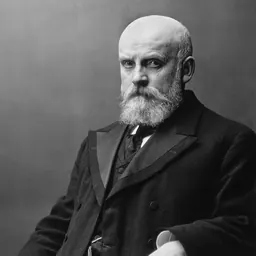
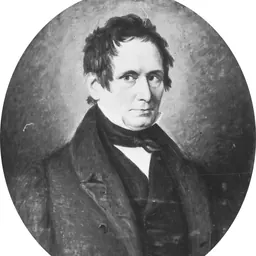
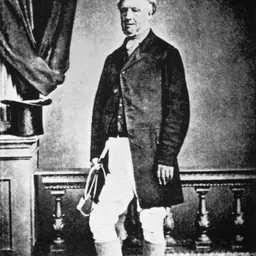
Related people
Same field, nearest in time


Contemporaries
People whose lives overlapped Hermann Goldschmidt's





Frequently asked questions
Who was Hermann Goldschmidt?
German-French astronomer and painter (1802-1866)
When was Hermann Goldschmidt born?
Hermann Goldschmidt was born on 17 June 1802 in Frankfurt.
When did Hermann Goldschmidt die?
Hermann Goldschmidt died on 30 August 1866 in Fontainebleau.
What was Hermann Goldschmidt's occupation?
Hermann Goldschmidt was an astronomer and painter.
What was Hermann Goldschmidt known for?
Hermann Goldschmidt was known for 21 Lutetia.
What nationality was Hermann Goldschmidt?
Hermann Goldschmidt was French and German.
Sources & further reading
· Wikipedia: Hermann Goldschmidt
· DBpedia: Hermann Goldschmidt
Cite this page
APA: Biography.guide. (2026). Hermann Goldschmidt. https://biography.guide/hermann-goldschmidt/
MLA: "Hermann Goldschmidt." Biography.guide, https://biography.guide/hermann-goldschmidt/.
Chicago: "Hermann Goldschmidt." Biography.guide. https://biography.guide/hermann-goldschmidt/.
Data last updated: 2026-09-20 · Spot an error? Report a correction.
Page generated 2026-09-27 05:11 UTC