
About Herman Pines
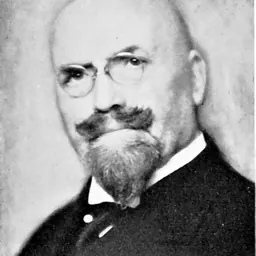
Lived 1902 – 1996 (aged 94). Herman Pines was an American chemist and university teacher.
Herman Pines (January 17, 1902 – April 10, 1996) was a Russian Empire–born American chemist and academici. He is best known for his work with Vladimir Ipatieff on the catalytic conversion of high-octane aviation fuel (and innovation credited with helping the Royal Air Force win the Battle of Britain). Because of his scientific contributions, new processes were developed for the isomerization of paraffins, the alkylation of aromatic compounds, and base-catalyzed organic reactions. (then in the Russian Empire, now Poland). Pines left Łódź as a young man, because Jewish quotas Instead Pines went to France to study. In 1927, Pines received a degree in chemical engineering at the École Supérieure de Chimie Industrielle de Lyon (now the École Supérieure de Chimie Physique Électronique de Lyon).
In 1928 After working at routine jobs for a couple of years, he joined Universal Oil Products (now UOP LLC) in McCook, Illinois, in 1930. He began by doing routine analyses, and was later transferred to the research department. Initially, the two expatriates used French and Russian as working languages, since they spoke both of them better than English.
Career In 1941, Pines received a part-time research professorship at Northwestern University in Evanston, Illinois. A modest man who tended to emphasize the contributions of others, Pines has nonetheless been described as "one of the towering scientists of this century". Throughout his career, Pines made significant contributions to the understanding of heterogeneous catalysis and the chemistry of petroleum hydrocarbons. This alkylation process
Ipatieff and Pines were trying to understand complex chemical reactions that were affected by many factors including temperature, concentration of acid used, and ratio of acid to other compounds. Such reactions often resulted in the formation of a complex mixture of products, including intermediate products which could participate in further reactions.
By working with pure hydrocarbons rather than petroleum fractions, Pines was better able to isolate and understand specific chemical reactions. Pines developed a method for the catalytic conversion of n-butane into isobutane. The first step was protonation of butene by sulfuric acid, forming a reactive but short-lived carbenium ion intermediate. Pure n-butane would not react without a source of olefin cations.
These methods of preparation were kept secret by the Americans during World War II, but the fuels were made available to the Allies for their Spitfires and Hurricanes, and are said to have given the Royal Air Force an advantage in the Battle of Britain. Another war-time accomplishment by Pines and his co-workers was the chemical analysis of the fuel of German aircraft. This enabled the Allies to target mines and other facilities that produced materials critical to the German war effort. They made basic discoveries that furthered the understanding of mechanisms involving carbonium ions, carbanions, free radicals, intermediates, thermal reactions, and relationships between catalytic behavior and surface chemistry. Pines studied both acid and base catalysis; catalytic properties of aluminas; and aromatization, dehydrogenation and metal hydrogenation catalysts.
He has contributed to understanding the mechanism of dehydration of alcohols on alumina as a catalyst and supporter. He has also examined mechanisms of aromatization of alkanes over chromia. He has analyzed hydrogen transfer reactions involving aromatic hydrocarbons. His work influenced Nobel winner George Andrew Olah, who was able to chemically stabilize carbocations and further investigate their structure and activity. The work of Pines, Ipatieff, Louis Schmerling, Herman S. Bloch, Vladimir Haensel and others at Universal Oil Products (UOP)'s Riverside Laboratory has been recognized by the presentation of a National Historic Chemical Landmark at the laboratory building in McCook, Illinois, on November 15, 1995.
Pines was a founder of the Catalysis Club of Chicago.
Personal life Pines married Dorothy Mlotek in 1927. She worked for many years as a Hebrew teacher. They had a daughter, Judith "Judy" Pines. 1981: Eugene J. Houdry Award in Applied Catalysis 1981: George A. Olah Award in Hydrocarbon or Petroleum Chemistry, from the American Chemical Society 1982: Chemical Pioneer Award, from the American Institute of Chemists 1983: E. V. Murphree Award in Industrial and Engineering Chemistry, from the American Chemical Society 1995: Designation of the laboratory building in McCook, Illinois, as a National Historic Chemical Landmark on November 15, 1995
Don’t just read it —
keep it.
Full-length biographies made to live with: read them, listen on the way to work, watch them tonight.
- E-book
- Audio
- Video
Instant download · yours to keep · every purchase keeps this site free
Important facts
People in Herman Pines's life
Named in this biography and alive at the same time



Related people
Same field, nearest in time


Contemporaries
People whose lives overlapped Herman Pines's





Frequently asked questions
Who was Herman Pines?
American chemist (1902–1996)
When was Herman Pines born?
Herman Pines was born on 17 January 1902 in Łódź.
When did Herman Pines die?
Herman Pines died on 10 April 1996 in San Rafael.
What was Herman Pines's occupation?
Herman Pines was a chemist and university teacher.
What nationality was Herman Pines?
Herman Pines was American.
Sources & further reading
Cite this page
APA: Biography.guide. (2026). Herman Pines. https://biography.guide/herman-pines/
MLA: "Herman Pines." Biography.guide, https://biography.guide/herman-pines/.
Chicago: "Herman Pines." Biography.guide. https://biography.guide/herman-pines/.
Data last updated: 2026-09-20 · Spot an error? Report a correction.
Page generated 2026-09-27 05:29 UTC