
About Vladimir Ipatieff
Lived 1867 – 1952 (aged 85). Vladimir Ipatieff was an American and Russian chemist, inventor and university teacher.
Life and career Born in Moscow, Ipatieff first studied artillery in the Mikhailovskaya Artillery Academy in Petersburg, then later studied chemistry in Russia with Alexei Yevgrafovich Favorskii and in Germany. The prominence of his extended family is illustrated by the fact that the July 17, 1918, murders of Czar Nicholas Romanoff, the Empress and the rest of the royal family took place in the basement of a vacation house owned by the Ipatieff family in Ekaterinburg. His first works in chemistry were devoted to the study of metals and explosives. Later, his works on catalysis methods under high pressure made him famous as a chemist; for his reactions he used massive steel autoclaves (sometimes called Ipatieff bombs). With the start of World War I, Ipatieff organized a dedicated laboratory in Petersburg which made improvements to the chemical weaponry and the methods of chemical protection for the army. Before the October Revolution, Ipatieff was a General-Lieutenant of the Russian army and a member of the Russian Academy of Sciences. He was elected to the Russian Academy of Sciences in 1916.
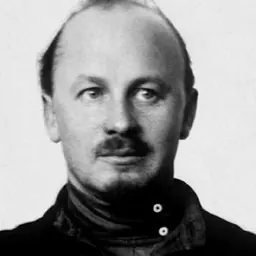
Although Ipatieff's political sympathies were with the Kadet party, after the Bolshevik Revolution, he agreed to work with the new government, as a specialist adviser and inspector for Vesenka. Ipatieff was active in creating and heading several important chemical research centers in Soviet Russia. Lenin called him "the head of our [Soviet] chemical industry". He was chairman of the Scientific Technical Institute, in 1920-26, but was removed and relegated to the post of vice-chairman of the chemical section of Vesenkha - an early sign that he was coming under suspicion because of his connections with the pre-revolutionary regime. In 1928-29, when he was still the youngest member of the Academy of Sciences, he handled the negotiations which averted a conflict with the regime by admitting Nikolai Bukharin and some other communists to the Academy. At this time, however, Ipatieff was starting to feel threatened because of his past in the Czarist army and because he had friends among those convicted in the Industrial Party trial. In June 1930, Ipatieff, fearing that in time he would be victimized, withdrew a small amount of money from his accounts and prepared to attend an industry conference in Munich. He invited his wife to come with him, and at the last minute suggested she bring her jewels "in the event that we go dancing." As the train came to the border into Poland, he announced to his wife, "Dear, look back at Mother Russia. You will never see her again." Though he spoke not a word of English, he fled to the United States.
In the US, Ipatieff secured a research-focused chemistry professorship at Northwestern University, in the Chicago suburb of Evanston. There, with his assistant Herman Pines, he discovered alternative fuel mixtures and procedures that greatly enhanced engine performance. It is said that after changing to Ipatieff fuel mixtures, the RAF was able to best German planes that had previously outperformed the British. Increasingly, he devoted time to commercial applications of his breakthroughs in fuel chemistry, and worked extensively for UOP LLC (Universal Oil Products).
Year Recipient 2022 Phillip Christopher 2019 Ive Hermans 2016 Aditya Bhan 2013 Melanie Sanford 2010 Christopher W. Jones 2004 Raul F. Lobo 2001 Joan F. Brennecke 1998 Andrew J. Gellman 1995 Mark Barteau 1992 Mark E. Davis 1989 Alexander M. Klibanov 1986 Robert M. Hazen 1983 D. Wayne Goodman 1980 Denis Forster 1977 Charles A. Eckert 1974 George A. Samara 1971 Paul B. Venuto 1968 Charles R. Adams 1965 Robert H. Wentorf, Jr. 1962 Charles Kemball 1959 Cedomir M. Sliepcevich 1956 Harry G. Drickamer 1953 Robert B. Anderson 1950 Herman E. Ries 1947 Louis Schmerling
Don’t just read it —
keep it.
Full-length biographies made to live with: read them, listen on the way to work, watch them tonight.
- E-book
- Audio
- Video
Instant download · yours to keep · every purchase keeps this site free
Important facts
People in Vladimir Ipatieff's life
Named in this biography and alive at the same time



Related people
Same field, nearest in time



Contemporaries
People whose lives overlapped Vladimir Ipatieff's

Frequently asked questions
Who was Vladimir Ipatieff?
American-Russian chemist (1867–1952)
When was Vladimir Ipatieff born?
Vladimir Ipatieff was born on 9 November 1867 in Moscow.
When did Vladimir Ipatieff die?
Vladimir Ipatieff died on 29 November 1952 in Chicago.
What was Vladimir Ipatieff's occupation?
Vladimir Ipatieff was a chemist, inventor and university teacher.
What nationality was Vladimir Ipatieff?
Vladimir Ipatieff was American and Russian.
Sources & further reading
· Wikipedia: Vladimir Ipatieff
Cite this page
APA: Biography.guide. (2026). Vladimir Ipatieff. https://biography.guide/vladimir-ipatieff/
MLA: "Vladimir Ipatieff." Biography.guide, https://biography.guide/vladimir-ipatieff/.
Chicago: "Vladimir Ipatieff." Biography.guide. https://biography.guide/vladimir-ipatieff/.
Data last updated: 2026-09-20 · Spot an error? Report a correction.
Page generated 2026-09-27 05:22 UTC