
About Herman Neugass
Lived 1915 – 1991 (aged 76). Herman Neugass was an athletics competitor.
Herman Leo Neugass (January 10, 1915 – August 31, 1991) was an American collegiate track and field athlete who was a record holder for a period of time in sprints. He is most noted for his refusal to participate in the Olympic trials for the 1936 Berlin Olympic Games because of his Jewish faith and objection to Nazi antisemitism. He also served various community service organizations in the Washington, D.C. area, especially for Jewish people and for combat veterans.
Early life Neugass was born in Magnolia, Mississippi, on January 10, 1915. Neugass's family moved to New Orleans, Louisiana, when he was a child. There, he attended Isidore Newman School. On enrolling at Tulane University, Neugass majored in mathematics and succeeded academically, being admitted to the Phi Beta Kappa honor society. He graduated in 1935 with a Bachelor of Science degree. There was considerable recognition that the Third Reich was using the 1936 Olympics as a propaganda platform. Following public disclosure of his refusal to participate in the Olympic trials, Neugass received letters of support for his decision and letters of objection. These included opposition from other Jews in the southern United States who feared unnecessary attention to the antisemitism of the Third Reich and thereby avoid controversy. It also included Charles Sherrill, who was a member of the Olympic committee.
Post athletic career Following his college graduation, Neugass initially pursued career opportunities in New Orleans but soon recognized that advancement was limited because of widespread antisemitism at the time. For that reason, Neugass relocated to Washington, D.C., where he went to work for Landsburgh's department stores. He became an executive in the chain, retiring from there in 1968. Lansburgh's was his wife's family's business enterprise, and in that way Neugass avoided antisemitism in his professional career.
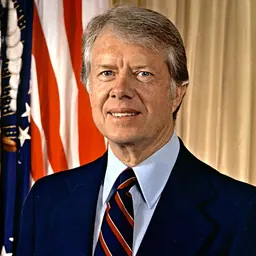
In an event at the White House Rose Garden, Neugass stood with then United States President Jimmy Carter as Carter explained the 1980 Summer Olympics boycott against the Soviet Union. Carter stated that the 1980 boycott was a variation of the same principle as for the boycott of the 1936 Olympics. Carter's decision to include Neugass in the event reminded people of his 1935 actions which by then had faded from public attention, and in that respect re-invigorated public attention to Neugass's decision in 1935. At the time of the Rose Garden appearance, Neugass stated, "Sometimes you can shout 'fire' and not be heard, but it's still our duty to shout." However, the Hall of Fame was destroyed in 2005 by Hurricane Katrina and not rebuilt as of 2022. The same year, Neugass posthumously received the Kehr Award by the American Philatelic Society for his work on behalf of the Stamps for the Wounded project.
Don’t just read it —
keep it.
Full-length biographies made to live with: read them, listen on the way to work, watch them tonight.
- E-book
- Audio
- Video
Instant download · yours to keep · every purchase keeps this site free
Important facts
People in Herman Neugass's life
Named in this biography and alive at the same time

Related people
Same field, nearest in time

Contemporaries
People whose lives overlapped Herman Neugass's




Frequently asked questions
Who was Herman Neugass?
American track and field athlete
When was Herman Neugass born?
Herman Neugass was born on 10 January 1915.
When did Herman Neugass die?
Herman Neugass died on 31 August 1991 in Washington, D.C..
What was Herman Neugass's occupation?
Herman Neugass was an athletics competitor.
Sources & further reading
Cite this page
APA: Biography.guide. (2026). Herman Neugass. https://biography.guide/herman-neugass/
MLA: "Herman Neugass." Biography.guide, https://biography.guide/herman-neugass/.
Chicago: "Herman Neugass." Biography.guide. https://biography.guide/herman-neugass/.
Data last updated: 2026-09-22 · Spot an error? Report a correction.
Page generated 2026-09-27 05:04 UTC