
About Harold Abrahams
Lived 1899 – 1978 (aged 78). Harold Abrahams was a British athletics competitor, sprinter, lawyer, journalist and olympic champion.
Early life and education Abrahams's father, Isaac, was a Jewish immigrant from Polish Lithuania, then part of the Russian Empire since the Partitions of Poland. He worked as a financier, and settled in Bedford with his Welsh Jewish wife, Esther Isaacs. he relinquished his commission on 1 September 1921 having completed his period of service.
He studied at Gonville and Caius College, Cambridge, from 1919 to 1923. At Cambridge, he was a member of the Cambridge University Athletics Club (of which he was president 1922–1923), Cambridge University Liberal Club, the University Pitt Club, After university he trained as a lawyer.
Abrahams was also a member of the Achilles Club, a track and field club formed in 1920 by and for past and present representatives of Oxford and Cambridge universities. One of the club's founding members was Evelyn Montague, who like Abrahams is also portrayed in the 1981 film Chariots of Fire.
Athletics Abrahams had been a sprinter and long jumper since his youth. He continued to compete in running while at Cambridge. Abrahams earned a place in the 1920 Olympic team, He became the national long jump champion after winning the AAA Championships title at the 1923 AAA Championships.
After graduating from Cambridge, he employed Sam Mussabini, a professional coach, who improved his style and training techniques in preparation for the 1924 Olympics in Paris, France.
For six months, Mussabini emphasised the 100 metres at Abrahams's direction, with the 200 metres as secondary. Through vigorous training, Abrahams perfected his start, stride and form. Abrahams won both the 100 yards and long jump titles at the 1924 AAA Championships and one month before the 1924 Games, Abrahams set the English record in the long jump , a record which stood for the next 32 years.
At the 1924 Summer Games, Abrahams won the 100 m in a time of 10.6 seconds, beating all the American favourites, including the 1920 gold-medal winner Charley Paddock. He went on to report from the 1936 Berlin Olympics for the BBC, exuberantly covering Jack Lovelock's win in the 1500 metres: “A hundred yards to go! Come on, Jack!! My God, he’s done it. Jack, come on! Lovelock wins. Five yards, six yards, he wins. He’s won. Hooray!” His daughter reported that Abrahams had sat close to Hitler, and had said afterwards: "I wish I'd shot him."
Abrahams wrote a number of books, including Oxford Versus Cambridge. A Record Of Inter-University Contests From 1827-1930 (co-written with John Bruce-Kerr), The Olympic Games, 1896–1952 and The Rome Olympiad, 1960.
Abrahams died in Enfield on 14 January 1978, aged 78. He was buried in the same grave as his wife Sybil Evers, in St John the Baptist churchyard in Great Amwell, Hertfordshire.
Personal life While at Cambridge, Abrahams was romantically involved with academic Christina McLeod Innes, and they became informally engaged, but their relationship waned and ended as Abrahams began focusing exclusively on his athletics and the Olympics. In early 1934, he met D'Oyly Carte Opera Company singer Sybil Evers, and they began a passionate on-and-off romance. According to his biographer Mark Ryan, Abrahams had a fear of commitment and old-fashioned ideas about the role of women in marriage, but he was able to overcome these, and the couple wed in December 1936. In the film Chariots of Fire, Abrahams is instead depicted as dating D'Oyly Carte soprano Sybil Gordon (portrayed by Alice Krige), and the film portrays the couple as meeting a decade earlier than he and Evers actually did.
Abrahams cut a strip of gold off his Olympic medal to make the bridal wedding ring. Both the medal and the ring (following Sybil's death) were later stolen, on separate occasions.
Sybil Evers could not have children, so they adopted an eight-week-old boy, Alan, in 1942, and a nearly three-year-old girl, Susan, in 1946; Susan ("Sue") later married the formerly imprisoned anti-nuclear activist Pat Pottle, with whom she had two sons.
During the Nazi regime and war, the couple also fostered two Jewish refugees: a German boy called "Ken Gardner" (born Kurt Katzenstein), and an Austrian girl named Minka.
Sybil Evers died in 1963 at the age of 59. Abrahams set up two awards in her name: the Sybil Evers Memorial Prize for Singing (1965–1995), an annual cash prize awarded to the best female singer in her last year at the Webber Douglas School of Singing and Dramatic Art, and the Sybil Abrahams Memorial Trophy, presented each year from 1964 onward at Buckingham Palace by the Duke of Edinburgh, President of the British Amateur Athletics Association, to the best British woman athlete.
Abrahams was active in freemasonry. He was a fan of Gilbert and Sullivan, which was portrayed in Chariots of Fire.
Honours
Abrahams was appointed a Commander of the Order of the British Empire (CBE) in 1957.
In July 2012, plans were announced to erect a memorial to Abrahams in Telford, Shropshire, to recognise that before the 1924 Olympics he won a gold medal in the 100-yard sprint at the Midlands Area AAA championships at St George's Recreation Club ground. The memorial, in the form of a plaque, was unveiled by Sue Pottle in October 2014 in the lounge of the club, which now possesses the medal he won at the event.
Norris McWhirter once commented that Abrahams "managed by sheer force of personality and with very few allies to raise athletics from a minor to a major national sport". Reflecting in 1948 on Abrahams' athleticism, Philip Noel-Baker, Britain's 1912 Olympic captain and a Nobel Prize winner, wrote: I have always believed that Harold Abrahams was the only European sprinter who could have run with Jesse Owens, Ralph Metcalfe, and the other great sprinters from the U.S. He was in their class, not only because of natural gifts – his magnificent physique, his splendid racing temperament, his flair for the big occasion – but because he understood athletics and had given more brainpower and more will power to the subject than any other runner of his day.
Don’t just read it —
keep it.
Full-length biographies made to live with: read them, listen on the way to work, watch them tonight.
- E-book
- Audio
- Video
Instant download · yours to keep · every purchase keeps this site free
Important facts
People in Harold Abrahams's life
Named in this biography and alive at the same time






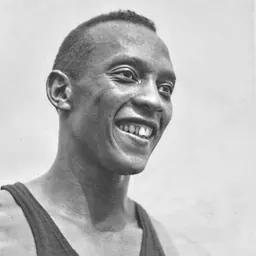

Related people
Same field, nearest in time

Contemporaries
People whose lives overlapped Harold Abrahams's



Frequently asked questions
Who was Harold Abrahams?
British sprinter (1899–1978)
When was Harold Abrahams born?
Harold Abrahams was born on 15 December 1899 in Bedford.
When did Harold Abrahams die?
Harold Abrahams died on 14 January 1978 in London Borough of Enfield.
What was Harold Abrahams's occupation?
Harold Abrahams was an athletics competitor, sprinter, lawyer, journalist and olympic champion.
What nationality was Harold Abrahams?
Harold Abrahams was British.
Sources & further reading
Cite this page
APA: Biography.guide. (2026). Harold Abrahams. https://biography.guide/harold-abrahams/
MLA: "Harold Abrahams." Biography.guide, https://biography.guide/harold-abrahams/.
Chicago: "Harold Abrahams." Biography.guide. https://biography.guide/harold-abrahams/.
Data last updated: 2026-09-20 · Spot an error? Report a correction.
Page generated 2026-09-27 05:26 UTC